
At 59 Million Tons, Our E-Waste Problem Is Getting Out of Control
Every year, we blithely discard billions of phones, laptops, TVs, and other electronics that can end up poisoning communities around the world.
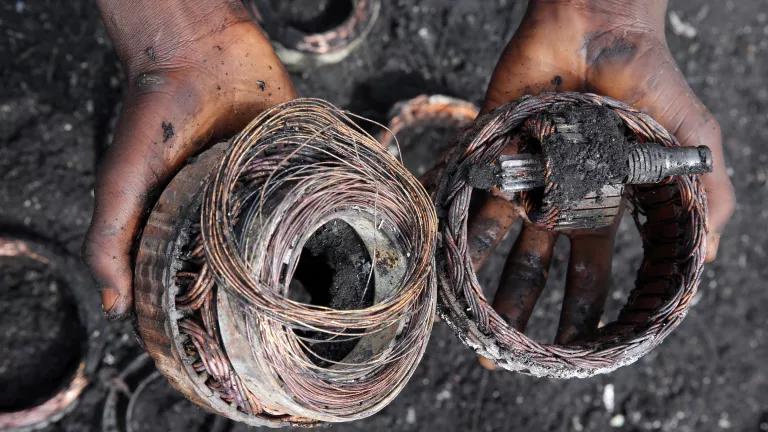
Old electronics are burned in an open air pit in Accra, Ghana, in order to more easily extract the valuable copper wires.
Friedrich Stark/Alamy Stock Photo

With each passing year, our electronics—all the smartphones, laptops, monitors, TVs, speakers, and other personal devices that, for better or for worse, have become indispensable to modern life—get smaller, slimmer, and more lightweight. One of the earliest laptops, the Macintosh PowerBook 100, weighed more than five pounds when it was released in 1991; the lightest laptop currently on the market is less than two. The lightest phone you can find today weighs in at just over three ounces, less than a deck of playing cards. And as wireless technology continues to develop, we need fewer and fewer of the cords and cables that we once relied on for connectivity.
So why are we generating more metric tons of e-waste than ever before?
Because with each passing year, we’re also throwing more and more of these devices away and “upgrading” to whatever newer, lighter, slimmer iteration of them has just appeared on the market. Along with steadily falling prices for personal technology, the electronics industry’s strategy of planned obsolescence is a big reason why humans generated 59 million U.S. tons of e-waste last year—more than any other year on record, and 21 percent more than we were generating just five years ago. Taken together, 2019’s discarded electronics weighed as much as 350 Queen Mary 2 ocean liners. Last year, we produced more than 16 pounds of e-waste for every one of the 7.8 billion people living on Earth. But among the human population, the benefits as well as the dangers of the electronics boom are being distributed very unevenly.
These figures come from the Global E-waste Monitor 2020, a collaboration between the United Nations University and several other large international groups that are working at the intersection of technology, economics, and the environment. Among the startling conclusions in their just-published report is that our global e-waste is on track to reach 74 metric tons by 2030—representing nearly a 100 percent increase over a 16-year period. “This makes e-waste the world’s fastest-growing domestic waste stream,” they write, “fueled mainly by higher consumption rates of electric and electronic equipment, short life cycles, and few options for repair.”
E-waste is unique among the many rivulets making up our larger waste stream. The same chemicals and metals that allow our electronics to work so smoothly and quickly—among them mercury, cadmium, and lead—are highly toxic when consumed or absorbed into bloodstreams. When e-waste is deposited into landfills, these chemicals inevitably leach into soil and groundwater, putting people and wildlife at risk. According to the report, only 17.4 percent of the world’s e-waste in 2019 was documented, collected, and recycled properly—leaving more than 82 percent of it essentially unaccounted for. Within that 82 percent, the experts say, was 55 tons of mercury that have either already been released into the environment or will be eventually.
But if all of this missing e-waste were to be collected, handled, and disposed of properly, we could be pulling a lot more than toxic chemicals out of it. As the report notes, hiding inside all of that unrecycled e-waste is also $57 billion worth of recoverable gold, silver, platinum, and other precious metals. That’s more than the gross domestic product of most countries.
Which leads us to yet another way in which our current consumption and disposal habits jeopardize public health. Currently, only 78 countries have adopted any sort of e-waste legislation or policy. In places without a formal e-waste recycling system, informal—and dangerous—recycling systems have emerged.
A 2018 New York Times Magazine article depicted “backyard recyclers” in India, Indonesia, and Thailand who tried to recover the gold inside circuit boards by “bathing” them in nitric and hydrochloric acid, or by literally cooking e-waste in stoves to get at the valuable metals hidden inside the plastic, wires, and circuitry, with “no protection against the emissions.” Many of these workers are children, who typically receive the lowest fees—as low as three dollars a day—and who often work without goggles, gloves, or other safety equipment. The combination of lax regulation, labor-intensive work, and rare metals has even led to well-known e-waste recyclers, ones who claim to be ecologically conscious, succumbing to greed and secretly sending their electronics overseas to be processed by people working for low wages under hazardous conditions.
So what’s to be done? For starters, more countries need to enact responsible e-waste legislation. The International Telecommunication Union, one of the groups behind the publication of the Global E-waste Monitor 2020, has set a target of getting 50 percent of the world’s nations to enact such legislation by 2023—which would mean getting the current number up from 78 to 97 over the next three years. Given that only 61 countries had undertaken such legislation as of 2014, the goal seems plausible, if ambitious. Right now, just over half of U.S. states have laws on the books regulating the disposal of e-waste, but there is currently no federal law requiring it to be recycled or prohibiting it from being exported to developing countries, even though such legislation has been proposed repeatedly over the years.
For their part, businesses, organizations, and individuals that routinely need to dispose of their old electronics can choose recyclers who have signed on to the e-Stewards Initiative, a program that certifies recyclers according to the highest standards for responsible practices. The requirements of certification stipulate that “no hazardous, illegal e-waste will be exported to developing nations, be disposed into landfills, or recycled using forced or child labor.”
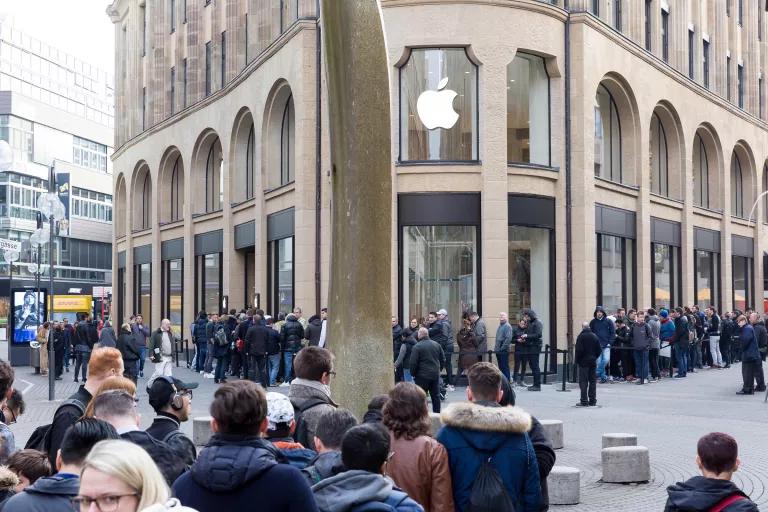
People wait in long lines at an Apple store in Cologne, Germany, for the release of the iPhone X.
Marco Verch via Flickr
This just leaves the major electronics manufacturers themselves, as well as us: the people who line up outside of stores for hours and hours in order to buy whatever is being deemed as the newest, the fastest, the slimmest, the lightest, the best. Pressure is growing on tech companies to do away with their strategies of planned obsolescence and to make it easier for electronics consumers to repair their older devices instead of tossing them out. But we would also do well to put our phone cameras in selfie mode and take a good look at ourselves and our choices. Can’t live without that new phone that just came on the market? Fine. But just remember that somewhere—in a place that’s most likely far, far away from you—someone can’t live with your old ones, either.
This NRDC.org story is available for online republication by news media outlets or nonprofits under these conditions: The writer(s) must be credited with a byline; you must note prominently that the story was originally published by NRDC.org and link to the original; the story cannot be edited (beyond simple things such as grammar); you can’t resell the story in any form or grant republishing rights to other outlets; you can’t republish our material wholesale or automatically—you need to select stories individually; you can’t republish the photos or graphics on our site without specific permission; you should drop us a note to let us know when you’ve used one of our stories.
Why Redistricting Could Lead to More Pollution, Sickness, and Death
The Environmental Justice Movement
Can the Environmental Justice Movement Survive Trump’s Attacks? This EJ Warrior Says Yes.