
The Environmental Justice Movement
Environmental justice is an important part of the struggle to improve and maintain a clean and healthful environment, especially for communities of color who have been forced to live, work, and play closest to sources of pollution.
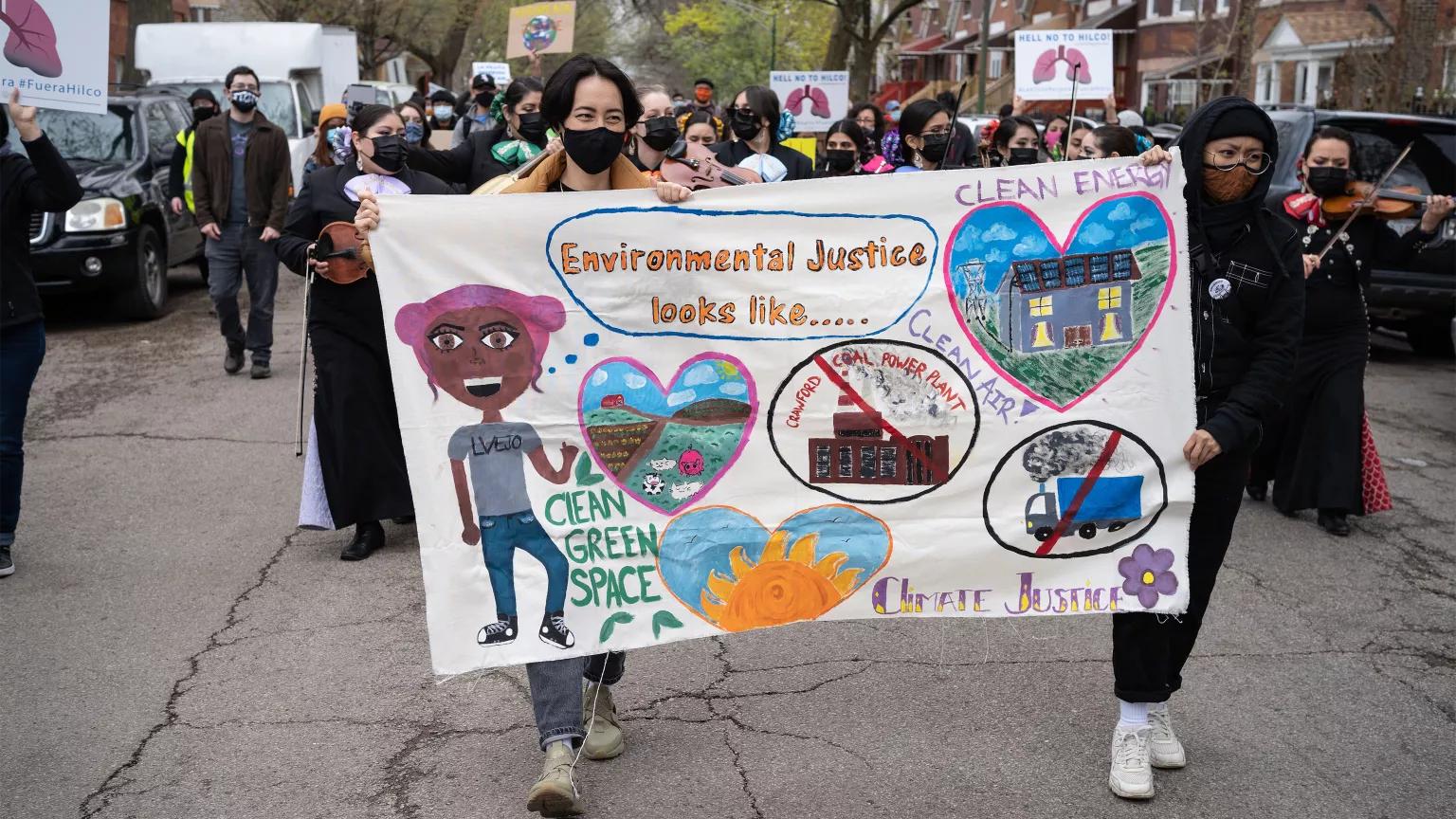
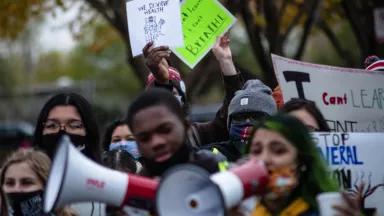
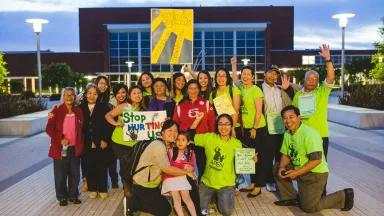
The Little Village Environmental Justice Organization with community partners Únete La Villita, El Foro Del Pueblo, and Mi Villita Neighbors protesting in Chicago
Max Herman

The environmental justice movement—championed primarily by Black people, Latines, Asian Americans, Pacific Islanders, and Indigenous People—was born of a statistical fact: Those who live, work, and play in America's most polluted environments are commonly people of color and those living in poverty. Because of environmental justice advocates, we now know this as environmental racism, and it’s precisely what communities of color have been battling for decades.
What is environmental justice?
Environmental justice essentially means that everyone—regardless of race, color, national origin, or income—has the right to the same environmental protections and benefits, as well as meaningful involvement in the policies that shape their communities. But rarely has this been the reality for people of color and those with low incomes. That’s because virtually all environmental injustice is shaped by the same patterns of racism and inequality that have existed in the United States since its founding and continue to influence every facet of our society, from education to housing to health care.
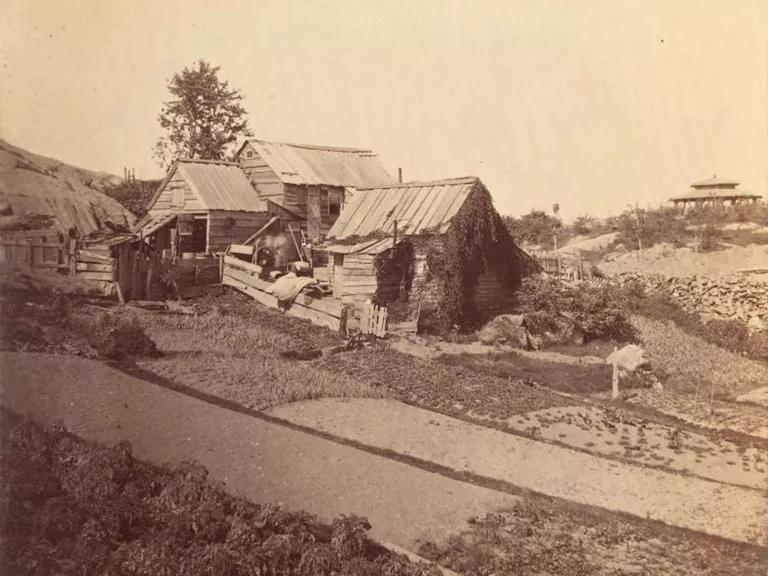

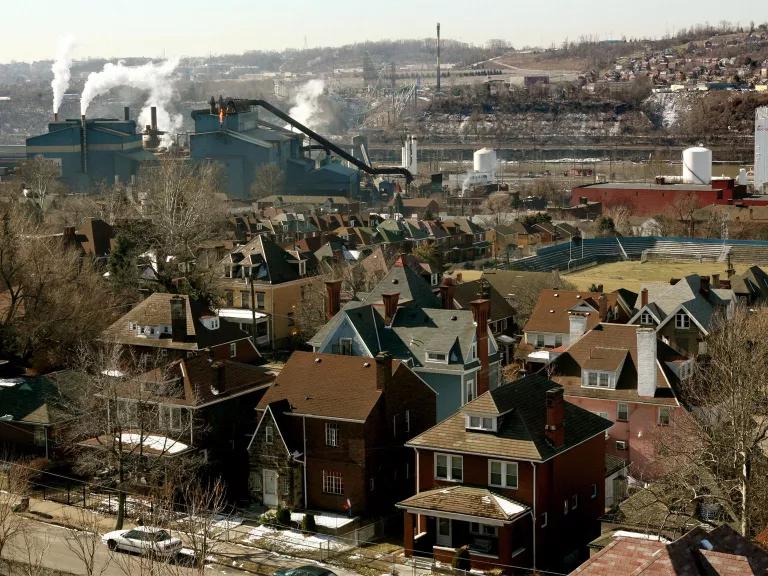
Clockwise from top left: Remains from New York City’s Seneca Village, a majority-Black community whose residents were displaced in 1857 to create Central Park; Gina Ramirez, NRDC’s Midwest outreach manager, and her parents watching their lead service lines being replaced outside their home in Chicago; the U.S. Steel Edgar Thomson plant emitting smoke near homes in Braddock, Pennsylvania, 2007
From The New York Public Library
; 2)Andrew Rush/Associated Press
; 3)Vanessa Bly Photography
For example, to this day, majority-white and wealthy communities are where investments into infrastructure are more likely to be made, where environmental laws are more likely to be properly enforced, and where polluters are more likely to be held accountable or kept away entirely. By comparison, the most marginalized communities are routinely treated as the areas where highways can be built, waste can be stored, industrial warehouses and facilities can be concentrated, and where natural resources can be readily exploited or destroyed.
What’s worse, the most affected communities often experience multiple environmental threats at once. A single resident may drink lead-contaminated tap water and go to school near a soot-producing, coal-fired power plant. When such threats compound, and are exacerbated by other social and economic vulnerabilities, residents face even higher health risks. This is why the environmental justice movement has long worked to change these unjust patterns.
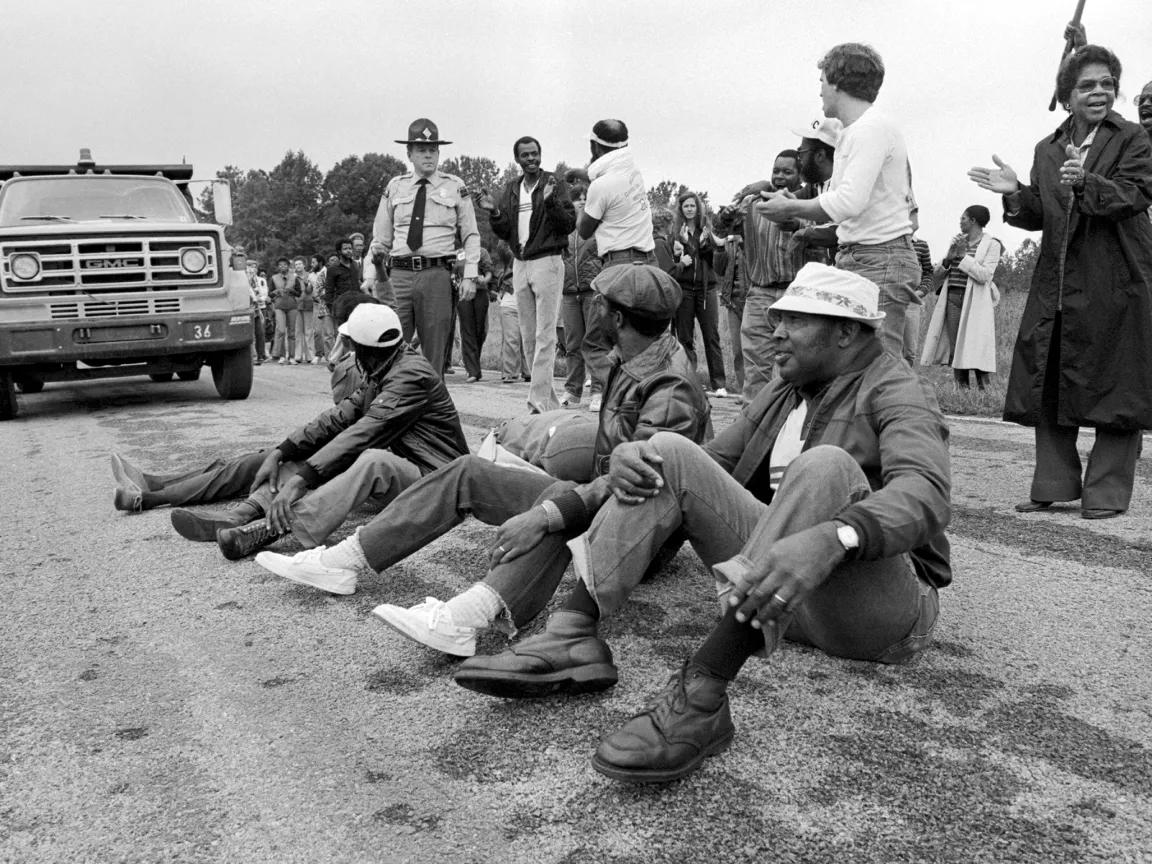
Protesters preventing trucks filled with soil contaminated by polychlorinated biphenyl (PCB) from reaching the proposed Warren County landfill in Afton, North Carolina, September 1982
Ricky Stilley/Henderson Dispatch
How Warren County protests led to a national movement
The story of how the environmental justice movement became a national one can generally be traced back to Warren County, North Carolina. In the late 1970s, the state’s government was deliberating where it could store 6,000 truckloads of soil laced with toxic PCBs. It decided on rural, poor, and overwhelmingly Black Warren County. That quickly became the focus of national attention.
Learn More: EJ Fights
Residents were furious that state officials had dismissed concerns over PCBs leaching into drinking water supplies. Many veterans of the Civil Rights Movement—often affiliated with Black churches—shared their sentiments and showed up. Among them were Dr. Benjamin F. Chavis Jr. and Reverend Joseph Lowery, then of the Southern Christian Leadership Conference, and Reverend Leon White of the United Church of Christ's Commission for Racial Justice. The dump trucks still rolled into Warren County in mid-September 1982, headed for a newly constructed hazardous waste landfill in the small community of Afton. But the same frustrated residents and their allies stopped the trucks by lying down on roads leading into the landfill. Six weeks of marches and nonviolent street protests followed, and more than 500 were arrested—the first arrests in U.S. history over the siting of a landfill.
Other communities of color had organized to oppose environmental threats before Warren County. In the early 1960s, Latine farmworkers organized by Cesar Chavez fought for workplace rights. In 1967, Black students took to the streets of Houston to oppose a city garbage dump in their community that had claimed the lives of two children. In 1968, residents of West Harlem, in New York City, fought unsuccessfully against the siting of a sewage treatment plant in their community. But the Warren County protests and accompanying legal challenges are considered by many to be the first major milestone in the national movement for environmental justice.
The people of Warren County ultimately lost the battle, and the toxic waste was deposited in that landfill. But their story—one of ordinary residents driven to protect their homes from a toxic assault—fired the imagination of many across the country who had lived through similar injustices. These events even inspired a new faction within the Civil Rights Movement. In fact, several early environmental justice leaders came out of it. They understood that the environment was another front in the struggle for justice, and they brought with them many of the same tactics—like marches, petitions, coalition building, community empowerment, litigation, and nonviolent direct action.
The mounting facts of environmental racism
In the wake of Afton, the newly energized environmental justice activists noticed a clear pattern. Corporations, regulatory agencies, and local planning and zoning boards consistently targeted low-income communities of color when siting polluting facilities like landfills, waste transfer stations, incinerators, garbage dumps, diesel bus and truck garages, auto body shops, smokestack industries, industrial hog and chicken processors, oil refineries, chemical manufacturers, and radioactive waste storage areas.
Activists also found some common factors among the most affected communities. For example, these communities typically had lower property values due to long histories of redlining. They often lacked connections to decision makers on zoning boards or city councils that could protect their interests. They usually couldn’t afford to hire the technical and legal expertise necessary to fight a siting. And polluting companies intentionally withheld information from them about how the pollution could affect their health, something that was exacerbated in non-English-speaking communities.
Several studies in the late 1980s and early ’90s gave these accounts of environmental racism new credibility. Walter Fauntroy, the District of Columbia’s congressional delegate and then chair of the Congressional Black Caucus, took part in the Warren County protests. When he returned to Washington, he tasked Congress's General Accounting Office (now the Government Accountability Office or GAO) with determining whether communities of color suffered disproportionate negative impacts from the siting and construction of hazardous waste landfills within them. That GAO study was published in 1983 and revealed that three-quarters of the hazardous waste landfill sites in eight southeastern states were located in primarily low-income, Black, and Latine communities.
More evidence of widespread environmental racism soon followed. In 1987, the United Church of Christ's Commission for Racial Justice (CRJ), under the leadership of executive director Chavis, who had been at Afton, published the landmark Toxic Wastes and Race in the United States report. Researched by Charles Lee, CRJ's director of the Special Project on Toxic Injustice, the report showed that race was the single-most important factor in determining where toxic waste facilities were sited in the United States. It also found that the placement of these facilities was the intentional result of local, state, and federal land use policies. And in 1990, sociologist Dr. Robert Bullard published what is considered to be the first overarching book on environmental injustice, Dumping in Dixie: Race, Class, and Environmental Quality, which underscored the importance of race as a factor in the siting of unwanted facilities that produce toxic chemicals.
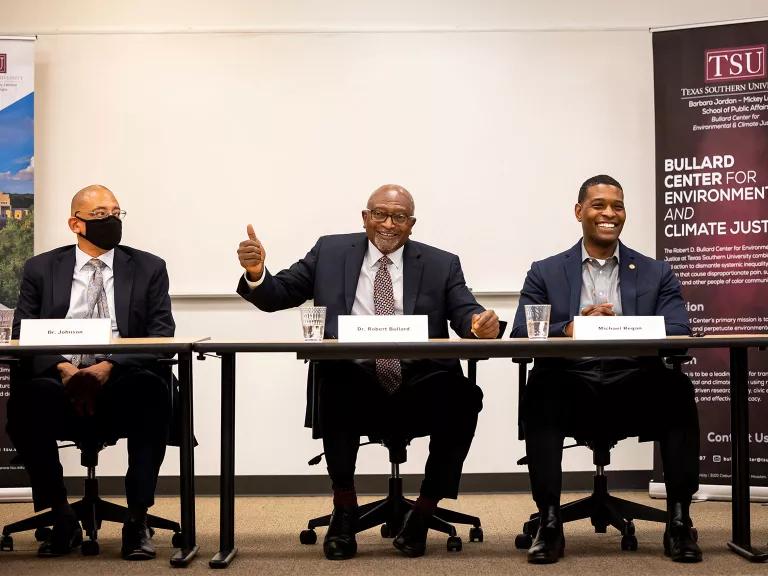
Dr. Robert Bullard speaking at an event with EPA Administrator Michael Regan at Texas Southern University, November 2021
Annie Mulligan/The Texas Tribune
The push to advance the environmental justice agenda nationally
By 1990, leaders of the growing environmental justice movement, who had chiefly relied on coalition building and community empowerment, began to look for allies among the traditional, primarily white—and more well-resourced—environmental organizations. These were groups that had long fought to protect the wilderness, endangered species, clean air, and clean water. But they had had little or no involvement in the environmental struggles of people of color. That year, several environmental justice leaders cosigned a widely publicized letter to the "Big 10" environmental groups, including NRDC, accusing them of racial bias in policy development, hiring, and the makeup of their boards, and challenging them to address toxic contamination in the communities and workplaces of people of color and the poor. As a result, some mainstream environmental organizations developed their first environmental justice initiatives, added people of color to their staff, and resolved to take environmental justice into account when making policy decisions. All of this remains a serious work in progress.
Environmental justice leaders also pushed their agenda within the government. In 1990, a meeting between a group of prominent academics and advocates within the movement and a top official in the first Bush administration led to the creation of the U.S. Environmental Protection Agency’s Environmental Equity Workgroup. The following year, the First National People of Color Environmental Leadership Summit brought together hundreds of environmental justice leaders from around the world to Washington, D.C., to network and strategize for the first time. The list of attendees—which included Reverend Jesse Jackson, Dolores Huerta, Cherokee Principal Chief Wilma Mankiller, and the heads of NRDC and the Sierra Club—demonstrated that environmental justice was beginning to be taken up by many in the American mainstream. What's more, the summit produced the "Principles of Environmental Justice" and the "Call to Action," two foundational documents of the environmental justice movement.
By 1992, when Bill Clinton became president, it was clear that environmental justice was becoming important to leaders of a core constituency of the Democratic Party. Clinton appointed two leaders, Chavis and Bullard, to his natural resources transition team, where they helped make environmental justice an important part of the president’s stated environmental policy. And then, on February 11, 1994, Clinton signed Executive Order 12898—a groundbreaking order directing federal agencies to identify and address the disproportionately high adverse health or environmental effects of their policies or programs on low-income people and people of color. It also directed federal agencies to look for ways to prevent discrimination by race, color, or national origin in any federally funded programs dealing with health or the environment. What began in the streets of Warren County had made it to the White House.
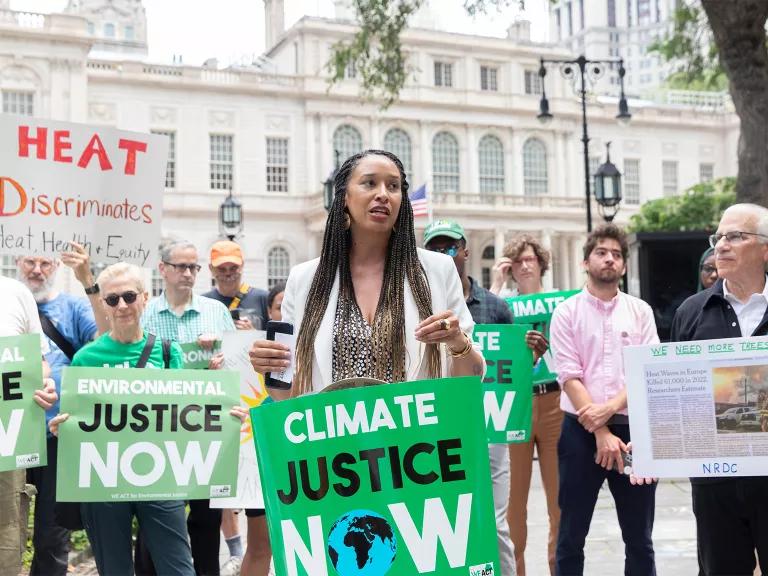
New York City councilmember Sandy Nurse at the Too Hot to Handle rally, hosted by WE ACT for Environmental Justice to call for legislative action to improve the city's ability to adapt to extreme heat and mitigate negative health impacts, July 13, 2023
John McCarten/NYC Council Media Unit
The legacy and future of environmental justice
In the roughly 40 years since the dump trucks first rolled into Afton, hundreds of environmental justice grassroots groups—like WE Act for Environmental Justice, the Gulf Coast Center for Law & Poverty, Asian Pacific Environmental Network, and the Southeast Environmental Task Force—have formed. They represent strong and enduring forces for environmental protection and social change in their communities. Their work has also continued to ensure that environmental justice is a central issue within environmentalism and progressive politics.
These groups have also pushed for environmental justice to become more embedded across federal policy. Their efforts paid off when the Biden administration passed the Justice40 Initiative, directing 40 percent of federal investments in climate and clean energy toward disadvantaged communities. The initiative made huge strides in a relatively short period of time, validating the needs of many grassroots groups and leveling the grants playing field to help them better access funding for critical work in their communities. These wins also motivate advocates like Matthew Tejada, NRDC’s senior vice president for environmental health, who has worked alongside environmental justice organizations, to keep up the fight.
Now, Tejada and others find themselves confronting a serious backlash to the progress the country has made on climate, equity, and justice as the Trump administration has gutted federal environmental justice investments. All 10 of the U.S. Environmental Protection Agency’s regional environmental justice offices have been shuttered. And the agency is increasingly giving polluters a free pass to continue business as usual, at the expense of public health. Frontline communities that share their neighborhoods with dirty industries will pay the steepest price for these harmful rollbacks.
But the federal government has not shed its obligation to intervene on behalf of areas rife with pollution. And there is so much work that remains. Wide-ranging research continues to show the ubiquitousness of environmental injustice in everything from America’s failing drinking water system to the impacts of climate change, like extreme heat vulnerability. Even in the face of those continued challenges, what remains clear is this: The work of the environmental justice movement has already reshaped how so many experience the environment; it has saved lives; and it represents the power of sustained collective action.
This story was originally published on August 22, 2023, and was updated with new information and links on August 14, 2025.
This NRDC.org story is available for online republication by news media outlets or nonprofits under these conditions: The writer(s) must be credited with a byline; you must note prominently that the story was originally published by NRDC.org and link to the original; the story cannot be edited (beyond simple things such as grammar); you can’t resell the story in any form or grant republishing rights to other outlets; you can’t republish our material wholesale or automatically—you need to select stories individually; you can’t republish the photos or graphics on our site without specific permission; you should drop us a note to let us know when you’ve used one of our stories.
Why Redistricting Could Lead to More Pollution, Sickness, and Death
Can the Environmental Justice Movement Survive Trump’s Attacks? This EJ Warrior Says Yes.
When Customers and Investors Demand Corporate Sustainability