Biomass Energy and Cellulosic Ethanol
Credit: Gretz, Warren - NREL Staff Photographer
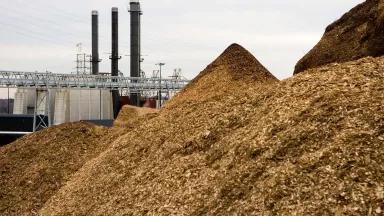
Biomass energy comes from plants -- things like wood waste, corn kernels, or non-food "energy" crops, which can be used to make liquid fuels, heat or electricity. Biomass accounts for roughly half of all the renewable energy produced in the United States, and we use more of it than any other country in the world.
Our challenge is to ensure that biomass energy is produced in ways that reduce global warming pollution, protect the environment, and do not impact the global food market. In other words, biomass energy should do the job better than the fossil fuel energy it replaces.
Setting standards for how we can maximize the benefits of biomass energy will help the industry continue to grow and develop profitably and sustainably. Simply turning existing waste from farms and forests into biomass energy could produce about 7,500 megawatts of power each year -- enough for every home in New England. And aggressive action to develop the best biofuels could allow America to produce the home-grown equivalent of all the oil we import from the Persian Gulf by 2050.
Most of the biomass we use commercially today comes from highly problematic unsustainable resources: wood, which is burned by the lumber, pulp and paper industries for heat and fuel, and ethanol, which is made from fermenting crops like corn and sugarcane and blended with gasoline fuel for automobiles.
How Biomass Energy Works
Properly harnessed, U.S. crop waste could produce about 7,500 megawatts of power annually -- enough for every home in New England
Today's biomass energy comes from annual row crops, such as corn and soybeans, and organic leftovers from farming and forestry, such as rice husks, wood waste, and pressed sugar cane. Researchers are also developing ways to produce energy from special, fast-growing "energy crops" such as willow and switchgrass. All this plant material can be treated in different ways to produce energy and fuel. Biomass can be:
- Burned in power plants to produce heat or electricity, with fewer harmful emissions than coal.
- Fermented to produce fuels, like ethanol, for cars and trucks.
- Digested by bacteria to create methane gas for powering turbines.
- Heated under special conditions, or "gasified," to break down into a mix of gases that can be burned for electricity or used to make a range of products, from diesel to gasoline to chemicals.
Where Biomass Power Is Used
Biomass power plants across the country burn wood and agricultural waste to generate electricity for industries and residents, and more than 100 plants in 31 states burn methane gas collected from landfills. Together these facilities contribute 7,000 megawatts to the national power grid. In the Southeast and Pacific Northwest, the lumber, pulp and paper industries generate 60 percent of the energy they need to run their factories by burning wood residues.
A small but growing number of conventional power plants substitute biomass for a percentage of the coal they normally burn -- a process known as cofiring, which reduces emissions of sulfur dioxide and carbon dioxide. When one medium-sized power plant adds sustainably sourced biomass to its mix, the reduction in its global warming emissions is equivalent to taking 17,000 cars off the road.[1] The process works best when the coal plant is physically close to the source of biomass.
How Much Biomass Power Costs
Power plants that burn biomass directly can generate electricity at a cost of 7 to 9 cents per kilowatt-hour
The cost of energy produced from biomass depends on the type of biomass being utilized, the type of energy being produced (heat, electricity or fuel), the technology used and the size of the plant. Power plants that burn biomass directly can generate electricity at a cost of 7 to 9 cents per kilowatt-hour. Federal incentives for biomass power generation include a seven-year Modified Accelerated Cost Recovery System (MACRS) that allows for accelerated depreciation on a plant owner's assets, reducing long-term federal tax liabilities as a result.
Advantages of Biomass Energy
- Farmers and foresters already produce a great deal of residue. While much of it is needed to protect habitat, soil and nutrient cycles, tens of millions of tons could be safely collected, and even more could be collected in the future with the right management practices. Every year in the United States, roughly 39 million tons of crop residues go unused.[2] Properly harnessed, this waste could produce about 7,500 megawatts of power -- enough for every home in New England.
- Unlike coal, biomass produces no harmful sulfur or mercury emissions and has significantly less nitrogen -- which means less acid rain, smog and other toxic air pollutants.
- Over time, if the deliberate growth of biomass is sustainably managed, biomass conversion to energy can result in low or no net carbon dioxide emissions, provided that the carbon dioxide released is rapidly absorbed right back from the atmosphere by growing more biomass.
- Using biofuels in our cars can potentially produce less global warming pollution than gasoline, and allows us to invest our energy dollars at home rather than in foreign oil.
- Switchgrass, a promising source of biofuel if planted in such a way that it does not replace native habitat, is a native, perennial prairie grass that is easier to grow responsibly than most row crops. It can help reduce erosion and nitrogen runoff, and it increases soil carbon faster when mowed than when standing.
- Many ethanol production plants are owned by farmer-cooperatives, which help preserve the economic vitality of rural communities.
What's Around the Corner for Biomass Energy
Aggressive action to develop the best biofuels could allow America to produce the home-grown equivalent of all the oil we import from the Persian Gulf by 2050
- Aggressive action to develop advanced biofuels by 2015 could allow America to produce the equivalent of the same amount of oil by 2050 that we currently import from the Persian Gulf. If at the same time we make our vehicles more efficient and make plug-in hybrids widely available, biofuels could help virtually eliminate our demand for gasoline.
- Flexible-fuel vehicle requirements are being considered at the national level that will prompt manufacturers to equip all new cars and trucks for both gasoline and biofuels within about a decade.
- Improved high-tech "gasification" systems could bring down the cost of biomass energy to 5 cents per kilowatt-hour.
- Farmers will find innovative ways to produce more food and more biomass utilizing sustainable management practices that increase yields, generate useful by-products and improve degraded and marginal soils, while simultaneously protecting critical ecosystems. Researchers are testing the ability of fast-growing, cost-efficient trees such as poplar and eucalyptus, and grasses such as switchgrass and alfalfa, to be harvested as biofuels.
- More power plants will soon burn biomass along with coal to reduce their polluting emissions. Facilities can recover the cost of adopting the new technology within a few years.
Renewable Energy Meets Wildland and Wildlife Conservation
Certain sensitive lands -- such as parks, monuments and wildlife conservation areas -- and ecologically sensitive marine areas are not appropriate for energy development. In some of these places, energy development is prohibited or limited by law or policy, and in others it would be highly controversial. NRDC does not endorse locating energy facilities or transmission lines in such areas. Siting decisions must always be made extremely carefully, with impacts mitigated and operations conducted in an environmentally responsible manner.
For more information on the intersection between clean energy development and wildland and wildlife conservation in the American West, including locations of parks, wildlife refuges and other conservation areas, see this Google Earth-based feature.
Notes:
- [1] Calculation assumptions and factors are available at US EPA online: http://epa.gov/cleanenergy/energy-resources/calculator.html
- [2] DOE (2005) http://feedstockreview.ornl.gov/pdf/billion_ton_vision.pdf