
Renewable Energy: The Clean Facts
Wind and solar are powering a clean energy revolution. Here’s what you need to know about renewables and how you can help make an impact at home.
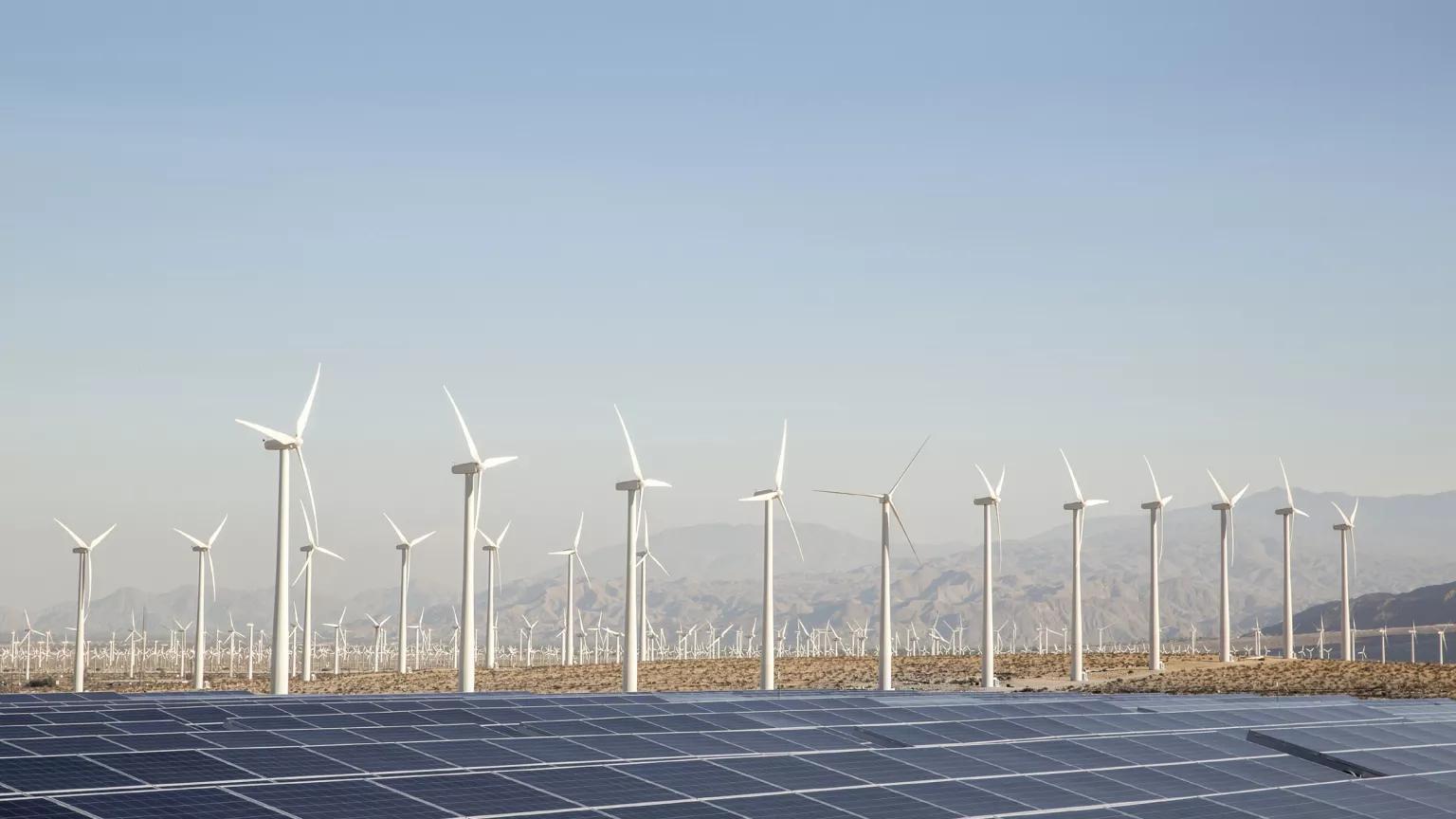
Wind turbines and a large solar panel in Palm Springs, California
Vanja Terzic/iStock
Renewable power is booming, as innovation brings down costs and starts to deliver on the promise of a clean energy future. American solar and wind generation are breaking records and being integrated into the national electricity grid without compromising reliability.
This means that renewables are increasingly displacing “dirty” fossil fuels in the power sector, offering the benefit of lower emissions of carbon and other types of pollution. But not all sources of energy marketed as “renewable” are beneficial to the environment. Biomass and large hydroelectric dams create difficult trade-offs when considering the impact on wildlife, climate change, and other issues. Here’s what you should know about the different types of renewable energy sources—and how you can use these emerging technologies in your own home.
What is renewable energy?
Renewable energy, often referred to as clean energy, comes from natural sources or processes that are constantly replenished. For example, sunlight and wind keep shining and blowing, even if their availability depends on time and weather.
While renewable energy is often thought of as a new technology, harnessing nature’s power has long been used for heating, transportation, lighting, and more. Wind has powered boats to sail the seas and windmills to grind grain. The sun has provided warmth during the day and helped kindle fires to last into the evening. But over the past 500 years or so, humans increasingly turned to cheaper, dirtier energy sources, such as coal and fracked gas.
Now that we have innovative and less-expensive ways to capture and retain wind and solar energy, renewables are becoming a more important power source, accounting for more than 12 percent of U.S. energy generation. The expansion in renewables is also happening at scales large and small, from giant offshore wind farms to rooftop solar panels on homes, which can sell power back to the grid. Even entire rural communities (in Alaska, Kansas, and Missouri) are relying on renewable energy for heating and lighting.
As renewable use continues to grow, a key goal will be to modernize America’s electricity grid, making it smarter, more secure, and better integrated across regions.
Dirty energy
Nonrenewable, or “dirty,” energy includes fossil fuels such as oil, gas, and coal. Nonrenewable sources of energy are only available in limited amounts. When we pump gas at the station, we’re using a finite resource refined from crude oil that’s been around since prehistoric times.
Nonrenewable energy sources are also typically found in specific parts of the world, making them more plentiful in some nations than others. By contrast, every country has access to sunshine and wind. Prioritizing renewable energy can also improve national security by reducing a country’s reliance on exports from fossil fuel–rich nations.
Many nonrenewable energy sources can endanger the environment or human health. For example, oil drilling might require strip-mining Canada’s boreal forest; the technology associated with fracking can cause earthquakes and water pollution; and coal power plants foul the air. To top it off, all of these activities contribute to global warming.
Types of renewable energy sources
Solar energy
Humans have been harnessing solar energy for thousands of years—to grow crops, stay warm, and dry foods. According to the National Renewable Energy Laboratory, “more energy from the sun falls on the earth in one hour than is used by everyone in the world in one year.” Today, we use the sun’s rays in many ways—to heat homes and businesses, to warm water, and to power devices.
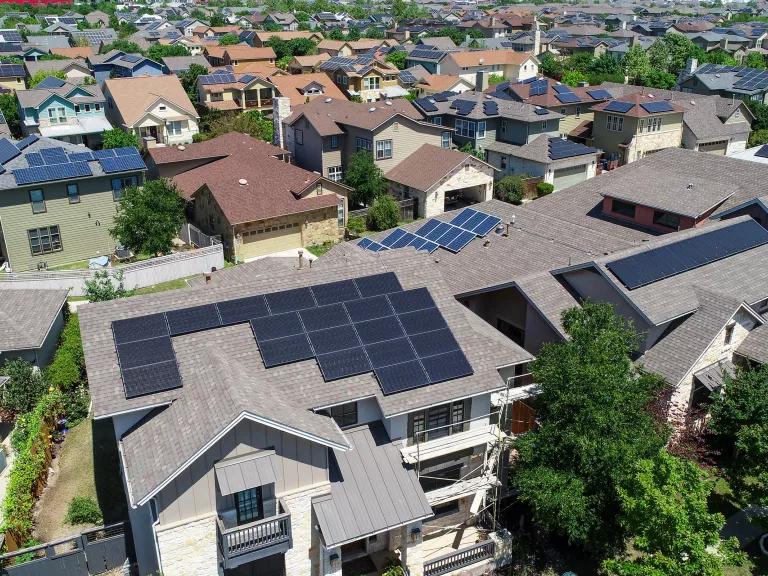
Solar panels on the rooftops of East Austin, Texas
Roschetzky/IstockPhoto
Solar, or photovoltaic (PV), cells are made from silicon or other materials that transform sunlight directly into electricity. Distributed solar systems generate electricity locally for homes and businesses, either through rooftop panels or community projects that power entire neighborhoods. Solar farms can generate enough power for thousands of homes, using mirrors to concentrate sunlight across acres of solar cells. Floating solar farms—or “floatovoltaics”—can be an effective use of wastewater facilities and bodies of water that aren’t ecologically sensitive.
Solar supplies nearly 3 percent of U.S. electricity generation (some sources estimate it will reach nearly 4 percent in 2022). But 46 percent of all new generating capacity came from solar in 2021.
Solar energy systems don’t produce air pollutants or greenhouse gases, and as long as they are responsibly sited, most solar panels have few environmental impacts beyond the manufacturing process.
Wind energy
We’ve come a long way from old-fashioned windmills. Today, turbines as tall as skyscrapers—with turbines nearly as wide in diameter—stand at attention around the world. Wind energy turns a turbine’s blades, which feeds an electric generator and produces electricity.
Wind, which accounts for 9.2 percent of U.S. electricity generation, has become one of the cheapest energy sources in the country. Top wind power states include California, Iowa, Kansas, Oklahoma, and Texas, though turbines can be placed anywhere with high wind speeds—such as hilltops and open plains—or even offshore in open water.
Other alternative energy sources
Hydroelectric power
Hydropower is the largest renewable energy source for electricity in the United States, though wind energy is soon expected to take over the lead. Hydropower relies on water—typically fast-moving water in a large river or rapidly descending water from a high point—and converts the force of that water into electricity by spinning a generator’s turbine blades.
Nationally and internationally, large hydroelectric plants—or mega-dams—are often considered to be nonrenewable energy. Mega-dams divert and reduce natural flows, restricting access for animal and human populations that rely on those rivers. Small hydroelectric plants (an installed capacity below about 40 megawatts), carefully managed, do not tend to cause as much environmental damage, as they divert only a fraction of the flow.
Biomass energy
Biomass is organic material that comes from plants and animals, and includes crops, waste wood, and trees. When biomass is burned, the chemical energy is released as heat and can generate electricity with a steam turbine.
Biomass is often mistakenly described as a clean, renewable fuel and a greener alternative to coal and other fossil fuels for producing electricity. However, recent science shows that many forms of biomass—especially from forests—produce higher carbon emissions than fossil fuels. There are also negative consequences for biodiversity. Still, some forms of biomass energy could serve as a low-carbon option under the right circumstances. For example, sawdust and chips from sawmills that would otherwise quickly decompose and release carbon can be a low-carbon energy source.
Geothermal energy
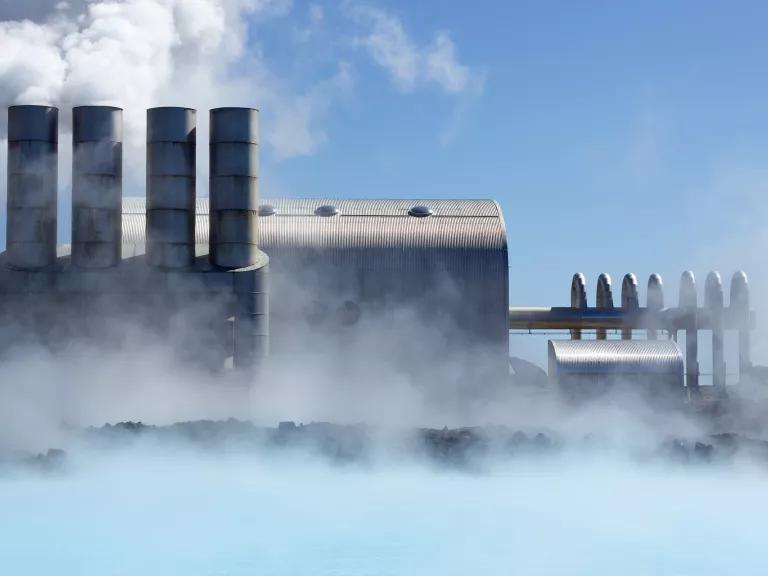
The Svartsengi geothermal power plant near Grindavík, Iceland
Daniel Snaer Ragnarsson/iStock
If you’ve ever relaxed in a hot spring, you’ve used geothermal energy. The earth’s core is about as hot as the sun’s surface, due to the slow decay of radioactive particles in rocks at the center of the planet. Drilling deep wells brings very hot underground water to the surface as a hydrothermal resource, which is then pumped through a turbine to create electricity. Geothermal plants typically have low emissions if they pump the steam and water they use back into the reservoir. There are ways to create geothermal plants where there are not underground reservoirs, but there are concerns that they may increase the risk of an earthquake in areas already considered geological hot spots.
Ocean
Tidal and wave energy are still in the developmental phase, but the ocean will always be ruled by the moon’s gravity, which makes harnessing its power an attractive option. Some tidal energy approaches may harm wildlife, such as tidal barrages, which work much like dams and are located in an ocean bay or lagoon. Like tidal power, wave power relies on dam-like structures or ocean floor–anchored devices on or just below the water’s surface.
Renewable energy in the home
Solar power
At a smaller scale, we can harness the sun’s rays to power the whole house—whether through PV cell panels or passive solar home design. Passive solar homes are designed to welcome in the sun through south-facing windows and then retain the warmth through concrete, bricks, tiles, and other materials that store heat.
Some solar-powered homes generate more than enough electricity, allowing the homeowner to sell excess power back to the grid. Batteries are also an economically attractive way to store excess solar energy so that it can be used at night. Scientists are hard at work on new advances that blend form and function, such as solar windows and roof shingles.
Geothermal heat pumps
Geothermal technology is a new take on a recognizable process—the coils at the back of your fridge are a mini heat pump, removing heat from the interior to keep foods fresh and cool. In a home, geothermal or geoexchange pumps use the constant temperature of the earth (a few feet below the surface) to cool homes in summer and warm houses in winter—and even to heat water.
Geothermal systems can be initially expensive to install but typically pay off within 5 to 10 years. They are also quieter, have fewer maintenance issues, and last longer than traditional air conditioners.
Small wind systems
A backyard wind farm? Boats, ranchers, and even cell phone companies use small wind turbines regularly. Dealers now help site, install, and maintain wind turbines for homeowners, too—although some DIY enthusiasts are installing turbines themselves. Depending on your electricity needs, wind speeds, and zoning rules in your area, a wind turbine may reduce your reliance on the electrical grid.
Selling the energy you collect
Wind- and solar-powered homes can either stand alone or get connected to the larger electrical grid, as supplied by their power provider. Electric utilities in most states allow homeowners to only pay the difference between the grid-supplied electricity consumed and what they have produced—a process called net metering. If you make more electricity than you use, your provider may pay you the retail price for that power.
Renewable energy and you
Advocating for renewables, or using them in your home, can accelerate the transition toward a clean energy future. Even if you’re not yet able to install solar panels, you may be able to opt for electricity from a clean energy source. (Contact your power company to ask if it offers that choice.) If renewable energy isn’t available through your utility, you can purchase renewable energy certificates to offset your use.
This story was originally published on June 15, 2018, and has been updated with new information and links.
This NRDC.org story is available for online republication by news media outlets or nonprofits under these conditions: The writer(s) must be credited with a byline; you must note prominently that the story was originally published by NRDC.org and link to the original; the story cannot be edited (beyond simple things such as grammar); you can’t resell the story in any form or grant republishing rights to other outlets; you can’t republish our material wholesale or automatically—you need to select stories individually; you can’t republish the photos or graphics on our site without specific permission; you should drop us a note to let us know when you’ve used one of our stories.
Families will be forced to pay billions to keep outdated coal and gas plants running.
The Trump administration is halting offshore wind projects, threatening clean energy jobs and raising utility bills. Congress must step in now to defend offshore wind.

Tell Congress to protect offshore wind—and our economy!
Instead of delivering affordable, reliable clean energy, the Trump administration is forcing families to pay billions to keep outdated coal and gas plants running—threatening clean energy jobs and raising utility bills. Congress must step in now to defend offshore wind.
Decarbonization: Why We Must Electrify Everything Even Before the Grid Is Fully Green
Offshore Wind Can Power the Future (If We Just Let It)
The AI Boom Is Stressing the Grid—but It Doesn’t Have to Be This Way