
Solar Power 101
How renewable energy from the sun can mean a brighter future for people and the planet.
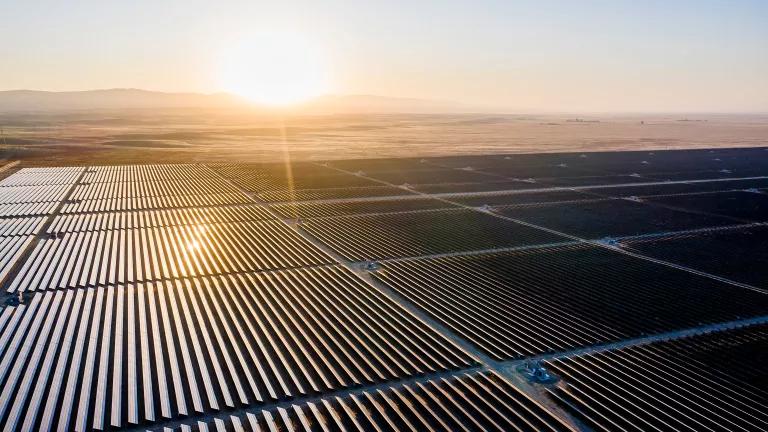
Solar farms, like this one located in the Carrizo Plain in California, use the sun's rays to generate clean, renewable energy.
Markus Altmann/Getty Images

Did you know that people have harnessed the power of the sun at least as far back as 700 BCE, when glass lenses were used to magnify sunlight and create fire? It’s easy to imagine how the sun’s energy—the way it provides warmth and light—has always inspired the human mind.
Today, we know that the sun’s rays can actually provide endless clean electricity, and great progress has been made to make that renewable energy as affordable as possible. In fact, solar power is one of the nation’s fastest-growing energy sectors, with more than half of all new generating capacity coming from solar in 2023.
But how can sunshine recharge your smartphone, refuel your electric car, warm your bath, and keep your appliances humming? Read on to learn more.
What is solar energy?
Solar energy refers to the electrical or thermal energy that is created from solar radiation—the power of the sun. Solar energy is also called solar power, or even just solar, for short.
The sun emits an enormous amount of radiation onto Earth: around 44 quadrillion watts of power a year. However, the amount of solar energy that can be generated depends not only on the technology and equipment used but factors like geography, season, time of day, and even the shade of local trees and buildings.
Because the energy source—the sun—is not depleted over time (or at least in a timeline that concerns us mortal humans), it is considered renewable energy.
One important note: Throughout this guide, we’ll reference solar power at two scales, which have different qualities and costs:
- Residential, or rooftop, solar: small systems installed on top of or near homes or businesses. These energy sources are relatively easy to install, often taking advantage of existing infrastructure like rooftops. Because of the way these smaller, scattered systems plug into the grid, they’re considered “distributed” energy resources.
- Utility-scale, or commercial, solar: larger systems that operate like a typical power plant, providing energy to entire neighborhoods. These systems require more space and infrastructure than residential solar and are typically owned by utilities (aka power companies), which sell the energy to their customers on the local grid. Terms like solar farms and solar plants refer to these utility-scale solar power plants. While distributed solar may be cheaper to set up because they are smaller, utility-scale solar systems cost less per kilowatt-hour (kWh) because of economies of scale.
Types of solar power
There are two main types of solar energy: photovoltaic power and thermal power. Both utilize sunlight as a fuel but they harness it in different ways.
Photovoltaic power
Photovoltaic (PV) energy, which converts sunlight directly into electricity, is what most people think of when we talk about solar power. PV panels are the large black or blue modules you see in places like residential rooftops and parking lots, or clustered together in utility-scale solar farms. Each PV panel is made up of individual PV cells, and several connected panels form a solar array.
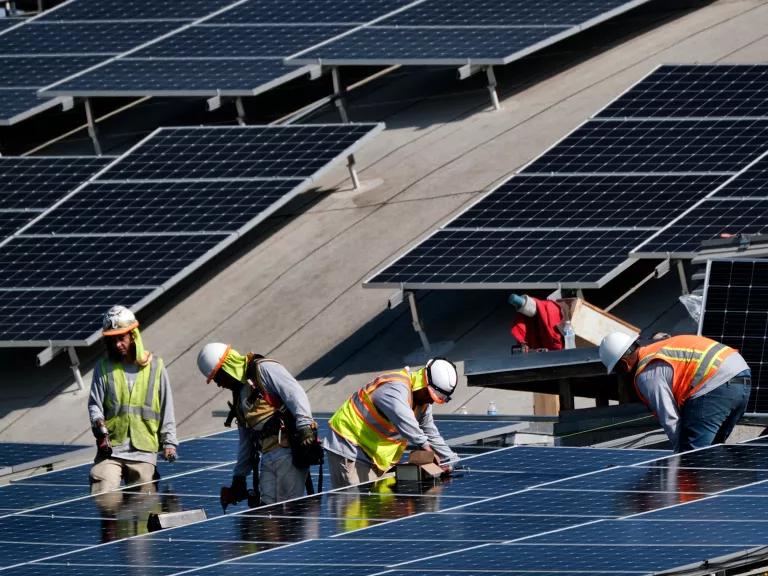
Solar installers set up panels at the Van Nuys Airport in Los Angeles, taking advantage of the vast rooftop space.
Richard Vogel/AP Photo
But how does sunlight become electricity, exactly? PV cells contain semiconductor material: silicon, most commonly. When sunlight—which is made up of tiny bits of energy called photons—hits the PV cell, the material absorbs the photons, which dislodge electrons. This movement of electrons creates an electrical current.
Metal connectors on the side of each PV cell then transfer the electricity to wires and to an inverter, which feeds this current into our electrical grid.
It takes about 20 solar panels to satisfy the 11,000 kWh of power consumed by a typical U.S. household every year.
Thermal power
There’s nothing quite like the feeling of warm sunlight on a cool, crisp day. Amazingly, we can harness this heat, or thermal energy, for many things. Thermal energy can be used to warm the water for your shower or, more passively, maintain a comfortable temperature inside your home. We can even use it to generate electricity at a massive scale.
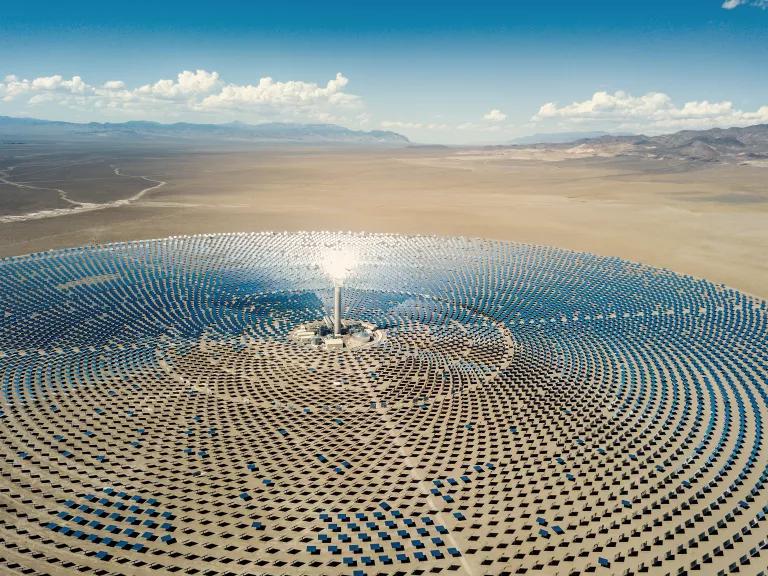
When it opened in 2014, the Ivanpah Solar Electric Generating System in California was the world’s largest concentrated solar-thermal plant.
Mlenny/Getty Images
Concentrated solar-thermal power
Just as humans first focused sunlight with glass lenses more than 2,700 years ago, concentrated solar-thermal power (CSP) creates electricity using the same basic mechanism. CSP utilizes mirrors to point sunlight into a receiver to heat up a fluid and generate steam. That steam spins the turbines that then create electricity.
CPS systems are utility-scale solar plants that are typically built on large swaths of land and can power tens of thousands of homes and businesses.
One of the advantages of a CPS system is that the fluid can retain the heat for a long time, which is especially handy on cloudy days when CPS systems aren’t able to harness as much sunlight. However, the technology is still in limited use and the industry is not expected to grow as much as utility-scale PV solar.
Gas- and coal-powered plants also use steam to spin turbines but with CSP, there’s no nasty pollution or waste—or climate-warming emissions—like there are from burning fossil fuels.
Passive solar design
Most of us have seen at least one example of passive solar heating: a greenhouse, which is designed to take maximum advantage of sunlight.
A passive solar system isn’t so much about equipment as it is about strategy. This method of controlling indoor temperatures doesn’t even require electricity—just the right building materials and conditions to take advantage of the sun’s warmth.
Whether it’s primarily for heating or cooling, there are a few key requirements for a passive solar system in a building:
- Aperture: large windows that face within 30 degrees of true south, with no shade between 9 a.m. and 3 p.m. (In North America, this is where the sun sits the highest during the day.)
- Thermal mass: materials like concrete, brick, or stone that can hold onto heat
- Distribution: Thermal energy is distributed around the building via: conduction, like when you touch the thermal mass; convection, moving thermal energy through the air, as through vents and fans; or radiation, moving through electromagnetic waves.
- Controls: things like thermostats, awnings, or blinds that can help prevent overheating or under-heating the building throughout all kinds of weather
Solar water heaters
The sun’s thermal power can also be used to heat tap water in a home or business. Similar to the PV systems, solar water heaters utilize collector panels to absorb solar radiation. Water will heat up as it’s circulated through the panels and sent to a storage tank. These panels are typically installed on rooftops to capture the most direct sunlight, and some systems include pumps and valves to move the water through the system.
For a typical U.S. home, heating water accounts for a good chunk of its total energy use: about 20 percent. The cost of a solar water heater varies, based on factors such as the size of the storage tank, how many collector panels are needed, and installation fees. And while it can be pricier up-front compared with a conventional water heater, a solar water heater can cut your water heating bills by 50 to 80 percent. That’s because sunlight is free!
(If you’re not in such a sunny location, heat pump water heaters are another efficient and eco-friendly option.)
Advantages of solar energy
Solar power—along with wind energy and other renewable technologies—is lighting the path toward a future without fossil fuels.
Clean and renewable energy source
Unlike power plants that rely on fossil fuels, solar energy does not produce greenhouse gases or air and water pollution. That’s because nothing is burned. And the more we develop and install solar power, the less we will have to depend on dirty sources of electricity.
Building up more solar energy at residential and utility scales also makes our electrical grid more reliable, especially under the stress of extreme weather—like the heat waves that can send our energy consumption soaring to the point of blackouts. Solar energy is a major climate solution, helping us not only adapt to climate change but to mitigate it.
Job creation and economic growth
Clean energy jobs are on the rise across the United States, especially as private and public investments are plugged in. Solar leads as a top employer within renewable energy, with more than 346,000 people employed in the U.S. solar sector in 2022. And these jobs aren’t limited to installing solar panels on rooftops but spread out across construction, manufacturing, software, and science.


The booming clean energy industry is making way for new jobs, including solar installation and manufacturing.
Sandy Huffaker/Bloomberg via Getty Images
; 2)Megan Jelinger/Reuters
Cost savings
With the increased efficiency of solar technology comes decreased costs. And these aren’t small savings, either. The National Renewable Energy Laboratory found an 85 percent cost reduction in PV modules between 2010 and 2021, whether residential or utility scale. In fact, electricity from utility-scale solar is now almost always less expensive than electricity from gas or coal.
And if we compare clean solar with the polluting fossil fuel technologies that have dominated the energy landscape for the past century, the savings for public health care are astronomical.
Challenges with solar energy
Although solar technology isn’t new, the sector is still evolving to become more efficient, affordable, and accessible. Here are some of the challenges the sector is working to address.
Weather and location dependency
Naturally, solar power depends on how much sunlight can be reached. For instance, PV panels do not generate as much energy on a cloudy day, or if they’re blocked by a tree during daylight hours—and they stop generating electricity altogether at night.
This is where battery storage comes in. Whether at the residential or utility scale, batteries can store the energy generated during sunny periods so that it can be accessed when the sun isn’t shining or energy use is extra high.
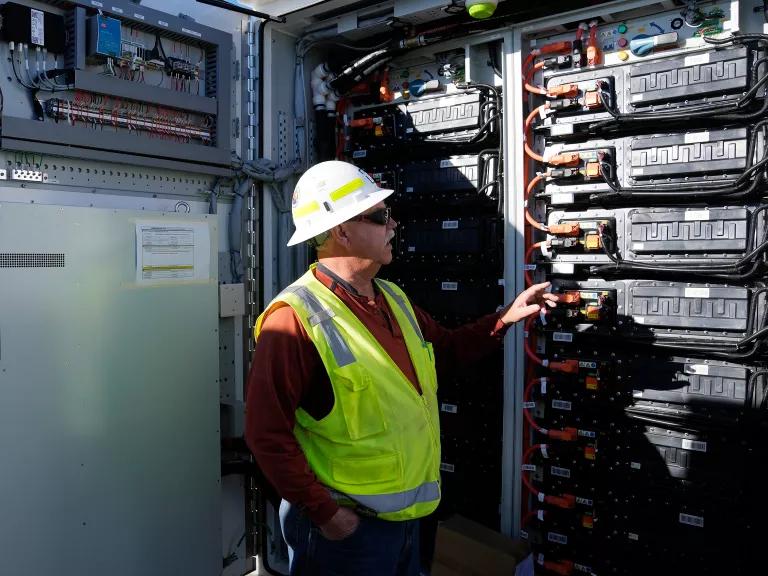
Energy storage, like at Orsted’s Eleven Mile Solar lithium-ion battery storage facility in Coolidge, Arizona, helps maintain a steady supply of electricity when the sun isn’t shining.
Ross D. Franklin/AP Photo
The future looks even brighter as the United States modernizes its grid infrastructure, including increasing capacity, plugging in more distributed energy sources (including small solar systems), and building new transmission lines. And solar energy isn’t the only renewable energy source on the market: Wind energy is also rapidly expanding across the country.
High initial cost
While the cost of installing a residential solar system has dropped, a typical home system requires an average initial investment of about $25,000. The good news is that if the solar system can cover all of your electricity needs, you can save that amount or even thousands more over the 35-year lifetime of the system. And clean energy tax credits are making it that much easier to recoup your initial investment.
Community solar projects, through which customers join together to collectively purchase and use locally produced solar energy, are also a great option for businesses and homes (benefiting owners and renters alike). Typically, participants can pay a monthly subscription to access solar energy or purchase a portion of the panels. Both subscribers and owners will also receive credit from the utility to cover any excess energy that their share of solar panels produce to reduce their electricity bills. Community solar is also a good solution if your rooftop isn’t suitable for solar panels, like if your property is shaded or your roof is aging.
Solar owners can potentially pay little or nothing for electricity if they generate more energy than they use. Depending on the specific city and state policies, some utility companies (as in California) offer net metering programs that exchange access to residents’ and businesses’ excess electricity for credits toward their bills.
Environmental concerns
Since utility-scale solar farms and plants do not generate any carbon emissions while operating, solar energy is an asset in the fight against climate change. In fact, moving from fossil fuels to clean energy means reduced air and water pollution, as well as water consumption.
However, the siting, production, and end-of-life phases of solar equipment, like in any other power sector, involve resources and waste that can potentially have negative impacts.
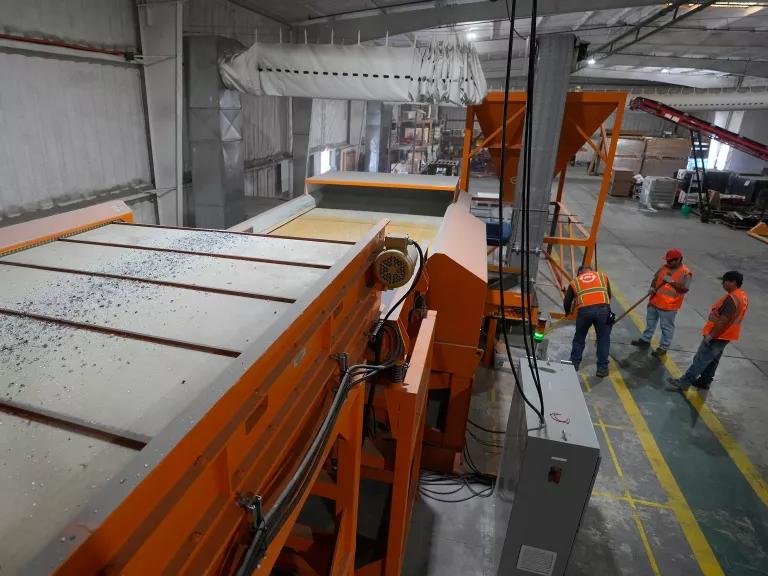
A sorting machine breaks down solar panels at North America’s first utility-scale solar panel recycling plant, We Recycle Solar, in Yuma, Arizona.
Gregory Bull/AP Photo
Thankfully, end-of-life impacts from solar are low, as the materials in modern panels pose no threat of leaching. Nevertheless, recycling panels is better but currently very limited. NRDC, the electric utility industry, and the solar industry have jointly called for more investment and public support for building the infrastructure needed to support more recycling.
The growing industry is taking steps to address other issues head-on. For example, utility-size solar plants require a lot of space. One way to address this is with agrivoltaics, which combines solar and farming on the same land. The U.S. Department of Energy (DOE) has designated millions of dollars to researching how this promising field can grow. The land usage challenge can also be addressed by siting solar farms on degraded land, such as brownfields or retired landfills.
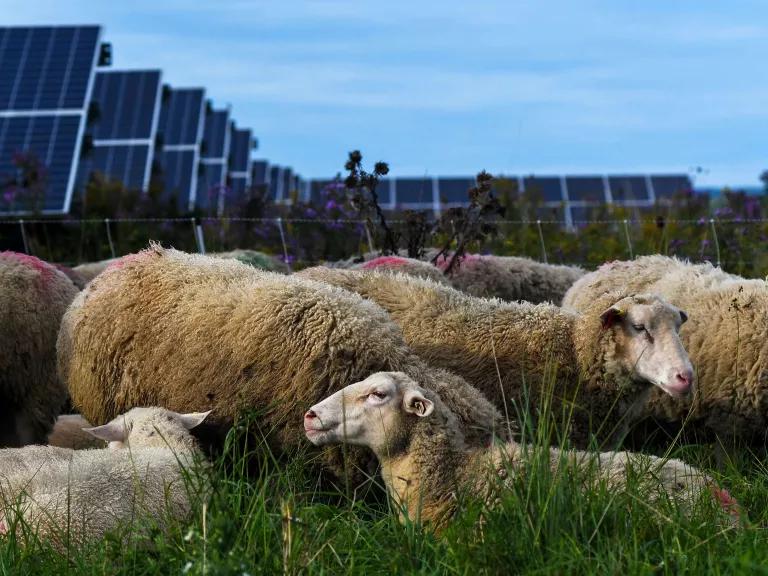
Sheep graze and rest among solar panels at Cornell University in Ithaca, New York.
Heather Ainsworth/AP Photo
Part of the responsibilities of the DOE’s Solar Energy Technologies Office is researching best practices for developing solar energy with minimal impacts on the environment. This includes how PV cells and other solar components might be built to last longer and then recycled at the end of their lifespan.
NRDC and other organizations are advocating for a circular economy approach, in which we invest the resources and build out infrastructure so that solar panel components are reused as much as possible, or otherwise safely recycled.
Trade and labor concerns
As we push for a faster transition to renewable energy, it’s important that we avoid the harms that have become the trademarks of the fossil fuel industry. That means fostering an environment where workers are treated as valued stakeholders—investing in the skills and well-being of workers so they can provide positive contributions to local economies and workforce diversity.
Investing in domestic manufacturing is another way in which we can address concerns around labor exploitation in the global solar industry. The 2022 Inflation Reduction Act, which includes the Advanced Manufacturing Production tax credit, does just that by spurring the creation of stable, family-supporting jobs as well as helping the U.S. solar industry compete on the international stage. Moreover, partnership with labor unions can help to reduce burdens on developers, contractors, and customers to meet the requirements of the Inflation Reduction Act and other regulatory hurdles, so we can get solar to market much more efficiently.
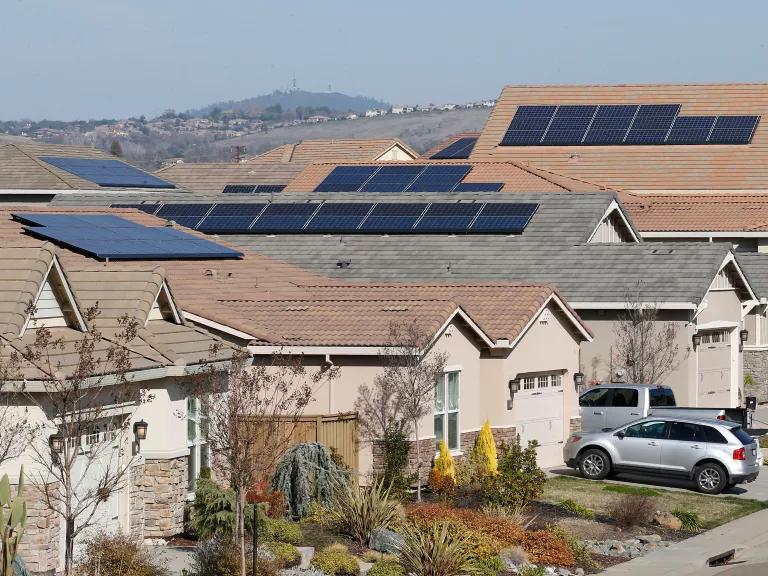
With greater incentives and access, more residents can benefit from rooftop solar, like these homes in Folsom, California.
Rich Pedroncelli/AP Photo
The future of solar energy
As mentioned above, the Inflation Reduction Act has helped to energize the clean power industry, with $369 billion in investments to help fight climate change. That includes billions to spur solar development, like the clean energy Investment Tax Credit, which provides a 30 percent credit for qualifying solar investments, as well as the extended Residential Clean Energy Credit, which can cover 30 percent of costs for solar installation, among others.
While solar power accounts for just 4 percent of electricity generated in the United States right now, it’s an integral part of a broader, booming renewable energy market.
Unfortunately, fossil fuels are still the primary energy source in the world, by far, and we’ve got a long way to go in achieving net zero emissions by 2050, as scientists are telling us we must do to avoid the worst impacts of climate change.
The good news is, according to NRDC’s modeling, the recent tax credits could boost generation from utility-scale wind and solar to account for around one-third of the country’s electricity portfolio by 2030—and up to 46 percent by 2035. And unprecedented investments, like Solar for All, are expanding access to residential solar and creating solar programs where none previously existed. So don’t count us down-and-out. A future where it’s lights out for fossil fuels remains in reach.
This NRDC.org story is available for online republication by news media outlets or nonprofits under these conditions: The writer(s) must be credited with a byline; you must note prominently that the story was originally published by NRDC.org and link to the original; the story cannot be edited (beyond simple things such as grammar); you can’t resell the story in any form or grant republishing rights to other outlets; you can’t republish our material wholesale or automatically—you need to select stories individually; you can’t republish the photos or graphics on our site without specific permission; you should drop us a note to let us know when you’ve used one of our stories.
Decarbonization: Why We Must Electrify Everything Even Before the Grid Is Fully Green
Offshore Wind Can Power the Future (If We Just Let It)
The AI Boom Is Stressing the Grid—but It Doesn’t Have to Be This Way