Bryan Anselm for NRDC
Overview
NRDC stands in solidarity with U.S. communities on the frontlines of the fight for safe drinking water—often BIPOC (Black, Indigenous, and people of color) and low-income, who face compounding environmental injustices. In 2015, we signed onto the Jemez Principles for Democratic Organizing, which advances a vision of how ideals like social, economic, and environmental justice should be achieved. At their heart are inclusive decision-making, bottom-up organizing and elevating of the voices of those who are directly impacted. We strive to use these principles to guide our efforts to protect clean drinking water, ensure that water and sanitation are affordable, and center equity in all solutions.


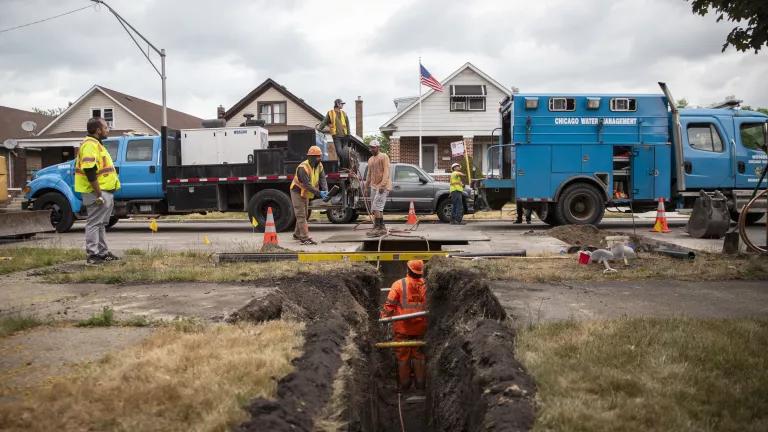
From left: A worker digs to check for lead service lines in Flint, Michigan, where elevated levels of lead contaminated the city's drinking water and resulted in major health issues for residents—particularly children—for years; as in Flint, residents of Benton Harbor, Michigan, saw severe lead contamination in their water.
Brittany Greeson for NRDC
; 2)Taylor Emrey Glascock for NRDC
Solutions
Drinking water emergencies like those in Flint and Benton Harbor, Michigan, and Newark, New Jersey, underscore the need to raise awareness of the scale of this problem, and invest in solutions now. Here are our current priorities:
Raise awareness of who is impacted by unsafe water and promote scalable solutions
NRDC, working alongside environmental justice partner groups, has revealed that when it comes to safe drinking water in America, race matters. Communities where people of color make up higher percentages of the population are more likely to have drinking water systems in violation of the law, and to experience an inadequate response to the violations. The power of community voices calling attention to their drinking water problems cannot be denied. Our scientific research in partnership with community-level advocates is advancing a data-driven picture about who is impacted by this crisis, while humanizing the issue and building momentum to propel policy action at both the state and federal levels. NRDC and our partners believe now is the time to address the decades of divestment in drinking water infrastructure that is jeopardizing public health. Our key strategy is to reform state policy through frontline partnerships in Illinois and Michigan—in the process, demonstrating the feasibility and scalability of drinking water solutions. While these two midwestern states have unique histories and challenges, we believe that the lessons learned will be transferable to many other states and impacted communities.
Create gold standard policy models
NRDC uses its technical, legal, and policy expertise while working closely with local partners, who provide their knowledge of local politics and on-the-ground realities, to jointly highlight problems, document health threats, and pressure officials to address the issues. In the wake of the Flint water crisis, we worked with impacted community groups on the frontlines of these fights, environmental groups, and other allies to use targeted media strategies, political pressure, public disclosures of water testing, and NRDC-filed litigation on behalf of local citizens to help Michigan become the national leader on lead in drinking water policies. We made significant progress in Michigan by securing the strongest protections against lead in drinking water in the country, and we’re working to achieve a gold standard that can be adopted in other states. We are also working in partnership with more than two dozen groups to build other replicable models for change so that millions of Americans can have a fair shot at a healthy life.
Get lead pipes out of the ground
NRDC has been fighting to get lead out of our water for decades, including successfully challenging the Lead and Copper Rule from 1991 and from the Trump era, and filing litigation seeking cleanup of lead in tap water in Flint, Benton Harbor, and Newark. To fully tackle the issue, we are urging policymakers to ensure the removal of every lead service line within the decade—prioritizing action in disadvantaged communities—and to set a strict at-the-tap standard for safe water. We’re also working with local partners to ensure that federal funds for lead pipe removal via the Infrastructure Investment and Jobs Act are directed to frontline communities.
Did You Know?
Between 1900 and 1950, a majority of the largest cities in the United States installed lead water pipes—with some cities even mandating them because of their durability. And because lead pipes can last 75 to 100 years, the legacy of lead pipes lives on today. Chicago, for example, mandated the use of lead pipes to deliver drinking water until 1986, long after many other cities stopped using this practice.
Clean up PFAS from our water supply
All 50 states have water systems contaminated with these health-harming “forever chemicals.” They seep into our groundwater from landfills and are dumped by industries directly into waterways. We’ve seen some key victories in this battle, including the U.S. Environmental Protection Agency’s (EPA) release of the PFAS Strategic Roadmap, which sets out to increase research into health impacts and puts more pressure on PFAS manufacturers to limit pollution. We’re now advocating for federal action on this full class of more than 12,000 toxic chemicals (versus just one chemical at a time) to clean them up, phase them out, and ban them for future use, while simultaneously urging states to adopt a standard maximum contaminant level.
Address water scarcity in communities
Many building codes allow wasteful plumbing and lack appropriate water efficiency standards, despite increasing drought and water scarcity. In many cities, drinking water is used to irrigate ornamental landscaping, even as reservoirs are drying up. We are championing new standards that ensure there’s enough water to go around—through implementing smarter irrigation technology; capturing stormwater runoff; addressing wasteful infrastructure, such as leaky pipes under streets; promoting increased water efficiency of plumbing fixtures and products; and recycling wastewater for reuse. On the state level, we advocate for better reporting of water losses, and nationally, we are pushing for a data clearinghouse for water main breaks.
Ensure that water bills are affordable for low-income households
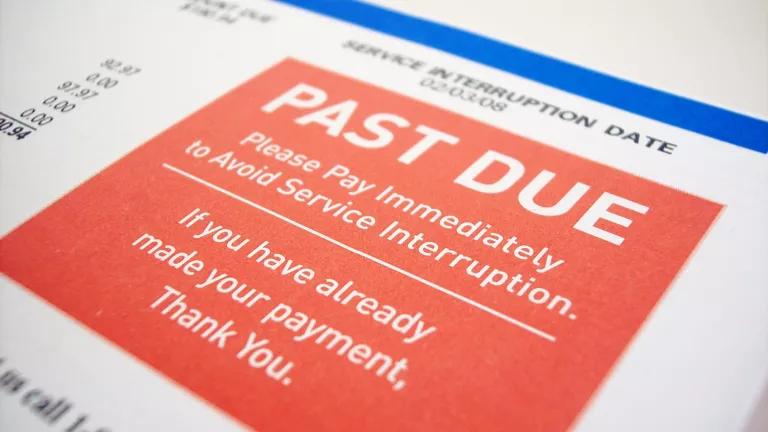
Water and sewer rates have been rising sharply, beyond many families’ ability to pay. This places many people at risk of losing access to essential water and sewer services, creating a grave public health risk that falls disproportionately on communities of color. NRDC is working with frontline partners around the United States to push for water affordability programs and equitable water rates, enact policies that protect vulnerable households from shutoffs, and improve transparency around how utilities treat their low-income customers. Building on that collaborative work, we published a Water Affordability Advocacy Toolkit as a resource to support communities in this fight.
Restore and protect natural freshwater sources
At the federal level, we continue to defend the Clean Water Act by ensuring that natural resources important for water quality and drinking water supplies (such as wetlands and streams) are protected by law, and that upstream threats from outside of protected areas are managed. And with our freshwater ecosystems suffering serious declines in the last few decades, we are advocating for their inclusion in all plans to protect 30 percent of nature by 2030.
“Water is essential for life. Safe water is a human right that should not be determined by what you look like or where you live.”
Angela Guyadeen, director, Safe Water Initiative, People & Communities Program

Residents of Mount Vernon, New York, were constantly battling floods of raw sewage in their homes due to the city's century-old clay pipes that often collapsed. In 2022, Governor Kathy Hochul announced $150 million in funding to fix the problem.
Jeenah Moon for NRDC
Progress
- In October 2024—10 years after NRDC and community partners started the fight against the water crisis in Flint, Michigan—the U.S. Environmental Protection Agency (EPA) released the Lead and Copper Improvements Rule, which requires that nearly every lead water pipe in the country be removed within the next 10 years. In 2020, NRDC, along with partner groups and 10 state attorneys general, had challenged the EPA's lead regulations, deeming them inadequate and illegal. This is a monumental victory for public health, as there is no safe level of lead. The rule—which is the first significant new protections on lead in water in more than three decades—also requires water utilities and cities to establish better lead testing requirements and mandates a complete inventory of lead water pipes.
- Through the Infrastructure Investment and Jobs Act, the federal government is investing $15 billion for removing lead from drinking water, nearly half of which are required to go to disadvantaged communities. The law includes an additional $11.7 billion that can be spent on any drinking water infrastructure priority, including removal of lead service lines, if a state decides to spend the funds on that. The bill also allocates billions to improve wastewater treatment.
- In 2021, Newark announced that it had finished replacing all 23,000 lead pipes, a project originally expected to take a decade. Safe water advocates now consider Newark a national model; the victory is the result of community advocates like Yvette Jordan and the grassroots coalition she helped lead, demanding environmental justice.
- In an unprecedented partnership with Mount Vernon and Westchester County, New York Governor Kathy Hochul dedicated $150 million in funding to repair the city’s century-old clay pipes that had a habit of collapsing and flooding the basements of homes in this majority-Black community with noxious sewage.
- Following the Flint water crisis, NRDC and local partners in Michigan successfully pushed the state to mandate replacement of all lead service lines within 20 years, making it the first state to take this level of comprehensive action to remove lead from drinking water. Since then, Illinois and New Jersey have passed laws creating similar requirements.
- Thanks in part to pressure from NRDC members who sent letters to their elected officials, several governors banned water shutoffs during the COVID-19 pandemic and, in some cases, required safe reconnections for all occupied homes and offered emergency water in the interim.
- Working in partnership with local groups in Michigan, NRDC secured and defended in court the strongest state Lead and Copper Rule in the country, directed more than $100 million to replace lead service lines, and secured the appointment of pro-environment members to the state’s regulatory oversight body, the Environmental Rules Review Committee.
- In order to deliver safe drinking water to children in schools, Washington, D.C., is implementing a Filter First policy requiring the installation of filters or fixtures with filters at schools, to be followed by testing. In partnership with community groups, NRDC has developed model legislation to roll out Filter First more broadly. To prove its affordability, NRDC also conducted a cost analysis for Michigan schools, which has been used in crafting a bipartisan state bill.
More Ways to Make an Impact
How to Find Out If Your Home Has Lead Service Lines
How to Protect Yourself from Lead-Contaminated Water

9 Ways to Avoid Hormone-Disrupting Chemicals
10 Ways to Reduce Plastic Pollution

How to Tackle Fracking in Your Community

9 Tricks That Save Tons of Water

6 Ways You Can Help Keep Our Water Clean
Latest News & Resources
The Trump Administration’s Pro-Cancer Agenda

The Data Is Clear
Accounting for AI: Environmental Transparency for a Responsible Digital Future

Minnesota’s Water Quality Wake-Up Call

Replace the Pipes, Invest in People
Flint Water Crisis: Everything You Need to Know

Political Control of Research Funding Threatens Sound Science

The Dakota Access Pipeline: What You Need to Know

The Global AI Buildout Needs Energy Transition Guardrails