
Fixing the Fashion Industry
The overseas textile mills that make our clothes are incredibly wasteful and polluting. Through NRDC's Clean by Design program, Linda Greer aims to change that.

Dying batik fabric in Phrae, Thailand
tuayai/Pond5
While visiting garment factories in China in 2007, Linda Greer learned something she'll never forget: Producing one ton of the fabric used for our jeans and T-shirts takes 200 tons of water—enough to fill several swimming pools. It was this tidbit, and other scary stats showing that the environmental footprint of global fashion was out of control, that led her to create the Clean by Design program.
“It was shocking to discover what a heavy polluter the industry is,” says Greer, a senior scientist at NRDC who has spent many years working on chemical pollution. “We think of fashion as glamorous, but I’ll never look at it in the same way.”
Many industries are guilty of using large amounts of water, but the problems with clothing production run particularly deep. Not only are vast volumes required for scouring, dyeing, and rinsing, but all that water becomes loaded with dyes and nasty chemicals.
Poisonous finishing chemicals are also often applied to make garments soft, wrinkle free, and stain resistant. Nonylphenol ethoxylates—cleaning and rinsing agents that, even at low levels, are hazardous to our health—are among these compounds. And perfluorinated chemicals, which are used to make fabric and leather products waterproof and stainproof, can affect growth and development, reproduction, and injure the liver. In countries without strict environmental laws, these toxic chemicals are often dumped into local waterways without treatment. They contaminate the water supply, leach into soil, and damage the agricultural yields of local farmers.
But water pollution is only part of the problem. Incredible amounts of energy are needed to produce all that hot water and steam required to dye and finish the fabric, as well as to turn those reams of cloth into the styles of our favorite brands. A well-worn look on a pair of jeans, for example, often relies on manual sandblasting, ripping, or scrunching, or a color-fading process that uses even more toxic chemicals.
Greer's solution: help these factories take real steps toward reducing their environmental footprint and save tons of money in the process. A group of experts spent a year investigating how five typical Chinese dyeing mills used water, chemicals, materials, and energy in order to develop what Greer calls the best practice manual for the program. These best practices include measures such as capturing heat and recycling water from the final rinse cycles, insulating steam systems, and reducing leaks in equipment.
These tweaks have already resulted in enormous success, says Greer. “Every factory we’ve been to—large or small, new or old—has been able to make use of some or all of them to reduce their environmental impact,” she explains. In 2014, the program saved more than 3 million tons of water, 61,000 tons of coal, and almost $15 million in production costs.
These changes in China undoubtedly have a huge impact, but NRDC is also working to make over the other end of the supply chain—back in the United States.
Not everything we call "eco-friendly" is, in fact, green. Natural fibers, like cotton, are still harmful to the environment if not grown and harvested correctly, and natural dyes can require large quantities of insects, plants, or tree bark, as well as toxic "mordants," which undermine their benefits. Through the Clean by Design program, designers and apparel retailers in the United States are connected with experts who can help make sense of these complex factors and suggest improvements.
As the buyers of garments made in China, multinational apparel retailers and brands can use their purchasing power to influence their suppliers. Greer quickly realized that spurring change on that corporate level would bring about results far faster than waiting for new government policies. “Multinational companies open the doors to the factories that come into the program,” says Greer. “They can go to the factories in their supply chain and encourage them to improve their practices. At the same time, we’ve been pressuring those companies to change their sourcing policies so that they consider environmental factors when qualifying suppliers for work.”
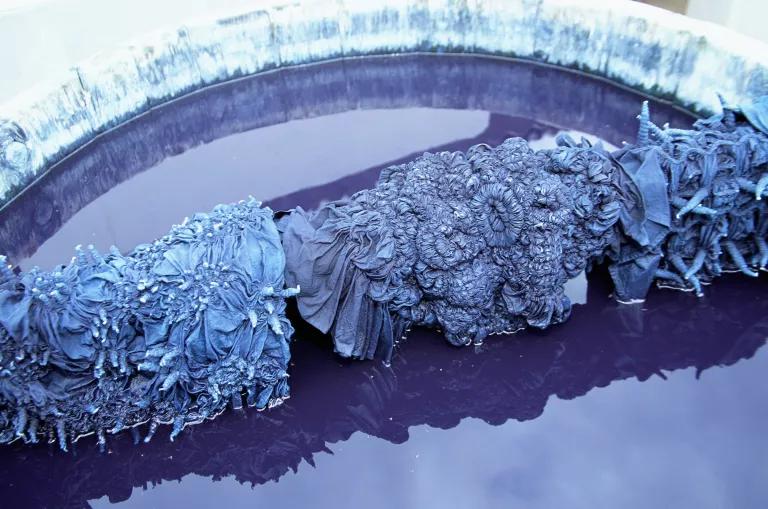
Cloth being dyed in Lijiang, Yunnan Province, China
No one is racing to do this, admits Greer. But some big brands—including Target, Levi Strauss, and Burberry—have been enticed enough by the combination of savings and the boost in public opinion that comes with environmental efforts to sign on.
Greer’s efforts also caught the attention of fashion designer Stella McCartney, who not only became an adviser to the program in 2009 but has sung the praises of Clean by Design (and Greer herself) in the pages of Vanity Fair. "What makes Linda’s work for Clean by Design so revolutionary is that it is simple and yet highly effective," McCartney wrote in 2015. "I jumped—no, dived—at the chance to be part of it. For me, the purity of the concept is what makes it such a modern approach to improving the planet."
This NRDC.org story is available for online republication by news media outlets or nonprofits under these conditions: The writer(s) must be credited with a byline; you must note prominently that the story was originally published by NRDC.org and link to the original; the story cannot be edited (beyond simple things such as grammar); you can’t resell the story in any form or grant republishing rights to other outlets; you can’t republish our material wholesale or automatically—you need to select stories individually; you can’t republish the photos or graphics on our site without specific permission; you should drop us a note to let us know when you’ve used one of our stories.
How to Limit Your PFAS Exposure in the Great Outdoors
Should Harmful Pesticides Come with Warning Labels?
Mercury’s Journey from Coal-Burning Power Plants to Your Plate