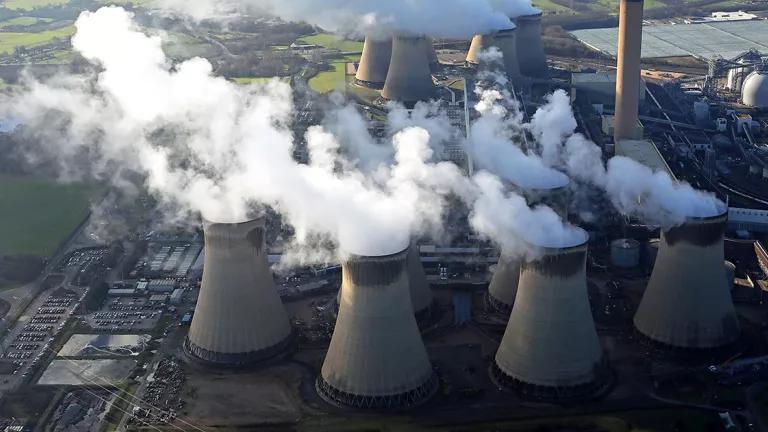
Our Forests Aren't Fuel
When companies cut down and burn trees to make electricity, the result is increased climate-changing carbon dioxide emissions, devastated ecosystems, and displaced wildlife.
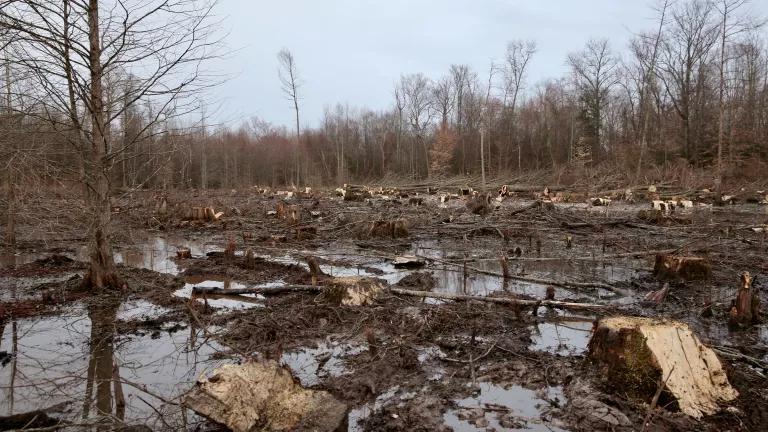
A clearcut site located less than a half mile from the Meherrin River, which feeds into the Albemarle Sound of North Carolina. Investigators tracked whole hardwood trees and other large-diameter wood from the cut directly to the Enviva Southampton facility in Virginia. The cut devastated an area of mature wetland forest as well as nearly 100 acres of surrounding natural forest.
Dogwood Alliance, January 2018
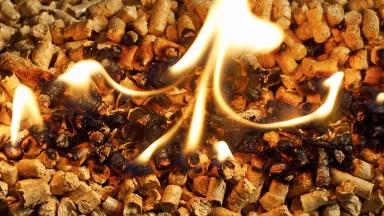
An environmental disaster is underway across the southeastern United States as trees are cut down from forests and turned into millions of tons of wood pellets to be exported and burned as fuel in European power plants. So-called biomass energy damages our climate and air, our forests, and our communities while the industry hides behind veils of misinformation.
When energy companies burn trees to make electricity, the result is increased climate-changing carbon dioxide emissions, devastated ecosystems, and displaced wildlife. Forests are one of our best tools for fighting climate change and one of our best defenses against its impact. They’re also where we hike, camp, hunt, and fish. Forests enhance our quality of life and our well-being—benefits that disappear when giant wood pellet manufacturers like Enviva contribute to forest destruction by sourcing wood from clearcut forests.
Truth
Burning forest biomass increases carbon pollution.
Myth
“To proactively address congressional directives and stakeholder concerns specific to the use of forest biomass for energy, EPA’s policy in forthcoming regulatory actions will be to treat biogenic CO2 emissions resulting from the combustion of biomass from managed forests at stationary sources for energy production as carbon neutral.”
—U.S. Environmental Protection Agency policy memo, April 23, 2018
Reason
Despite claims by the Trump administration and some in Congress, burning forest biomass for electricity is not “carbon neutral.” (Carbon neutral essentially means it results in no net increase in carbon dioxide in the atmosphere.) Leading scientists tell us that when biomass is removed from forests and burned for electricity, the result is an increase in carbon dioxide that persists in the atmosphere for decades, even under the best case scenario in which new trees are replanted immediately. That doesn’t even include additional emissions associated with harvesting, chipping, drying, preparing, and shipping the wood pellets.
Truth
Per unit of energy, biomass results in higher emissions than coal.
Myth
"As a leading global producer of wood pellets, our mission is to advance defossilization by providing an effective renewable bioenergy alternative"
—Enviva, Displacing Fossil Fuels webpage
Reason
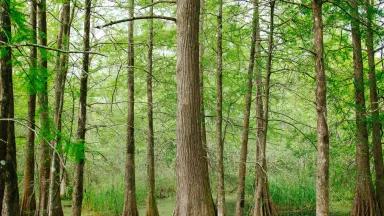
For years, scientists have warned that burning trees to produce electricity worsens climate change in the same way as coal and other fossil fuels do. Because wood is a less energy-dense fuel, biomass-burning plants emit more CO2 from their smokestacks than coal to generate the same amount of electricity. And cutting older trees and replacing them with saplings reduces a forest’s carbon storage for decades or more (and only if those forests are allowed to regrow and not converted to plantations).
Even when power plants burn forestry residues—the leftovers from logging operations—the result is more CO2 in the atmosphere for decades. This is incompatible with the urgent need to cut emissions to limit the damage from global warming.
Learn More: The Truth About Biomass
Truth
The biomass industry’s wood sourcing practices are unsustainable and contribute to forest degradation.
Myth
"At Enviva, we’re mindful of this imperative in all that we do. For us, that means providing a sustainable, effective alternative to fossil fuels and promoting responsible stewardship of forest lands."
—Enviva, Our Impact webpage
Reason
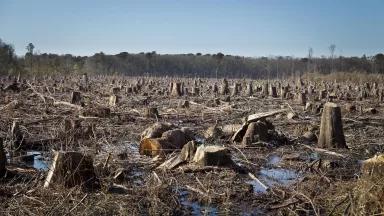
Burning wood for electricity degrades forests and threatens wildlife. NGO investigations—together with independent reporting from news organizations around the world—have exposed the unsustainable logging practices used to source wood for pellets manufactured and exported by Enviva, the world’s largest producer of wood pellets for use as fuel. These investigations show the destructive reality of biomass sourcing in the southeastern United States, including from clearcuts of mature hardwood forests. They likewise spotlight the vast quantities of the most carbon-intensive types of biomass, including whole trees, entering the industry’s supply chain.
Enviva is a top supplier to the U.K. power producer Drax and other large power companies in Europe. In order to satisfy their massive demand for wood fuel, regions like the southeast have ramped up pellet production. Meeting the production capacity of four of Enviva’s wood-pellet facilities in North Carolina and Virginia requires logging almost 50,000 acres of forest per year.
Truth
Biomass companies rely on an industry-dominated certification scheme to “greenwash” their practices as environmentally friendly.
Myth
“The Sustainable Biomass Program’s (SBP) vision is an economically, environmentally, and socially sustainable woody biomass supply chain that contributes to a low-carbon economy.... SBP certification provides assurance that woody biomass is supplied from legal and sustainable sources.”
—Drax, Sustainable Biomass Program webpage
Reason
The main certifier of “sustainable” wood pellets used by Enviva and its top customers, such as Drax, is the Sustainable Biomass Program (SBP). From the start, this certification scheme was dominated by industry and built using a self-policing approach that has resulted in increased carbon emissions, accelerated loss of natural forests, and harm to local communities. It amounts to little more than a smoke screen for forest destruction, as detailed in our report about the SBP’s deep flaws and deficiencies.
The biomass industry also poses serious environmental justice risks for the communities in which it operates. Enviva locates its wood pellet mills in poor, rural areas in North Carolina, Virginia, and the Gulf Coast states. These are communities that already live in a region enduring some of the highest logging rates in the world. They also suffer some of the highest poverty rates in the nation and face the threat of escalating flooding from climate change.
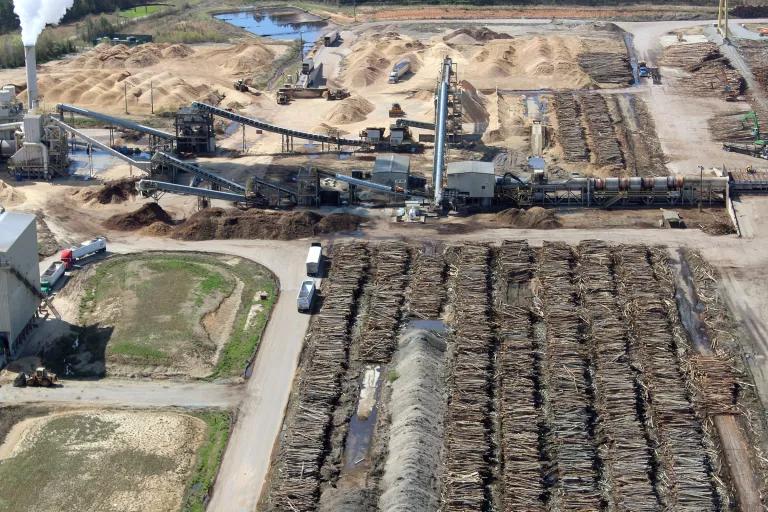
An aerial view of Enviva Northampton in Northampton County, North Carolina, 2019
Dogwood Alliance
Truth
When biomass companies claim credit for the carbon-capturing benefit of forests already growing elsewhere in the region, it doesn’t make their wood pellets a “carbon neutral” fuel—it’s double counting.
Myth
“Examining a forest at a landscape level reveals...[it can] recapture the carbon emitted by burning wood pellets or any other wood-based energy feedstocks within a year.”
—RealClearEnergy, “Missing the Forest for the Trees: Woody Biomass Helps Cut CO2 Emissions,” January 29, 2020
Reason
Any reduction of a forest carbon sink adds carbon to the atmosphere, just like an equal-size smokestack. The fact that other parts of a forest capture carbon cannot offset the climate impact of cutting down trees and burning them for electricity.
The wood pellet industry argues that the growth of the remaining uncut forests elsewhere in a region or state can offset the smokestack emissions from burning wood to fuel power plants. That’s like claiming a neighbor’s savings account should cover your debt. So-called landscape-level accounting is, in fact, double counting. Those uncut forests would be growing and “banking” carbon anyway—with or without the biomass industry’s presence.
Truth
We need to be growing, not shrinking, our forest carbon sink. Burning trees for electricity takes us backward.
Myth
“Despite rapid population growth and increased demand for timber worldwide, the number of trees in U.S. forests has increased every year for more than 50 years. State and federal forestry data demonstrate that in areas in which we operate, forest inventory also continues to increase.”
—Enviva, “Working with Forests Responsibly/A growing resource” webpage
Reason
In the United States, we already rely on domestic forests and other lands to absorb 11 percent of our greenhouse gas emissions each year, according to the EPA, and we take credit for that emissions offset in the figures we report to the United Nations. That carbon benefit cannot be counted a second time when wood taken from forests is burned as biomass fuel in power plants. Moreover, we urgently need our forest carbon sink to be growing—not shrinking—in the critical years to come in the fight against climate breakdown.
Truth
Without massive subsidies, biomass can’t compete with solar and wind.
Myth
“Converting coal-fired plants to dedicated or co-fired biomass plants is one of the quickest and most cost-effective ways of achieving substantial reductions in emissions of carbon dioxide and other pollutants.”
—John K. Keppler, chairman, president, and CEO of Enviva.
Reason
Biomass plants are uneconomic compared to solar and wind. A 2017 study found that by 2025, the United Kingdom’s existing biomass conversions will be more expensive to run than building completely new solar and wind capacity, including grid integration costs.
Similar research in the United States underscores how wind, solar, and energy efficiency are far less costly than biomass energy, making wood-burning plants uncompetitive in today’s electricity markets and a losing investment. A 2018 analysis found that Dominion Energy’s least-expensive biomass electricity is more than double the cost of energy efficiency and is approximately 50 percent higher than the cost of electricity from onshore wind and utility-scale solar. Electricity from Dominion’s four Virginia biomass plants is more expensive than 88 percent of power generation available in the regional energy market, including from wind, solar, and natural gas. This was true even after factoring in federal tax credits and state Renewable Energy Certificates, which Dominion used to justify its investment in biomass. Dominion has since shuttered or significantly cut reliance on its biomass plants.
Simply put, biomass plants are not economic to run. Biomass conversion is also a mature technology and comparatively little cost reduction is expected. Meanwhile, the costs of solar and wind continue to tumble.
Truth
European nations are wasting billions in subsidies on biomass—money that should go to truly clean and renewable energy like solar and wind.
Myth
“Renewable energy can be produced from a variety of sources, such as wind, solar, hydro, tidal, geothermal, and biomass.”
—The European Commission’s Revised Renewable Energy Directive fact sheet
Reason
The European Union has erroneously categorized biomass energy as a form of renewable energy and treats biomass fuel as “carbon neutral.” That effectively places this dirty energy source on par with solar or wind. On top of that, EU member states are providing huge financial subsidies to incentivize biomass burning for electricity. In some member states, biomass energy subsidies now make up a large share of all subsidies available to renewable energy sources. Meant to promote clean, renewable energy, these subsidies for biomass are doing the exact opposite.
Labeling biomass as carbon neutral diverts critical investments from real clean and renewable energy solutions like solar, wind, and geothermal. These alternative energy sources offer immediate carbon reductions—no decades of waiting required—and do so without threatening forests. Even better: These energy sources are readily available, reliable, affordable, and expanding. This is where the future of clean energy is headed.
Downloads
Related Resources