
Colony Collapse Disorder: Why Are Bees Dying?
Bees keep dying at record rates, putting our food supply at serious risk. Here’s how you can help take the sting out.
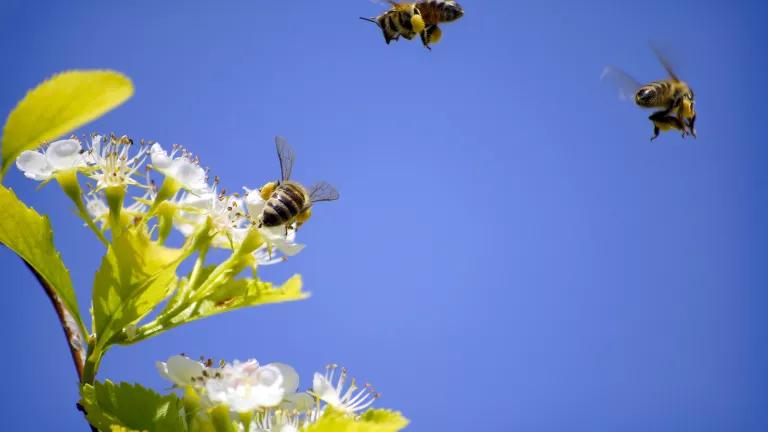
Lane V. Erickson/Shutterstock
The average person sitting down to dinner probably doesn’t realize the important role bees played in preparing that meal. Here’s something that might surprise you: One out of every three mouthfuls of food in the American diet is, in some way, a product of honeybee pollination—from fruit to nuts to coffee beans. And because bees are dying at a rapid rate (42 percent of bee colonies collapsed in the United States alone in 2015), our food supply is at serious risk.
The bee’s plight is widespread: Serious declines have been reported in both managed honeybee colonies and wild populations. Jennifer Sass, an NRDC senior scientist, says there are multiple factors at play. Each on its own is bad enough, but combined they are quickly proving too much to handle.
Pesticides: These chemicals are designed, of course, to kill insects. But some systemic varieties—specifically neonicotinoids—are worse for bees than others.
Loss of habitat: As rural areas become urban, the patches of green space that remain are often stripped of all weeds and their flowers, which bees rely on for food.
Climate change: Unusually warm winters have caused plants to shift their schedules. When bees come out of hibernation, the flowers they need to feed on have already bloomed and died.
Disease: Pathogens carried by mites weaken bees, which makes them more susceptible to pesticide poisoning. On the flip side, if bees are already weakened by pesticides, they’re more vulnerable to disease.
It’s hard to imagine a world without bees, but we know the impacts on our food supply would be significant. (Think way less varied and much more expensive.) Industry is scrambling to manage the crisis, with Big Agriculture securing healthy honeybee hives from wherever it can find them and transporting them around the country to pollinate crops. Some regions in China are even hand-pollinating.
The rest of us can help, too. “The thing we can most control is pesticides,” says Sass. Anyone with outdoor space—from a container garden to a large lawn—can create a pesticide-free, safe space for pollinators that will encourage native bees and other beneficial insects.
We can also make sure to purchase plants that aren’t pretreated with pesticides by asking questions when we shop for seeds and flowers. We can let our lawns grow a bit longer and leave the blooming clover for bees to enjoy. We can ask our elected officials to pass county and town ordinances to reduce pesticide spraying, and we can urge corporations to stop making and selling neonicotinoids.
It’s time to pay back the tiny, struggling pollinators that do so much for us, especially at mealtime.
This NRDC.org story is available for online republication by news media outlets or nonprofits under these conditions: The writer(s) must be credited with a byline; you must note prominently that the story was originally published by NRDC.org and link to the original; the story cannot be edited (beyond simple things such as grammar); you can’t resell the story in any form or grant republishing rights to other outlets; you can’t republish our material wholesale or automatically—you need to select stories individually; you can’t republish the photos or graphics on our site without specific permission; you should drop us a note to let us know when you’ve used one of our stories.
The Endangered Species Act Under Attack
Neonicotinoids 101: The Effects on Humans and Bees
Protecting Biodiversity Means Saving the Bogs (and Peatlands, Swamps, Marshes, Fens…)