
Invest in 21st Century Infrastructure
We promote infrastructure plans that transition us to clean energy, address the changing climate, create jobs, and remedy the negative legacy of the past.

Brooklyn Navy Yard


The nation’s infrastructure is aging, and the impacts of climate change only exacerbate the problem. The cumulative cost of extreme weather events and climate-related disasters to our transportation, energy, water, sewer, and other infrastructure has exceeded $1.5 trillion since 1980. Americans in some parts of the country are experiencing higher rates of contaminated water, greater incidence of asthma and other respiratory illnesses, more stormwater and wastewater overflows, and increased risk to their health and safety as a result of climate change and underinvestment in the nation’s infrastructure. These impacts threaten our nation’s economic vitality, our public health, and our future. To successfully move forward, America needs a robust infrastructure plan that transitions the nation to cleaner sources of energy, addresses the challenges imposed by a changing climate on our communities, creates jobs, and redresses the negative legacy of past investments.
NRDC works to encourage cities to adopt green infrastructure that is all-encompassing and comprehensive. We are pushing for an infrastructure plan that advances a clean energy future and makes our sewers, water supplies, roads, and housing more resilient. NRDC is also committed to protecting—and strengthening—existing environmental safeguards, which are crucial to green infrastructure plans.
Here are some key priorities we believe should be included in a federal infrastructure plan:
Clean Energy
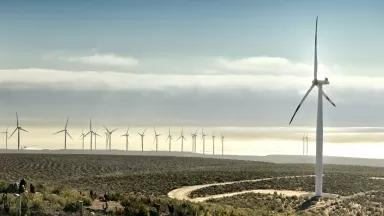
- Fund renewable and clean energy deployment. Support incentives that spur innovation in renewable energy, offshore wind investment, electric vehicle infrastructure, energy efficiency, energy storage, and high-efficiency transmission.
- Incentivize innovative finance tools to expand green banks and clean energy markets that improve communities, safeguard the environment, and boost job creation.
- Accelerate the just transition to a clean energy economy by phasing out fossil fuel extraction on federal lands and in federal waters and by aligning public resource management with the public interest. Promote federal renewable energy development, and prevent the rubber-stamp approval of interstate oil and natural gas pipelines under the nationwide general permit system.
- Increase clean transportation options via investments in transit, bike and pedestrian projects, greenhouse gas standards, electric vehicles, charging infrastructure, and other opportunities.
- Advance zero-emissions freight and port electrification. Provide direct funding and incentives through the Departments of Energy and Transportation to cut carbon and associated pollution at ports and their associated freight infrastructure, which would reduce greenhouse gas emissions and improve air quality for nearby communities.
Safe Water
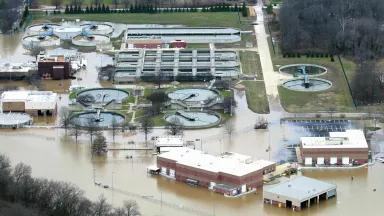
- Significantly increase funding levels and opportunities for water infrastructure investment. Triple appropriations to the Clean Water and Drinking Water State Revolving Funds (SRFs). Prioritize funding in the form of grants, rather than loans, for water infrastructure projects that help disadvantaged communities, promote climate resilience, and incorporate green infrastructure and other nature-based solutions. Set aside a portion of the expanded Drinking Water SRFs to benchmark state and local infrastructure restoration through water loss auditing and reporting, including funds for training. Allocate funds needed to test for and remediate widespread contamination of water by per- and polyfluoroalkyl substances (PFAS), especially in disadvantaged communities.
- Get lead out of drinking water in homes and schools. Aggressively address lead contamination by funding full lead service line replacement at no cost to individual homeowners and by prohibiting partial lead service line replacement. Prioritize grants particularly in low-income communities, and provide significant new funding for public schools to deploy water filters, conduct mandatory testing, and remediate any lead problem that comes to light.
- Make water bills affordable for low-income and rural Americans through targeted state revolving funds and Rural Utilities Service funding for disadvantaged communities. Support low-income affordability programs and incentives for utilities to adopt more equitable rate structures, and provide consolidation or regionalization assistance for smaller utilities to improve affordability and water quality. Establish a robust federal pilot program to assist low-income households in paying water and sewer bills.
- Protect drinking water sources. Improve our nation’s water supplies by requiring enhanced Clean Water Act safeguards for bodies of water that are either located in drinking water utilities’ source water protection areas (SWPAs) or designated for use as a drinking water supply. These safeguards could include Clean Water Act programs requiring that application of fertilizers be consistent with watershed-wide pollution budgets; requiring chemical or oil storage facilities to have state-of-the-art containment; prohibiting the filling of wetlands where a practicable alternative exists; and requiring significant upgrades to, or closure of, certain kinds of waste ponds (e.g., CAFO manure lagoons, coal ash pits) in such waters’ floodplains.
Key Resources

Resilient Communities
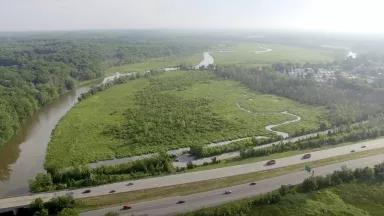
- Incentivize the use of natural infrastructure by funding programs that incorporate nature-based solutions. Natural infrastructure, also known as green infrastructure, uses techniques that protect, restore, and replicate natural systems and offers a wide range of social, economic, and environmental benefits. Restore floodplains and preserve wetland forests through federal conservation programs.
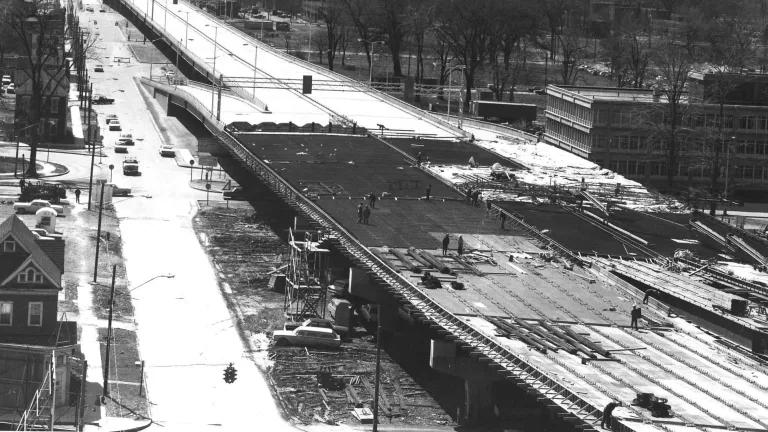
- Connect communities that have been divided by past transportation investments and are currently experiencing gaps in transportation infrastructure and services. Provide funding for regional and local projects that support multimodal investment, reconstruct highways and bridges at the end of their life cycle, restore pedestrian access, and promote environmental stewardship.
- Invest in affordable, climate-resilient housing. Establish a congressionally mandated grant program that incentivizes the production of affordable housing choices, upgrades and preserves existing affordable housing, and promotes better land-use policies. In addition, fund technical assistance programs to support low-income residential energy and water efficiency program design, community energy and water benchmarking, and the setting of energy-use reduction goals to improve energy efficiency.
- Increase affordable housing and equitable development near transportation options such as public transit. Prioritize and adequately fund all transit modes to ensure greater access and affordability while reducing greenhouse gas emissions and combating the impact of gentrification and displacement.
- Reduce the cost of energy bills in low-income households by increasing funding for the Low-Income Home Energy Assistance Program (LIHEAP) and the DOE Weatherization Assistance Program.
- Help low-income neighborhoods rebuild after natural disasters by ensuring permanent congressional authorization for the Community Development Block Grant Disaster Recovery program and by emphasizing resilience and disaster mitigation as new national objectives. Following a disaster, ensure that rental housing is available and affordable to the lowest-income households by increasing funding for the Project-Based Housing Choice Vouchers (PBV) program, and/or expand the eligible use of disaster vouchers to provide operating assistance for public housing authorities.
- Prioritize climate-resilient infrastructure investment. Ensure that all federal investments—programs, projects, and grants—account for the future impacts of climate change. Require hazard mitigation planning and risk assessments, and reestablish federal flood protection standards.
Worker Protections
- Create family-sustaining jobs. Ensure that all projects built with public resources are subject to Buy America standards that maximize the return to taxpayers and the U.S. economy. Enforce Davis–Bacon provisions ensuring that workers are paid prevailing wages.
- Maximize benefits to workers and communities, especially those most in need. Utilize project labor agreements (PLAs), community benefit agreements, local hire, and other provisions and practices that prioritize improving training, working conditions, and community benefits.
- Enhance workforce training and development programs to expand the number of skilled workers in new and existing industries, and increase economic opportunities for communities and local workers, especially for people of color and low-income communities.
Environmental Safeguards
- Maintain environmental safeguards, and protect the NEPA process. Preserve and enforce our nation’s bedrock environmental protections rather than sacrificing them in the name of infrastructure approval “streamlining.” The National Environmental Policy Act (NEPA) remains a critical federal screening mechanism to ensure that climate, environmental, and community impacts are considered before federal infrastructure decisions are finalized.
Related Content

Lightening Emissions in Heavy Industry: Reducing CO2 in Cement, Concrete, Steel, and Aluminum Can Help Keep Us on a Path to 1.5 Degrees

Transportation Solutions for the 21st Century

Equitable Water Rates for New York City: Charging for Stormwater
Infrastructure Done Right: A Voice for Those Affected

Infrastructure: A Better Deal to Fix It for Our Future

Climate Adaptation: A Growing Priority for NRDC

Green Infrastructure: How to Manage Water in a Sustainable Way
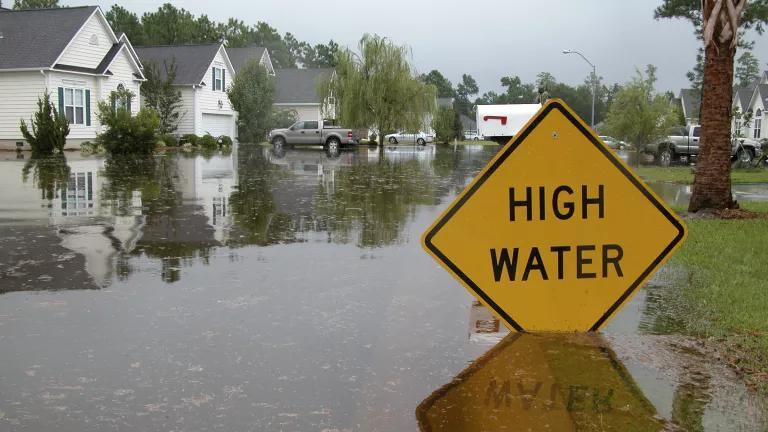
It’s Time to Fix Our Water-Logged National Flood Insurance Program

5 Ways Cities Are Preparing for a Dry (or Flooded) Future
Robust Infrastructure Plan Must Address Climate Change
Related Resources
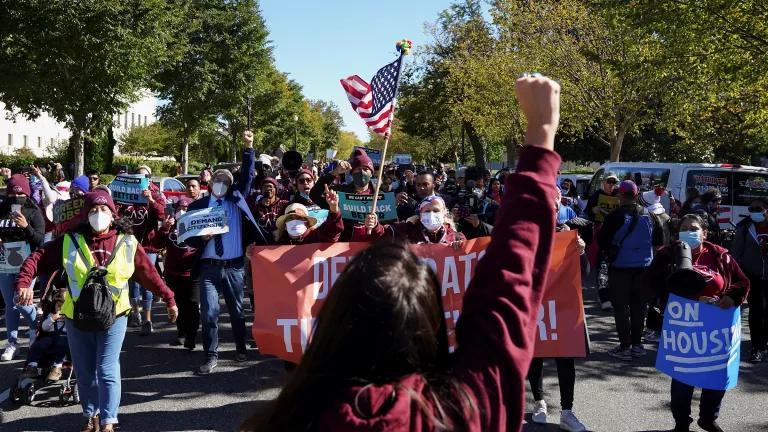
House Passes Historic Climate Action in Build Back Better Act
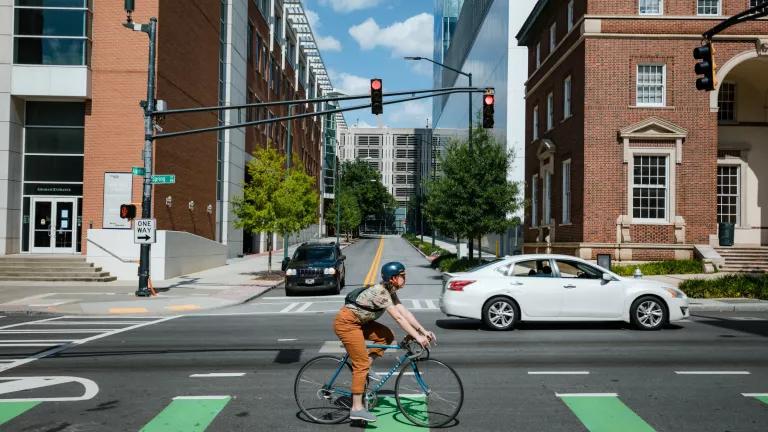
25 Cities Demonstrate How Major Climate Wins Are Possible
