
Recycling: Beyond the Bin
We've made huge strides in keeping the things we throw away out of landfills. Here's how you can take recycling to the next level—at home, at work, and in your community.
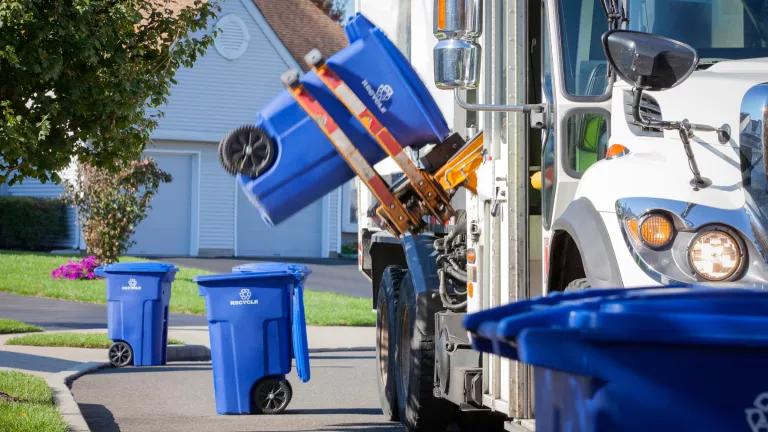
We all know recycling is the right thing to do. It keeps trash out of our landfills, saves energy, preserves natural resources and wildlife, and reduces our carbon footprint. And plenty of people do it: In 1980, recycling and composting kept 14.5 million tons of trash from landfills and incinerators in the United States. By 2013, that number had reached 87.2 million tons.
That's a big leap, but it still accounts for only 34.3 percent of the stuff we discard nationwide every year. In other words, we could do better. Here are six ways we can move closer to a zero-waste world as we continue to cart our blue and green cans to the curb.
Learn the basics.
"The power of a lot of people acting correctly is the most important thing," says Darby Hoover, an NRDC senior resource specialist. "People need to familiarize themselves with community guidelines." What you can recycle (takeout containers? direct mail?) and how you should do it (curbside? drop-off centers?) vary greatly from city to city and state to state. Visit your municipality's website to learn more about your local recycling rules and options—and don't forget to check whether your community collects food or yard waste for composting, as well.
Buy recycled.
Make sure the products you purchase (and the packaging they come in) are recyclable, and when possible, choose products that contain recycled materials. "If you purchase products that have recycled content, you're closing the recycling loop and making sure the cycle continues," Hoover says. You also incentivize manufacturers and businesses to use more postconsumer waste and fewer virgin materials.
Get your coworkers to recycle more.
Learn what's recyclable in your workplace. Make sure recycling bins are clearly marked and that everybody understands recycling procedures. Advocate for buying in bulk and for purchasing products made from recycled content that come in recycled packaging. Make sure electronic waste is handled by an E-Stewards-certified company, and explore other ways waste can be recycled. If your business has a contract with a recycling hauler, look into the possibility of reducing expenses by collecting high-value materials, such as office paper, separately. "Offices are often surprised to find the materials they throw away have value," Hoover says. Find ways to eliminate waste before it shows up, too, by offering filtered water and replacing disposable plates and cutlery with reusable options.
Raise community awareness.
"Schools are great places to educate about recycling," Hoover says. If you are a parent, teacher, or student, get the other members of your community involved in an informal waste audit: Take a look in a school trash bin and ask what's there and how and if it can be recycled or composted. Plan a community tour of your local materials recovery facility, recycling center, or landfill. "Seeing what happens to the items you put in the recycling or garbage bin really enforces that there's no such thing as throwing things away," Hoover says. "There is no 'away.' The items we discard end up somewhere." If municipal composting isn't available where you live, start a community compost pile for food and yard waste.
Reduce, reuse, and rethink before recycling.
Recycling waste materials is better than landfilling them, but the best option is to not generate them at all. Reduce waste by buying in bulk, using reusable shopping bags and water bottles, and tossing out less food. Reuse clothing and other unwanted items by donating them to community organizations like homeless shelters, thrift stores, and animal shelters. And rethink what you typically throw out—like grass clippings, which can be left on your lawn to condition and fertilize the soil. Cutting down on waste could even save you money, since a growing number of communities have "pay as you throw" programs that charge a waste collection fee based on the size of your garbage can.
Support extended producer responsibility laws.
When producers are responsible for the entire life cycle of the items they make, they're more apt to use environmentally safe and recyclable materials and to reduce the amount of those materials. By supporting legislation that holds manufacturers financially accountable, you encourage the design of better and more recyclable goods and ensure that producers pay their fair share of the costs of recycling.
This NRDC.org story is available for online republication by news media outlets or nonprofits under these conditions: The writer(s) must be credited with a byline; you must note prominently that the story was originally published by NRDC.org and link to the original; the story cannot be edited (beyond simple things such as grammar); you can’t resell the story in any form or grant republishing rights to other outlets; you can’t republish our material wholesale or automatically—you need to select stories individually; you can’t republish the photos or graphics on our site without specific permission; you should drop us a note to let us know when you’ve used one of our stories.
What Are the Solutions to Climate Change?
A Consumer Guide to the Inflation Reduction Act
How to Find Relief During Summer Heat Waves in the City