
Ocean Pollution: The Dirty Facts
We’re drowning marine ecosystems in trash, noise, oil, and carbon emissions.

Paulo Oliveira/Alamy
Covering more than 70 percent of our planet, oceans are among the earth’s most valuable natural resources. They govern the weather, clean the air, help feed the world, and provide a living for millions. They also are home to most of the life on earth, from microscopic algae to the blue whale, the largest animal on the planet. Yet we’re bombarding them with pollution. By their very nature—with all streams flowing to rivers, and all rivers leading to the sea—the oceans are the end point for so much of the pollution we produce on land, however far from the coasts we may be. And from dangerous carbon emissions and choking plastic to leaking oil and constant noise, the types of ocean pollution that humans generate are vast. As a result, collectively, our impact on the seas is degrading their health at an alarming rate. Here are some ocean pollution facts that everyone on our blue planet ought to know.
Ocean acidification
When we burn fossil fuels, we don’t pollute just the air but the oceans too. Indeed, today’s seas absorb as much as a quarter of all man-made carbon emissions, which changes the pH of surface waters and leads to acidification (pH is a measure of how acidic or basic water is). This problem is rapidly worsening—oceans are now acidifying faster than they have in some 300 million years. In absorbing so much of the carbon emissions from the atmosphere, the pH level of the ocean surface has increased an estimated 30 percent since the start of the industrial revolution 200 years ago. If greenhouse gas emissions continue to increase, the surface waters of the ocean could be nearly 150 percent more acidic by the end of the century.
Oregon State University
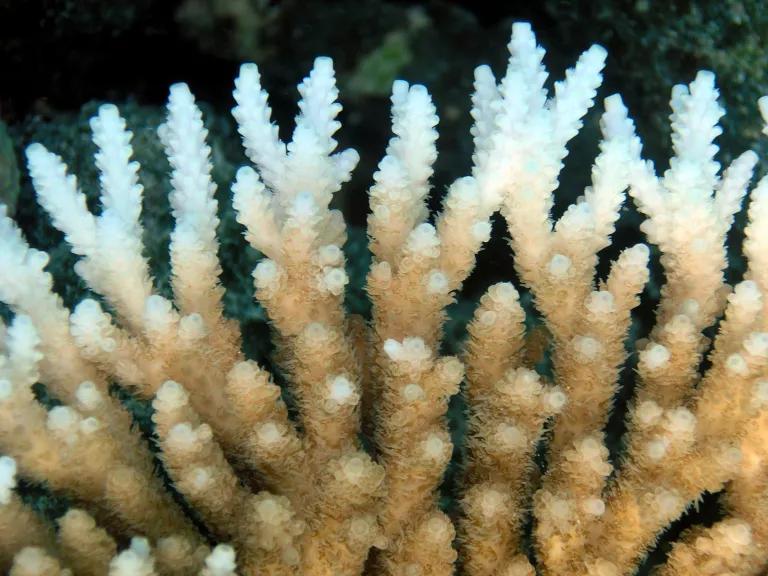
So what happens when the ocean’s chemistry is knocked out of whack? Marine ecosystems—and the coastal economies that depend on them—go out of whack too. Take reefs and shellfish, for starters. To build their shells and skeletons, creatures like mussels, clams, coral, and oysters require calcium carbonate (the same compound found in chalk and limestone). But the ocean’s carbonate levels go down when acidity levels rise, threatening the survival of these animals. Bivalves are at the bottom of the food chain, so these effects ripple up to many fish, seabirds, and marine mammals. More-acidic waters also contribute to the bleaching of coral reefs and make it harder for some types of fish to sense predators and for others to hunt prey.
Meanwhile, ocean acidification threatens us land dwellers too. The billion-dollar American shellfish industry is the economic backbone of myriad coastal communities, from Louisiana to Maryland to Maine. In the Pacific Northwest, the shellfish that are vulnerable to ocean acidification make up more than 60 percent of the fishery revenue. In total, the U.S. shellfish industry could lose more than $400 million annually by 2100 due to impacts of ocean acidification.
Trash in the ocean
The majority of the garbage that enters the ocean each year is plastic—and here to stay. That’s because unlike other trash, the single-use plastic bags, water bottles, drinking straws, and yogurt containers, totalling some eight million metric tons of the plastic waste we toss (instead of recycling), won’t biodegrade. Instead, they can persist in the environment for a millennium, polluting our beaches, entangling marine life, and getting ingested by fish, whales, turtles, and seabirds.
The most infamous example of marine debris is the Great Pacific Garbage Patch. But these patches (which are more like "soups") represent only a fraction of the trash in our oceans. In fact, plastic debris has been found at the bottom of the deepest ocean trench.
Where does all this debris originate? While some is dumped directly into the seas, 80 percent of marine litter makes its way there gradually from land-based sources―including those far inland―via storm drains, sewers, and other routes, according to the National Oceanic and Atmospheric Administration (NOAA). Oil from boats, airplanes, cars, trucks, and even lawn mowers is contributing to water pollution circulating in ocean waters. (An excellent reason for why we should all reduce plastic pollution, no matter where we live.) Chemical discharges from factories, raw sewage overflow from water treatment systems, and stormwater and agricultural runoff add other forms of marine-poisoning pollutants to the toxic brew, contributing to algal blooms and aquatic dead zones.
Ocean noise
The ocean is far from being a “silent world.” Sound waves travel farther and faster in the sea’s dark depths than they do in the air, and many marine mammals like whales and dolphins, in addition to fish and other sea creatures, rely on communication by sound to find food, mate, and navigate. But an increasing barrage of human-generated ocean noise pollution is altering the underwater acoustic landscape, harming—and even killing—marine species worldwide.

Anngu Chen/EyeEm
Consider the incessant din of the roughly 60,000 commercial tanker and container ships that ply the seas at any given time. The underwater racket that results creates a kind of “smog” that reaches nearly every corner of the ocean and shrinks the sensory range of marine wildlife. High-intensity sonar used by the U.S. Navy for testing and training causes some of the same effects—and has been linked to mass whale strandings.
Meanwhile, in the hunt for offshore oil and gas, ships equipped with high-powered airguns fire compressed air into the water every 10 to 12 seconds for weeks to months on end. Traveling as far as 2,500 miles, these deafening seismic blasts disrupt foraging, mating, and other vital behaviors of endangered whales (and may ultimately push some, such as the North Atlantic right whale, to extinction). The blasts lead some commercial fish species to abandon their habitat—a direct hit on coastal economies dependent on catch rates; they also injure and kill marine invertebrates, including scallops, crabs, and squid.
Offshore drilling
In addition to noise pollution, the oil and gas industry’s routine operations emit toxic by-products, release high levels of greenhouse gases, and lead to thousands of spills in U.S. waters annually. That oil can linger for decades and do irreversible damage to delicate marine ecosystems.
Take the 1989 Exxon Valdez tanker spill in Alaska’s Prince William Sound, from which oil still remains, or the 2010 BP Deepwater Horizon offshore drilling disaster, which spread millions of gallons of oil throughout the Gulf of Mexico, imposing a heavy toll on coastal communities. But smaller spills also pollute the ocean (and the air) with long-lasting impacts. Even the most advanced cleanup efforts remove only a fraction of the oil, and sometimes they use hazardous technologies. Chemical dispersants used in the largest spill response efforts—1.8 million gallons were released into the Gulf after the BP disaster—are dangerous pollutants themselves.
NRDC works to defend our oceans
From the earliest days of NRDC’s founding, we’ve advocated—and litigated—to protect the world’s oceans. As political tides changed in Congress and the White House, NRDC has been steadfast in our defense of policies that protect marine species, as well as coastal communities and their ocean-based economies. In addition to advocating for climate policies that will ensure the health of marine ecosystems, NRDC has played a key role in halting offshore drilling and seismic blasting in the Arctic and Atlantic oceans, in the creation of the Atlantic’s first marine national monument, and in the push for more sustainable, ethical seafood.
Today, we’re part of a growing coalition calling for governments to fully and highly protect at least 30 percent of our oceans by 2030 (part of what’s known as “30x30”) to help safeguard the marine ecosystems and fisheries that provide food, jobs, and cultural sustenance to billions around the world.
Ocean pollution and you
The fate of our seas is not only up to the government or industry. Our individual, daily actions matter too. You can start by reducing water pollution and runoff at home, being more mindful of your plastic consumption, or organizing a cleanup of your local waterway. You can also support the work of NRDC and other environmental advocacy groups as well as businesses and organizations that work to preserve our coasts and waters.
This story was originally published on January 22, 2018, and has been updated with new information and links.
This NRDC.org story is available for online republication by news media outlets or nonprofits under these conditions: The writer(s) must be credited with a byline; you must note prominently that the story was originally published by NRDC.org and link to the original; the story cannot be edited (beyond simple things such as grammar); you can’t resell the story in any form or grant republishing rights to other outlets; you can’t republish our material wholesale or automatically—you need to select stories individually; you can’t republish the photos or graphics on our site without specific permission; you should drop us a note to let us know when you’ve used one of our stories.
The Global Plastics Treaty: It’s Time to Clean Up Our Mess
The Smart Seafood and Sustainable Fish Buying Guide
Water Pollution: Everything You Need to Know