
Green Infrastructure: How to Manage Water in a Sustainable Way
By relying on plants, soil, and natural systems to manage rainfall runoff, green infrastructure tackles urban water woes and boosts climate resilience. Here’s how.
Joerg Hackemann/Alamy Stock Photo
From highways to bridges to airports, America’s infrastructure is in dire need of a face-lift. The critical systems we rely on nationwide endure chronic overuse and underinvestment, including our stormwater management systems. The U.S. Environmental Protection Agency (EPA) estimates that 10 trillion gallons of untreated stormwater runoff, containing everything from raw sewage to trash to toxins, enters U.S. waterways from city sewer systems every year, polluting the environment and drinking water supplies. In many urban and suburban areas, this runoff causes significant flooding as well. Not surprisingly, in 2021, the American Society of Civil Engineers bestowed a lowly D letter grade on U.S. stormwater and sewage systems. Meanwhile, the EPA estimates that upgrading our stormwater and other public wastewater systems will require at least $150 billion in investments over the next two decades.
The country’s urgent infrastructure needs also present a major opportunity. As an alternative to traditional water management systems, green infrastructure offers a cost-effective solution to many of our water woes, including how to handle flooding and stormwater pollution. Here’s a look at what green infrastructure is, what it does, and why we should invest so much green paper in it.
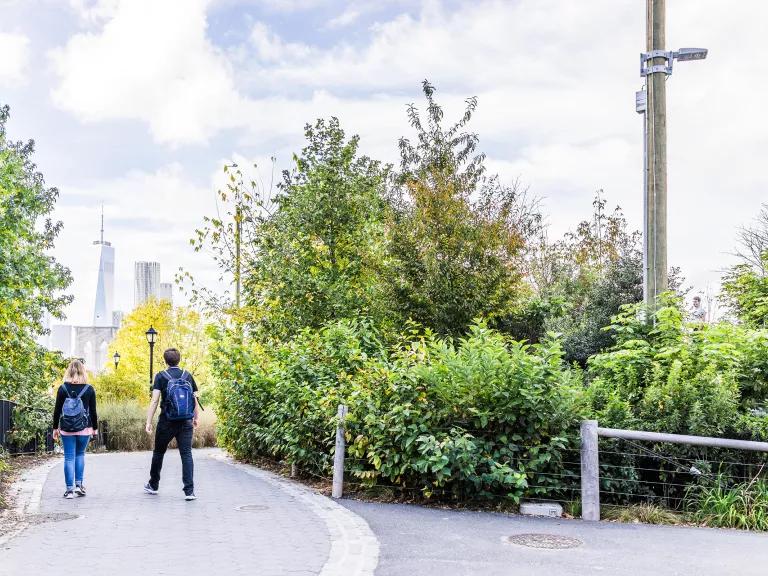
Green spaces, like Brooklyn Bridge Park in New York City (above), not only offer respite in a big city, but they also help capture stormwater runoff that would otherwise overwhelm storm sewers.
Kristina Blokhin/Alamy Stock Photo
What is green infrastructure?
Green infrastructure encompasses a variety of water management practices, such as vegetated rooftops, roadside plantings, absorbent gardens, and other measures that capture, filter, and reduce stormwater. In doing so, it cuts down on the amount of flooding and reduces the polluted runoff that reaches sewers, streams, rivers, lakes, and oceans. Green infrastructure captures the rain where it falls. It mimics natural hydrological processes and uses natural elements such as soil and plants to turn rainfall into a resource instead of a waste. It also increases the quality and quantity of local water supplies and provides myriad other environmental, economic, and health benefits—often in nature-starved urban areas.
What is gray infrastructure?
Gray infrastructure is the more traditional (and typically more expensive) water management systems that green infrastructure complements and can at times replace. It relies on hard infrastructure—such as storm drains, concrete, and pipes—to collect and channel stormwater (sometimes treated, oftentimes not) into waterways. It does not provide the same range of benefits as green infrastructure since it neither reduces the amount of stormwater that reaches waterways nor, for the most part, improves the quality of that runoff. Gray infrastructure also does not provide the same community benefits mentioned above.
Why is green infrastructure important?
Green infrastructure reins in stormwater runoff, which the EPA describes as “one of the fastest-growing sources of pollution” in the United States. Here’s what happens.
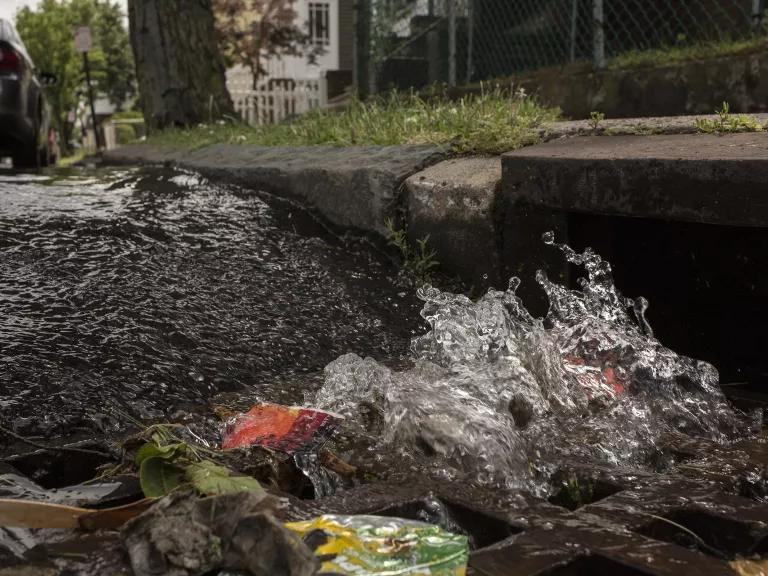
Water washes into a storm sewer partially clogged with litter.
Bryan Anselm for NRDC
Stormwater runoff
Runoff, the product of rainstorms or snowstorms, flows over the ground and into drains, sewers, and waterways. The more permeable (or absorbent) the surface, the less runoff there will be. Porous natural landscapes, such as meadows and forests, will readily soak up most of the rain or snowmelt they receive. This is then gradually released into the groundwater, nearby water bodies, and the atmosphere. In contrast, streets, parking lots, rooftops, and other hard, impervious (nonabsorbent) surfaces essentially repel stormwater, preventing it from soaking into the land and forcing it to flow whichever way gravity takes it. The EPA says that an average city block can generate more than five times as much runoff as a forested area of equal size.
Stormwater pollution
When rainfall hits an impervious surface, it meets whatever pollutants reside on that surface. That could include road salt, sediment, or trash; oil, heavy metals, or toxic chemicals from cars and trucks; pesticides or fertilizers from lawns and gardens; and even viruses or bacteria from animal waste. These contaminants turn pristine rainfall into dirty runoff, an estimated 10 trillion gallons of which enter U.S. waters from cities, untreated, each year, according to the EPA. How exactly does that happen? Point the blame at our stormwater management systems and impervious surfaces.
Water that drains from bathrooms, kitchens, and other sources with plumbing gets channeled via sewers to sewage treatment plants before it’s discharged into public waterways. However, most storm drains funnel rainfall directly into waterways without treatment, bringing with it whatever it carries in a raw state, including trash, toxins, pathogens, excess sediment and nutrients, and thermal pollution (hot water that causes a sudden upswing in ambient water temperatures). The following are just some of the ways in which stormwater pollution impacts rivers, streams, lakes, oceans, and all of us.
Impaired water quality
According to the EPA, urban stormwater is the "leading remaining cause of water quality problems" in U.S. rivers and streams, as well as a good chunk of our lakes and coastal waters. Impaired waters wreak havoc on ecosystems and vegetation, imperil drinking water supplies and public health, and ruin recreational areas.
Erosion
Just an inch of rainfall on one mile of a narrow, two-lane road can produce 55,000 gallons of stormwater runoff. When funneled through a storm drain, the sudden entry of so much runoff can damage and erode delicate banks of waterways, resulting in land and habitat loss and changing a waterway’s basic morphology.
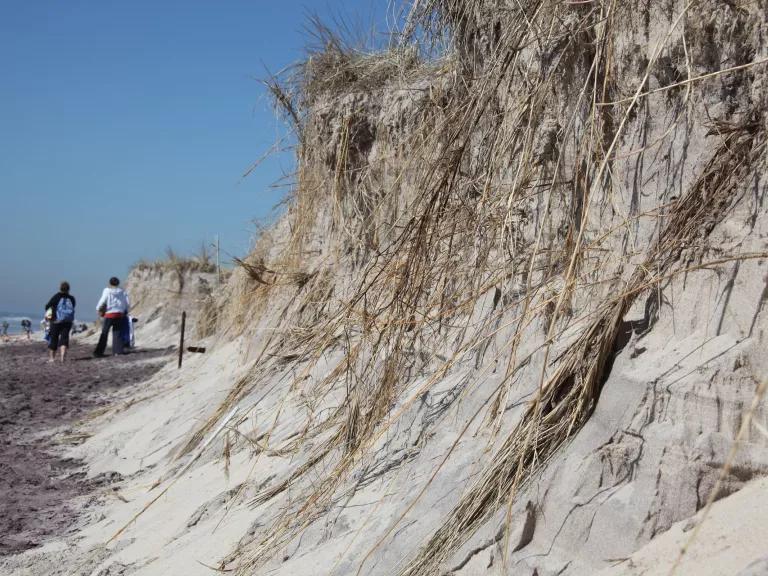
Water has the power to erode delicate landscapes.
Katharine Andriotis/Alamy Stock Photo
Sewage overflows
Instead of separate storm drains, nearly 860 municipalities across the United States use combined sewer systems, which dump stormwater runoff into the same pipes that are used for domestic sewage and industrial wastewater. Unfortunately, these sewer systems are designed to overflow when stormwater exceeds their capacity. A big storm, in other words, can cause an excess mess of both runoff and raw sewage to be released into waterways. In New York City alone, about 27 billion gallons of this noxious mixture pour from nearly 460 outfalls every year.
Economic toll
Stormwater runoff contributes to the frequency and severity of small-scale urban floods. Although localized flood events are not as damaging as catastrophic ones, they can create a greater overall economic burden because of their repetitive nature. In the United States, more than 30,000 properties in 2017 had been flooded an average of five times each (with some homes getting inundated 30-plus times). And those figures will likely rise as climate change takes its toll, which is why it’s critical that FEMA update its standards for the National Flood Insurance Program. The EPA estimates that annual flood damages, due in part to runoff, will increase by $750 million by century’s end. And stormwater comes with other costs too. When water quality deteriorates, fish and shellfish populations—along with the economies that rely on them—decline as well. There can also be a public health cost. One 2019 study by Heal the Bay estimated that in Los Angeles alone, stormwater runoff causes $14 million to $35 million in health costs annually just from people who contract gastrointestinal illnesses after swimming in contaminated oceans.
Health toll
Stormwater runoff impacts the water we drink, the seafood we eat, and the recreational areas we visit. It introduces disease-causing pathogens into water supply sources that treatment facilities can’t always filter out. And it can contaminate fish and shellfish, which in turn can sicken us. Rainfall runoff also inundates beach water with bacteria at levels that violate public health standards and sicken people, causing rashes, hepatitis, and gastrointestinal illnesses. As climate change creates more frequent, extreme weather events, our exposure to stormwater runoff pollution will increase.
Stormwater management
A key part of managing the pollution from stormwater runoff is prevention. Green infrastructure keeps waterways clean and healthy in two primary ways:
Water retention
Green infrastructure prevents runoff by capturing rain where it falls, allowing it to filter into the earth (where it can replenish groundwater supplies), return to the atmosphere through evapotranspiration (when water evaporates directly from the land or plants), or be reused for another purpose, such as landscaping.
Water quality
Green infrastructure improves water quality by decreasing the amount of stormwater that reaches waterways and by removing contaminants from the water that does. Soil and plants help capture and remove pollutants from stormwater in a variety of ways, including adsorption (when pollutants stick to soil or plants), filtration (when particulate matter gets trapped), plant uptake (when vegetation absorbs nutrients from the ground), and the decomposition of organic matter. These processes break down or capture many of the common pollutants found in runoff, from heavy metals to oil to bacteria.
What are other benefits of green infrastructure?
In addition to influencing the quantity and quality of runoff that reaches waterways, green infrastructure provides the following benefits.
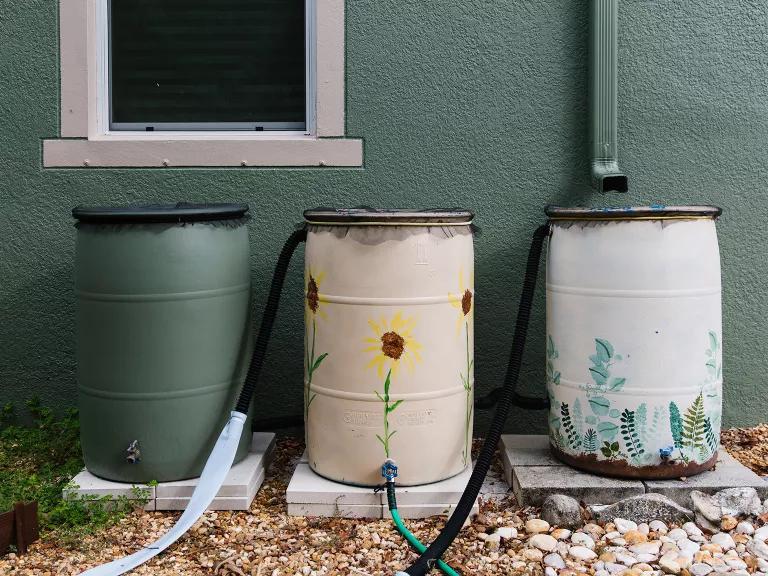
Rain barrels capture rainwater from this home’s rooftop.
City of St Pete via Flickr, CC BY-ND 4.0
Reduced flooding
Heavy rains have gotten more frequent—and intense—in the United States over the past 50 years, with climate change making matters worse and increasing the risk of flooding and sewer system overflows. Indeed, the average size of a 100-year floodplain is likely to increase 45 percent by century’s end, according to the EPA. Another growing problem is urban flooding: Caused simply by too much rain on impervious surfaces (not by storm surges or overflowing bodies of water), urban floods can destroy neighborhoods. They particularly affect low-income neighborhoods and communities of color and can leave behind health problems like asthma and illness caused by mold. Green infrastructure reduces flood risks and bolsters the climate resiliency of communities by capturing rain where it falls and keeping it out of sewers and waterways.
Increased water supply
According to the California Water & Land Use Partnership, more than half of the rain that falls in urban areas—which are covered mostly by impervious surfaces—ends up as runoff. Green infrastructure practices reduce runoff by capturing stormwater and allowing it to recharge groundwater supplies or be harvested for purposes like landscaping and toilet flushing. That reduces demand on municipal water supplies (even more important because of decreased rainfall, reduced snowpack, and earlier snowmelt brought on by drought and hotter temperatures that can come with climate change). Green infrastructure promotes rainfall conservation through the use of capture methods and infiltration techniques (for instance, bioswales, discussed below, absorb runoff that can recharge aquifers). As much as 75 percent of the rainfall that lands on a rooftop can be captured and used for other purposes. A study in Wisconsin estimated that green infrastructure could capture or reallocate up to four billion gallons of stormwater; and in California, it could save up to 4.5 trillion gallons.
Smog and heat mitigation
A city’s many miles of hot, dark pavement absorb and radiate heat into the surrounding atmosphere at a far greater rate than a natural landscape would. Known as the urban heat island effect, this phenomenon can significantly increase ambient air temperatures. The EPA estimates that the average air temperature of a city with one million people or more can be one to seven degrees Fahrenheit warmer during the day than surrounding areas. Higher temperatures reduce air quality by increasing ground-level ozone (also known as smog). In Los Angeles, for example, a one-degree temperature increase alone makes the air roughly 3 percent smoggier. Green roofs, green streets, and other forms of green infrastructure help improve air quality and reduce smog through their use of vegetation. Plants not only provide shade but also absorb pollutants such as carbon dioxide (CO2)—which is valuable for carbon sequestration—and help reduce air temperatures through evaporation and evapotranspiration.
Health benefits
By reducing air temperatures and pollution, improving water quality, and creating more natural spaces, green infrastructure provides myriad public health benefits. Cooler and cleaner air can reduce heat-related illnesses—vital when you consider that 210 million Americans currently live in places where high summer temperatures put them at risk for heat-related problems such as exhaustion and heatstroke. Risks for respiratory issues, such as asthma, can also be reduced. Healthier waterways mean less illness due to less exposure to polluted water and fewer contaminants in drinking water and seafood. Greener areas also promote physical activity and can boost mental health while improving neighborhood livability.
Reduced costs
Green infrastructure is often far cheaper than more conventional water management strategies. Philadelphia found that its new green infrastructure plan will cost $2.4 billion over 25 years, compared with the $9.6 billion that a gray infrastructure would have cost. The capital expenses associated with green infrastructure are often smaller—planting a rain garden to deal with drainage costs less than digging tunnels and installing pipes. But even when it isn’t cheaper, green infrastructure still represents a good long-term bet. The life expectancy of a green roof is twice that of a regular roof, while the low maintenance costs of permeable pavement can make it a solid long-term investment. The Iowa town of West Union, for example, determined it could save $2.5 million over the lifespan of a single parking lot by using permeable pavement instead of asphalt.
Green infrastructure saves money in other ways as well. Water from municipal drinking water systems is typically treated and then transported to homes. This alone can account for up to 40 percent of electricity use in municipal governments and about 2 percent of total U.S. use. But green infrastructure provides a source of water on the cheap for many non-potable uses that the EPA says presents “little human health risk.” That’s significant, given that only an estimated 19 percent of household water needs require purified water, and commercial users require even less. In other words, there is no reason to use expensive drinking water to flush the toilet or wash your car when rainwater works just as well.
Green infrastructure also improves the quality of water drawn from rivers and lakes for drinking, which reduces the costs associated with purification and treatment—in some cases by more than 25 percent, according to the Environmental and Energy Study Institute. And green roofs can cut heating and cooling costs, leading to energy savings of as much as 15 percent.
Quality-of-life improvements
Green infrastructure creates jobs in several ways. People can find direct employment opportunities, such as in the design, construction, and maintenance of green sites, but also indirectly. For example, when those workers have more money to spend, their spending fuels additional economic activity. Green infrastructure also raises local property values: A 2020 meta-analysis found that property values can increase by as much as 20 percent. New research suggests green infrastructure may even help reduce crime: Pleasant, verdant areas encourage people to gather outdoors (increasing safety); open spaces with grass and tall trees are especially effective.
Types of green infrastructure
From flowering rooftop gardens to absorbent pavement to tree-lined streets, green infrastructure comes in many forms and can often hide in plain sight. Here are some common examples.
Green roofs
A living landscape of vegetation (think hardy grasses, succulents, and wildflowers), green roofs provide a verdant oasis for birds, butterflies, and the people who have access to them. By providing an extra layer of insulation to a home or building, green roofs slash cooling- and heating-related energy usage and costs. Whereas a conventionally dark roof basically bakes on a hot summer day (transmitting the heat it absorbs to the building below), a green roof can remain cooler than the ambient air temperature around it. According to the EPA, green roofs can be up to 40 degrees Fahrenheit cooler than conventional roofs and even reduce citywide temperatures by as much as 5 degrees.
Green roofs generate other pluses: They also sequester rain and carbon pollution. Somewhere between 40 and 80 percent of the total volume of rain that falls on green roofs can be retained. Moreover, the water that is released from a green roof is released slowly, reducing the amount of runoff that rushes into a watershed all at once, which curbs flooding and erosion. The vegetation found on green roofs also captures CO2, which gets stored in plants and soil. One study found that if the Detroit area greened all of its commercial and industrial rooftops, the carbon sequestered over two years would be equal to taking more than 10,000 midsize SUVs or trucks off the road for a year.
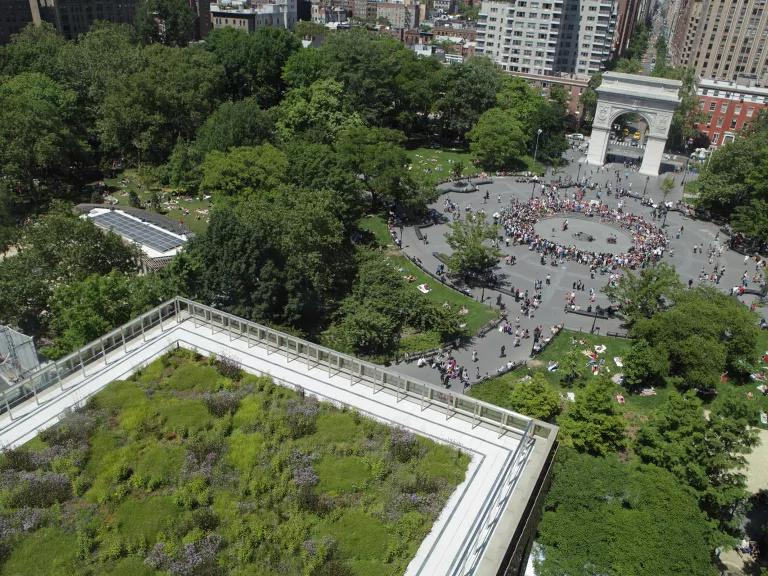
A green roof in New York City’s Greenwich Village
Andrew Cribb/Alamy Stock Photo
Blue roofs
Although not technically green infrastructure, blue roofs collect and store rainfall to reduce the influx of runoff into municipal sewer systems. They use detention ponds, basins, or trays to collect stormwater before draining it at a controlled rate into sewers or waterways. In addition to stormwater management, blue roofs can reduce the urban heat island effect when coupled with light-colored or reflective roof material, as well as provide energy savings in the form of reduced cooling expenses. The water from a blue roof can be reused too.
Downspout disconnection
Even a few inches of rain falling on a house can result in thousands of gallons of stormwater runoff; just a single one-inch rainfall on a 1,300-square-foot rooftop can generate 832 gallons or 12 gallons per minute. Often channeled into storm drains by gutters and downspouts, this runoff increases the risk of sewer system overflows. Downspout disconnection is the practice of redirecting rooftop runoff from storm drains to a permeable surface, such as a lawn, or to rain barrels or cisterns, which capture and hold the water for later use. Downspout disconnection can also significantly reduce the amount of stormwater that municipalities must manage. The city of Portland, Oregon, disconnected the downspouts of more than 26,000 properties from the city’s combined sewer system between 1993 and 2011. Now, an estimated 1.2 billion gallons of stormwater get diverted from the sewer system each year, alleviating combined sewer system backups in city neighborhoods.
Rainwater harvesting
Beyond helping to rein in runoff, the capture, storage, and usage of rainfall (a practice known as rainwater harvesting) has the potential to meet 21 percent to 90 percent of a city’s annual non-potable water needs, effectively supplying enough water for up to hundreds of thousands of residents. What’s more, rainwater harvesting (which typically uses cisterns or rain barrels to collect runoff from impervious surfaces like rooftops) provides a practical way to meet municipal water needs as climate change, population growth, and increased demand from industries such as agriculture and energy strain the water supplies of many regions.
Rain gardens
Rain gardens—which can be used in a variety of settings, from street medians to small yards—typically feature native shrubs, perennials, and grasses planted in a shallow basin. They are designed to trap and absorb rooftop, sidewalk, and street runoff. In addition to allowing rainfall to evapotranspire or slowly filter into the ground, rain gardens help recharge underground aquifers, keep stormwater from reaching waterways, provide habitat for wildlife, and beautify a street or yard. They are hardworking too: A typical rain garden is 30 percent more absorbent than a conventional lawn. In an analysis of the Seattle area by the 12,000 Rain Garden campaign, researchers estimated that a single rain garden can filter as much as 30,000 gallons of stormwater a year, and 12,000 rain gardens can absorb up to 160 million gallons.
Planter boxes, a type of rain garden, are often used in the space between a sidewalk and street. They feature elevated sides that allow rain to fall and be absorbed by vegetation and soil while small drainage openings help curb the flow of the runoff that exits from the planters.
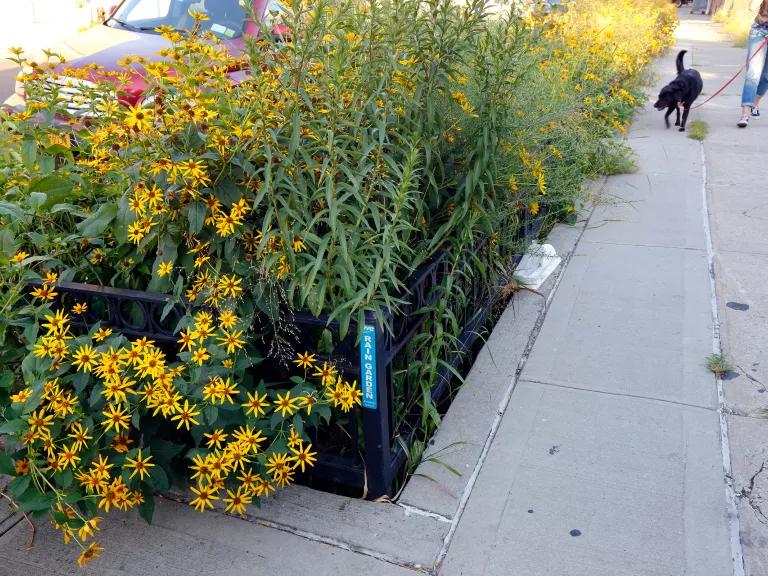
A rain garden built into a New York City sidewalk
Robert K. Chin/Alamy Stock Photo
Bioswales
Consisting of long, relatively deep channels of native plants, grasses, flowers, and customized soils that run parallel to parking lots or roads, bioswales can handle large quantities of runoff from large impervious surfaces. Not only do they absorb and retain runoff from small storms, but they also filter and slow the release of water from heavier rains to sewers or surface waters, limiting floods and providing a first filtration of pollutants. The City of Lincoln Transportation and Utilities estimates that effective bioswales can capture and filter out as much as 90 percent of solids (like sediment); 80 percent of trace metals, oil, and grease; and about 65 percent of phosphorus from the runoff they collect.
Urban tree canopy
In addition to cleaning and cooling the air, trees provide a natural stormwater management system. Tree canopies intercept rainfall before it hits the ground. By providing surface area—branches and leaves—for raindrops to land on and evaporate from, a mature deciduous tree can capture as much as 700 gallons of rain a year, while a mature evergreen can absorb up to 4,000 gallons annually. The root system of a tree plays a large role in the management of runoff as well. In addition to drinking up water, which is then released via transpiration, roots create channels and open up space in soil, which enhances the ground’s ability to soak up water.
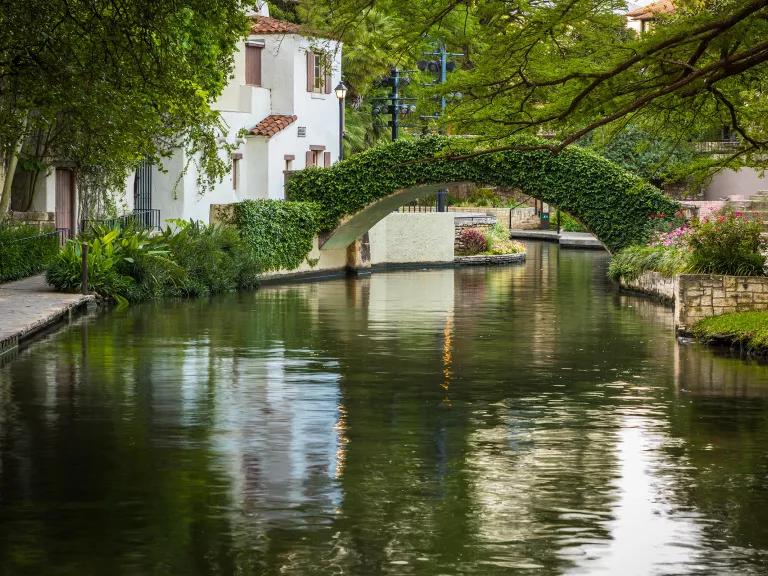
Downtown San Antonio, Texas
Inge Johnsson/Alamy Stock Photo
Permeable pavement
A pavement system often used for sidewalks, parking lots, or driveways, permeable pavement (also known as porous pavement) allows rainfall to seep through to underlying layers of pollutant-filtering soil before making its way to groundwater aquifers. Once installation costs are factored in, it can cost as much as 20 percent less up front than conventional pavement systems, and it can be cheaper in the long run to maintain.
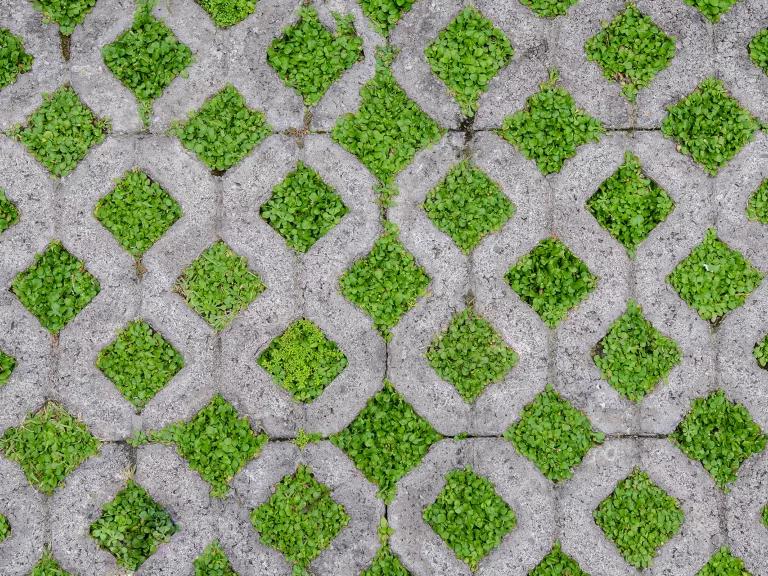
Porous surfaces allow rainfall to seep through to underlying layers of rock and soil that filter out pollutants.
Green parking lots
Designed to curb rainfall runoff, green parking lots often feature permeable pavement, vegetated areas around or within their perimeter, and shade trees that can help reduce the urban heat island effect.
Green streets
A form of sustainable road design, green streets combine various green infrastructure practices to more effectively manage stormwater. Whereas typical roads direct runoff into storm drains, green streets use permeable pavement, bioswales, planter boxes, and other stormwater management techniques to capture, absorb, and filter rainfall where it lands, slashing the amount of runoff that reaches waterways and improving the quality of what does. In fact, green streets can remove as much as 90 percent of stormwater pollutants, according to the EPA. In the Watts neighborhood of Los Angeles, a green streets project that began in 2016 has now helped offset nearly 30 million gallons of the city’s stormwater runoff that reaches local rivers and beaches each year.
Green streets offer many other benefits as well. In addition to providing an economical alternative to costly new investments in sewer system infrastructure, they can improve air quality, provide shade, enhance the safety of pedestrians and bicyclists, and beautify neighborhoods. When green streets incorporate additional elements—such as energy-efficient lighting, recycled or locally sourced materials, and improved spaces for walking, running, biking, or public transportation—they are referred to as complete streets.
History of green infrastructure
As described in the National Research Council’s definitive report on urban stormwater management, most urban drainage systems evolved in the United States after World War II. These complex structures are based on simple technology: catch basins and pipes that capture water and convey it elsewhere in order to reduce and avoid flooding. Unfortunately, many growing American cities soon discovered a major problem: These systems displaced high volumes of stormwater so quickly that floods weren’t being mitigated so much as moved. To make matters worse, the increasingly nonporous city surfaces were leading to drops in groundwater levels and impacting nearby waterbodies.
The thinking about urban stormwater management started to evolve in the 1970s as landscape architects began placing more emphasis on low-impact development. This entailed greater efforts to develop areas around their natural hydrology, using practices like infiltration via vegetative channels and swales. Architects and engineers were beginning to see a flood-prone area’s natural hydrology not as an impediment but as part of the solution to its flooding problems.
Around the same time, scientists and public health officials began raising the alarm about stormwater’s other hazard: pollution. Studies like the Nationwide Urban Runoff Program, completed in the 1980s, showed that urban runoff contained contaminants like heavy metals, sediment, and even pathogens—all of which water can pick up as it flows across impervious surfaces looking for the lowest ground.
At the start of the 21st century, stormwater infrastructure that was strategically built to allow runoff to infiltrate close to the source became an increasingly popular answer for reducing this pollution. This is when the term green infrastructure was likely coined.
New York’s Staten Island Bluebelt was one of the first and largest precursors to modern-day green infrastructure initiatives. Although it was designed in the 1990s, the Bluebelt’s story began in 1964 with the completion of the Verrazzano-Narrows Bridge linking Staten Island to Brooklyn. While better access to the borough sparked a two-decade boom in residential development, the corresponding infrastructure to handle the increase in sanitary waste and stormwater failed to keep up, resulting in chronic flooding, polluted waterways, and the regular smell of sewage. The Bluebelt project helped solve these issues by preserving streams, wetland areas, and other drainage corridors (bluebelts) that use natural mechanisms to capture, store, and filter stormwater—and quite effectively. Nearly three decades later, the award-winning Bluebelt comprises more than 14,000 acres, can temporarily hold and filter as much as 350,000 gallons of rainfall, and has saved tens of millions of dollars that would have been spent on conventional storm sewers.
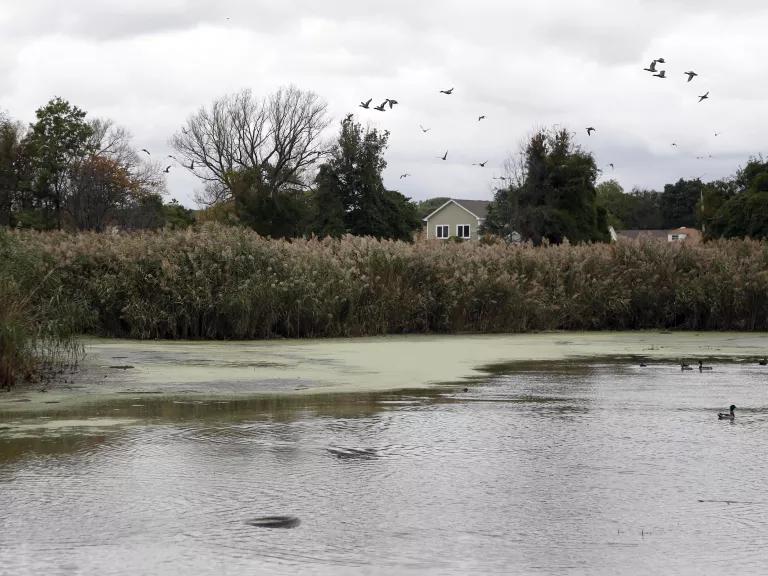
An undeveloped wetland known as the Mid-Island Bluebelt on Staten Island in New York City
Seth Wenig/Associated Press
Building a greener future
Although it wasn’t described as green infrastructure at the time of its creation, the Staten Island Bluebelt demonstrates the sustainable and cost-effective potential of green infrastructure and underscores the significant opportunities that come with investing in similarly innovative projects, both big and small.
Municipal and community leaders are beginning to understand that green infrastructure can deliver numerous economic and environmental benefits—as well as helping to correct age-old planning policies that create social divisions. That means more parks, open spaces, and other amenities can be built in formerly neglected neighborhoods, boosting the health and well-being of everyone.
Indeed, cities across the country are undertaking major green infrastructure initiatives. Take Philadelphia, home to one of America’s oldest sewer systems. The city is investing $2.4 billion to retrofit nearly 10,000 acres of impervious surface (at least one-third of the city’s total that is served by a combined sewer system) to manage stormwater runoff. By 2021, it had exceeded its first target goal and is now preventing nearly three billion gallons of stormwater runoff and sewer overflow annually. Perhaps the most groundbreaking aspect of the program is its competitive grant program to spur the voluntary development of green infrastructure retrofits on private property. The city celebrated the greening of its first thousand acres in 2017 and aims to add another thousand acres every five years.
There are plenty of ways that green infrastructure can be used on a smaller scale as well, including in our own homes. Simple strategies range from the use of disconnected downspouts and porous surfaces for outdoor spaces to the planting of native gardens. Or you can join the no-mow movement.
Federal and local funds available for water infrastructure continue to decline, although state and local governments are stepping up their investments of such projects. The United States maintains its embarrassing D grade in wastewater management from the American Society of Civil Engineers while climate change increasingly rears its ugly head. Altogether, there is simply no better time to look toward more effective, sustainable alternatives to the antiquated and faltering systems that we rely on today.
Modernizing regulations at the national, state, and local levels is a crucial step for driving the use of green infrastructure. In recent years, NRDC has been part of successful efforts to strengthen stormwater permits and regulations in places, including California, New Jersey, and Washington, D.C. Further legislation, incentives, and enforcement across the country—from the EPA, the Department of Transportation, and state and city governments—will be essential for combating stormwater runoff going forward.
This story was originally published on March 4, 2019, and has been updated with new information and links.
This NRDC.org story is available for online republication by news media outlets or nonprofits under these conditions: The writer(s) must be credited with a byline; you must note prominently that the story was originally published by NRDC.org and link to the original; the story cannot be edited (beyond simple things such as grammar); you can’t resell the story in any form or grant republishing rights to other outlets; you can’t republish our material wholesale or automatically—you need to select stories individually; you can’t republish the photos or graphics on our site without specific permission; you should drop us a note to let us know when you’ve used one of our stories.
What Are the Solutions to Climate Change?
How to Find Relief During Summer Heat Waves in the City
What Is the Justice40 Initiative?