
Hurricanes and Climate Change: Everything You Need to Know
The most widespread, damaging storms on earth are getting worse, and climate change is a big reason why. Here’s a look at what causes hurricanes and how to address the threat of a wetter, windier world.
Linda Rodriguez Flecha/AP
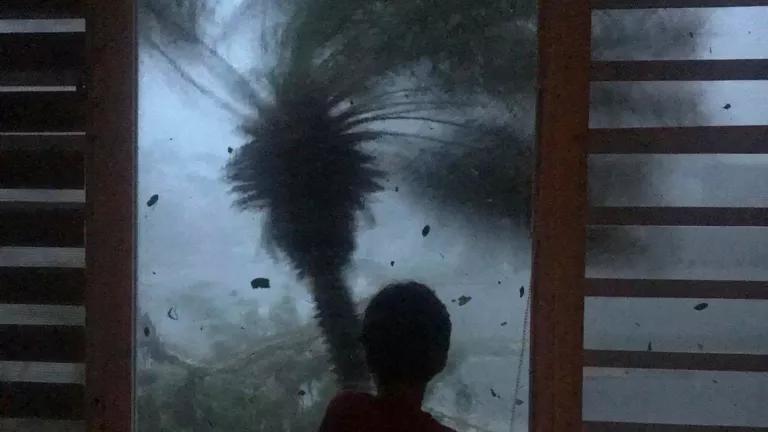
Pounding rain, raging winds, and devastating storm surge. When hurricanes make landfall, they bring a trifecta of threats that are capable of leveling communities and destroying lives and livelihoods. This primer explores what these giant energy powerhouses are made of, how climate change is affecting them, and how to limit damage from their wrath.
Hurricane facts
What is a hurricane?
A hurricane is an intense low-pressure weather system of organized, swirling clouds and thunderstorms that gain energy from warm tropical waters. While we’re using the term hurricane here, these systems are actually identical to typhoons and cyclones—the name varies depending on where they originate from. They’re called hurricanes in the Atlantic basin and in the central and eastern Pacific Ocean; typhoons in the northwestern Pacific; and cyclones in the Indian Ocean and South Pacific (more on this later). To be classified as a hurricane, wind speeds must reach at least 74 miles per hour (mph). That’s powerful enough to peel off roof shingles.
With their distinctive buzz saw shape when viewed from above, hurricanes spin around a low-pressure center known as the eye—an area of calm and sometimes even clear sky. The eye, which is typically 20 to 40 miles across, is surrounded by a circular “eye wall,” a dense wall of clouds and thunderstorms containing the most violent wind and rain. Beyond the eye wall and extending for as much as hundreds of miles, slowly rotating rain bands bring their own intense thunderstorms, capable of producing fierce winds and tornadoes.
Hurricane categories
Meteorologists measure a hurricane’s strength based on the intensity of its sustained wind speeds and rate it using the Saffir-Simpson Hurricane Wind Scale. There are five categories of hurricane: a category 1 produces sustained winds of at least 74 mph, a category 2 storm begins at 96 mph, and a category 3—considered “major”—has winds of at least 111 mph. Categories 4 and 5, which are both considered “catastrophic,” generate winds of at least 130 mph and 157 mph, respectively. In 2024, noting that hurricanes are now regularly growing more intense than what’s typically considered a category 5, scientists proposed adding a category 6.
The category of a hurricane reflects only the wind speed, not the overall potential for damage. In fact, the greatest risk comes from flooding associated with the storm surge and/or the intense rains the storms generate. Consider Superstorm Sandy, which arrived in New Jersey with 80 mph winds (barely over the category 1 minimum) but still proved devastating. Sandy lacked the extreme winds of a major storm, but the massive swell of water it generated crashed into New Jersey and New York, obliterating beaches and boardwalks, filling subway tunnels, inundating neighborhoods, and destroying massive amounts of infrastructure. Similarly, most of the damage caused by hurricanes Helene and Milton in 2024 were largely attributable to torrential rains, not wind or even storm surge in coastal areas.
Hurricane season
For the Atlantic basin (comprising the Atlantic Ocean, Caribbean Sea, and Gulf of Mexico), hurricane season runs from June through November. The Atlantic season peaks between mid-August and late October; a typical season produces an average of 10 hurricanes—with three of them measuring category 3 or above.
Hurricane season in the eastern Pacific, an area extending from the U.S. West Coast to 140 degrees west longitude (about due south of Alaska’s eastern border), lasts from mid-May through November. An average of 12 hurricanes a year appear in the eastern Pacific, with half of them measuring category 3 or above. The central Pacific, which includes Hawai‘i, typically sees two to five hurricanes a year during its season—June through November—with most storms appearing in August and September.
An average of six major (categories 3 and above) hurricanes have made landfall each decade in the United States since 1851, according to data collected through 2020. About 40 percent of all hurricanes make landfall in Florida, while 60 percent of major hurricanes hit either Florida or Texas.
How is a hurricane different from other storms?
The fact that hurricane, typhoon, and cyclone are all used for the same weather phenomena can be confusing. This explains where (and when) they occur and how they’re different from other major rain and wind events.
Typhoon
A typhoon is a tropical cyclone that occurs in the northwestern Pacific basin, covering eastern and southeastern Asia and Micronesia. Nearly one-third of the world’s big storms develop here, with an average of 26 typhoons a year, mostly between May and November. The world’s largest recorded tropical cyclone was Super Typhoon Tip (1979), which produced winds of 190 mph and measured a massive 1,380 miles in diameter, about the distance from New York City to Dallas; by the time it made landfall in Japan, winds had decreased to 129 mph. The strongest landfalling tropical cyclone on record was Super Typhoon Goni (2020), which slammed into the Philippines with 195 mph winds.
Cyclone
A cyclone—or a “tropical cyclone” or “severe tropical cyclone”—occurs in the Indian Ocean and South Pacific. Cyclones generally occur from May through November in the northern Indian Ocean and between November and April in the southern Indian Ocean and South Pacific. Areas impacted by cyclones include Southeast Asia, northern Australia, the South Pacific islands, India, Bangladesh, and some parts of East Africa, including Indian Ocean islands such as Mauritius and Madagascar.
Tornado
Although both types of storms are known for their spiraling, violently destructive winds, the similarity between tornadoes and hurricanes ends there. A hurricane forms over tropical waters and can span several hundred miles, last for days to weeks, and be predicted well in advance. A tornado, on the other hand, forms over land as a tall, rotating column of air that extends from the base of a thunderstorm (including those produced by hurricanes) to the ground. The largest tornadoes are just over a quarter mile wide and typically last for no more than an hour, though they can pack a punch in terms of wind speed—as high as 300 mph. (Most hurricanes top out around 180 mph.) And advance warnings for tornadoes, while incredibly accurate, are typically less than 15 minutes.
Monsoon
Similar to a hurricane, a monsoon can produce torrential rains and flooding. But while a hurricane is basically a single weather event, a monsoon is a seasonal change in the prevailing winds that move from ocean to land—and vice versa—and can produce months of wet (or even dry) conditions. Although most often associated with Southeast Asia, monsoon winds exist around the world, including the U.S. Southwest.
Hurricane impacts
Hurricanes leave a trail of devastation in their wake, piling up costs in terms of lives and livelihood.
How hurricanes impact communities
Hurricanes create a range of short- and long-term health and economic woes, with vulnerable populations often shouldering the greatest burden.
Flood damages
Flooding isn’t just the deadliest threat; it also causes tremendous damage to homes, buildings, and infrastructure, whether from storm surges or extreme rains. In fact, flooding was the main cause of damage for many of the costliest hurricanes. The trend toward storms with heavier rainfall has put a strain on the National Flood Insurance Program (NFIP), which has been in debt since Katrina caused $16.1 billion in flood-related damages in 2005. The program has relied on federal bailouts to stay operational, and as of February 2025, its debt totaled $22.5 billion. Meanwhile, the existence of this public financial safety net is a growing target of the Trump administration.
Economic loss
Hurricanes are the costliest form of weather disaster, accounting for more than $1.5 trillion in damages since 1980. In 2024, Hurricane Helene alone cost a whopping $78.7 billion. That figure includes everything from wrecked homes to mangled material assets like cars and boats. It also includes damage to public infrastructure including roads, bridges, and power lines, along with lost wages and income-generating assets such as crops, livestock, and businesses.
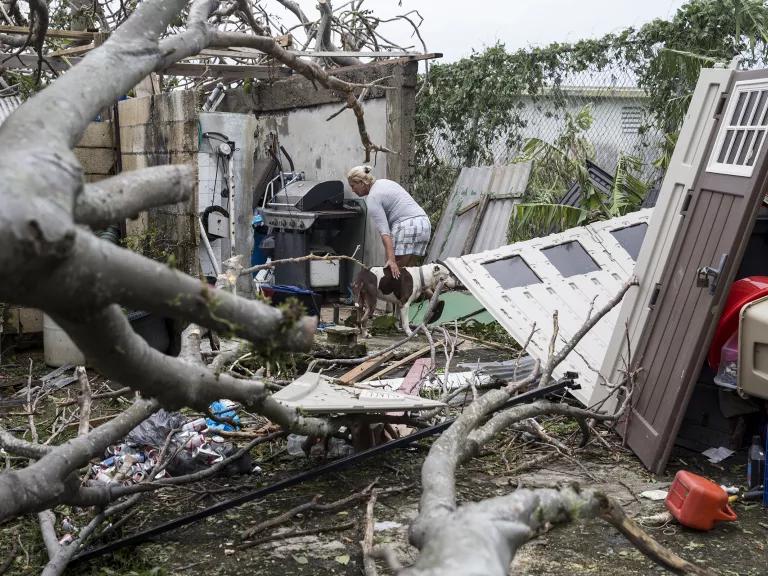
Damage to a residential property after Hurricane Maria made landfall in Puerto Rico in September 2017
Alex Wroblewski/Getty
Health toll
Hurricane Maria, which struck Puerto Rico in 2017 and is considered the deadliest hurricane in recent U.S. history (nearly 3,000 fatalities), showed how a storm can overwhelm the local electrical, water, and medical infrastructure and take a long-term toll on human health, including mental health.
Hurricane Katrina, meanwhile, struck the U.S. Southeast in 2005 and claimed more than 1,800 lives. The majority of Katrina’s victims perished from the storm surge, which is the main cause of U.S. fatalities related to a hurricane. Flooding from rainfall is the second-gravest danger; together with drownings, either near shore or out at sea, these water events are responsible for 88 percent of all hurricane-related deaths. While a storm’s strength is based largely on wind speed, deaths from falling debris and other wind-borne hazards—including tornadoes spawned by the hurricane—account for only about 11 percent of fatalities.
These statistics don’t tell the full story of how a hurricane impacts health, however. Flood-induced sewage overflows from wastewater treatment plants can dump fecal bacteria into floodwaters and waterways, increasing the risk of skin, eye, ear, and gastrointestinal infections. Runoff from toxic waste sites and factory farms can expose nearby residents to hazardous waste. After the storm has passed, water-damaged homes can harbor bacteria and mold, making the air unhealthy to breathe. Mold can be a particularly pervasive health hazard, since it starts growing immediately and can be hard to detect and remove.
Which groups are the most vulnerable?
While hurricanes impact everyone living in a storm-affected area, environmental injustice means that some communities shoulder higher costs. Low-income communities, people of color, and the elderly are disproportionately exposed to storm impacts. These populations often live in suboptimal housing that’s situated in areas particularly vulnerable to storm threats—sometimes close to polluting industries that raise the risk of contamination via pipeline or facility leaks or chemically contaminated floodwaters. What’s more, low-income communities are the least prioritized by response and recovery efforts. After a hurricane has passed, they routinely face challenges in accessing public disaster relief and affordable housing.
How hurricanes impact the environment
Ravaged homes and submerged streets are the images most often seen on the news after a hurricane strikes, but coastal ecosystems—both on land and at sea—experience their own forms of devastation as well.
Saltwater/freshwater intrusion
When seawater surges into wetlands, bays, and estuaries, the onslaught of salt can harm freshwater marsh grasses and plants as well as crabs, minnows, and other marine life. When saltwater washes over land, it can harm or even kill bottomland forests and coastal trees unaccustomed to the uptick in salinity. The opposite can happen as well: Heavy rains can cause freshwater to flood into coastal basins, decreasing the salinity of typically brackish waters and imperiling the species that depend on them.
Dislocation of species
Both strong winds and the relative calm of a hurricane’s eye (which acts as a natural cage) can push birds, particularly seabirds and water fowl, hundreds of miles from home. Meanwhile, floodwaters—from both storm surge and overflowing rivers and streams—can strand animals far from their natural territory.
Forest destruction
Hurricane-force winds can uproot trees and bushes or strip them of their leaves, seeds, fruit, berries, and branches, damaging entire wooded ecosystems. This can not only create short-term food shortages for species but also change the face of an entire area. After a forest canopy is damaged, a once shady, cool, and damp area may become a sun-filled, hot, and dry space—effectively creating new habitat for invasive species while destroying ideal conditions for other, longer-term inhabitants.
Wetland, dune, and beach loss
Storm surges, waves, and winds can destroy wetlands and erode dunes and beaches, which provide critical habitat and important nesting grounds for a wide variety of wildlife species. These areas also provide a first line of defense from storm surge for us humans as well. Wetlands alone prevented an estimated $625 million in flood damage to East Coast communities during Hurricane Sandy. And another study estimated that if Florida had retained just 3 percent of its wetlands acreage, it would’ve saved about $430 million in damage when Hurricane Irma hit in 2017.
Turbid waters
Heavy rainfall and flooding can wash everything from soil and sediment to nutrient pollution and hazardous waste from wastewater treatment plants, refineries, and Superfund sites into marine, coastal, and freshwater environments. The introduction of mud and debris can smother marine life, such as oysters, and damage grasses and agriculture; nutrient pollution can contribute to coral bleaching; and poisonous contaminants can accumulate in fish and shellfish (and then be eaten by us).
What causes a hurricane?
Whether you call them hurricanes, typhoons, or cyclones, these systems result from the interplay of four main ingredients. Those include warm ocean water, cooperative wind patterns, stormy weather, and a dose of bad luck (since the first three ingredients alone aren’t always enough).
How do hurricanes form?
While any tropical disturbance can spawn a hurricane, the origins of nearly 83 percent of major Atlantic hurricanes (category 3 and up) come from North Africa, where the Sahara’s scorching summer heat meets the cooler, more humid air that rises from West Africa’s forested coastal regions. The contrast in temperatures forms an area of strong high-altitude winds known as the African easterly jet, which moves from east to west. Because of the temperature differences in the lands over which it crosses, the jet stream wobbles from north to south, creating atmospheric troughs—basically V-shaped tropical waves—of low-pressure areas that get pushed along by the winds. These tropical waves, which can trigger clusters of thunderstorms, emerge near the Cape Verde Islands, just west of Africa (hence the term Cape Verde hurricane) and continue westward across the Atlantic Ocean.

Aaron McConomy
About 60 tropical waves typically track across the Atlantic Ocean each year, peaking in summer and early fall—around the same time that the ocean is at its warmest. And that’s the kicker: When seawater with a temperature of at least 80 degrees Fahrenheit and a depth of about 165 feet meets a low-level weather disturbance like a tropical wave, conditions grow favorable for hurricane development. As a storm system moves across tropical ocean waters, the evaporation of warm water pushes more moist air up into the clouds, creating a low-pressure pocket near the sea’s surface and fueling the storm. Like water funneling down a drain (but inverted), moist air from surrounding areas rushes in to fill the atmospheric void, then evaporates as well, further fueling the formation of clouds and thunderstorms. As winds pick up and the energy-generating process continues, what was once a tropical disturbance can develop into a tropical depression and then a full-blown hurricane.
Hurricanes and climate change
As we continue to heat the planet by burning fossil fuels, we’re altering both the earth’s longer-term climate systems and its shorter-term weather, increasing the threat and cost of extreme weather events. A recent study by Climate Central published in Environmental Research: Climate that looked specifically at hurricanes in the North Atlantic between 2019 and 2023 shows that climate change increased the intensity for most of them. Here’s a look at why.
How does climate change affect hurricanes?
Warmer ocean temperatures
Over the past 50-plus years, the earth’s oceans have absorbed more than 90 percent of the extra heat generated by man-made global warming, becoming warmer as a result. Since warm sea surface temperatures fuel hurricanes, a greater temperature increase means more energy and supercharged storms. Rapid intensification—defined as an increase in a hurricane’s maximum sustained winds of at least 58 miles per hour within 24 hours—is harder to forecast and becoming more common. Officials may be unable to plan for the true magnitude of the resulting impacts or provide enough advanced warning to help communities adequately prepare for evacuation.
Rising air temperatures
The burning of fossil fuels and other human activities have caused an estimated 1.5 degree Celsius (1.8 degrees Fahrenheit) of global warming since preindustrial times. Since a hotter atmosphere can hold—and then dump—more water vapor, a continued rise in air temperature is expected to result in storms that produce 14 percent more rainfall, on average, for every 2 degrees Celsius (3.6 degrees Fahrenheit) of warming. And wetter storms like these come with an increased risk of flooding.
Sea level rise
As the ocean warms and expands and as ice sheets and terrestrial glaciers melt, we’ll see increased sea level rise. In turn, the threat of storm surge grows. This phenomenon, where powerful winds drive a wall of ocean water onto land, can devastate coastal areas and low-lying nations.
Longer-lasting storms
Research suggests that global warming may be weakening the atmospheric currents that keep weather systems like hurricanes moving, resulting in storms that linger longer. Sluggish storms can prove disastrous—even without catastrophic winds—since they can heap tremendous amounts of rain on a region over a longer period of time. The stalling of Hurricane Harvey over Texas in 2017, as well as the slow pace of Hurricane Florence through the Carolinas in 2018, resulted in record-setting rainfalls in each case.
Have hurricanes increased in number?
While there may seem to be a growing number of hurricanes snatching headlines each year, models show that the frequency of hurricanes making U.S. landfall has not increased since 1900. The exception is the North Atlantic, which the United Nations notes has experienced an increase in both the frequency and intensity of its hurricanes. This is supported by a 2021 study from the Massachusetts Institute of Technology.
Are hurricanes getting more intense?
We may not be experiencing more storms, but we are riding out stronger ones, with heavier rainfall and more powerful winds (hence, all those news headlines). For example, it’s been estimated that Hurricane Harvey dumped as much as 38 percent more rain than it would have without climate change. Another Harvey analysis indicates that the likelihood of a storm of its size evolved from happening once per century at the end of the 20th century to once every 16 years by 2017—again, due to climate change. Looking forward, the intensity of hurricanes that make landfall is expected to increase through the end of this century, with more category 4 and 5 storms.
Reducing hurricane risks
As the evidence makes clear, the force, strength, and impact of today’s natural disasters is inextricably tied to society’s past choices. Our centuries-long reliance on fossil fuels has driven the global warming trend, and we’re now experiencing the repercussions in the form of more severe weather events, including catastrophic hurricanes.
Of course, hurricanes are natural phenomena, and there is nothing we can do to halt any single storm in its path (though some people may try). We can, however, forgo the burning of carbon-emitting oil, coal, and gas for more efficient renewable energy options—such as wind and solar—and thereby reduce future warming and the ferocity of tomorrow’s storms.
And that’s a big point of the Paris Agreement, which was signed by nearly every nation on earth in 2015 and aims to curb the consequences of climate change by limiting global warming since preindustrial times to, ideally, 1.5 degrees Celsius. But getting there will require serious heavy lifting in the form of immediate, transformative global action, and recent actions by the Trump administration—including an executive order to withdraw the United States from the agreement—threaten to throw climate change progress in reverse. The risk of falling back into a business-as-usual approach could result in the “extreme” weather of today seeming commonplace by tomorrow.
Beyond the critical need to address the causes of climate change, mitigating the damage caused by intensifying hurricanes and other extreme weather events requires a focus on adaptation efforts. Communities, cities, and states should work together to improve climate resiliency and ensure that public safety is a primary factor in determining where and what we build—particularly around our floodplains and coastlines.
In the United States, we spend hundreds of billions of dollars each year on infrastructure investments that don’t account for increased flooding risks. NRDC and our partners are pushing to update federal standards to require and enable climate-smart decision-making. We also push states to better inform home buyers and renters of flood risks before moving into a new home.
Investing in making our infrastructure more resilient to intensifying storms, flooding, erosion, and sea level rise could result in major cost savings. Indeed, according to a report by the National Institute of Building Sciences, every $1 spent by the federal government on hazard mitigation today—for example, reducing the number of homes in flood-prone areas and increasing the weather resilience of buildings—could save $6 in future disaster-related expenses. And adopting the most current building code requirements will save even more: an estimated $11 per $1 invested.
Climate adaptation planning must also strengthen efforts to help people get out of harm’s way when a major storm is on the way, and to recover from the resulting damage. Among the millions who could be displaced in the coming decades, many will need assistance to move to safer locations. Governments should develop clear guidelines, recognizing their duties to provide refugee status to individuals displaced by environmental harm.
Within the United States, NRDC is advocating for smarter, more equitable policies that target the distribution of federal grants, our home insurance crisis, and the voluntary buyout programs which help people move to higher ground.
How to prepare for a hurricane
If you live in an area considered at risk for hurricanes, knowing what to do before, during, and after a storm will go a long way toward keeping you safe.
Hurricane preparedness list
- Visit your local government website to find out if you live in a hurricane evacuation area and to familiarize yourself with your area’s evacuation plans, routes, and shelters.
- Sign up or download apps for local weather alerts to stay on top of storm developments.
- Review your homeowner’s insurance policy for gaps and keep it up-to-date.
- At the start of hurricane season, inspect your home for vulnerabilities and opportunities for flood-proofing. Fix loose shingles, clear drains and gutters, and remove tree branches that could pose a threat during high winds and heavy rain. Consider elevating boilers and central air-conditioning units, installing a sewer backflow valve, and landscaping to guide water away from your house.
- Before a storm hits, prepare your flood survival plan: Refresh your disaster supply kit, add last-minute essentials such as medications and important documents, and ensure you have cash on hand, which can prove essential if the power goes out. Secure your property by protecting windows with hurricane shutters or plywood and removing outdoor furniture, trash cans, and other items that could blow away.
- Read more of our evacuation tips and guidance for what to do when the storm has passed.
This story was originally published on December 3, 2018, and has been updated with new information and links.
This NRDC.org story is available for online republication by news media outlets or nonprofits under these conditions: The writer(s) must be credited with a byline; you must note prominently that the story was originally published by NRDC.org and link to the original; the story cannot be edited (beyond simple things such as grammar); you can’t resell the story in any form or grant republishing rights to other outlets; you can’t republish our material wholesale or automatically—you need to select stories individually; you can’t republish the photos or graphics on our site without specific permission; you should drop us a note to let us know when you’ve used one of our stories.
What Are the Solutions to Climate Change?
1.5 Degrees of Global Warming—Are We There Yet?
Climate Change Progress