
Demolition Derby Deregulation That’s Too Much, Even for Industry
Companies and trade associations are telling the EPA that it’s going too far.

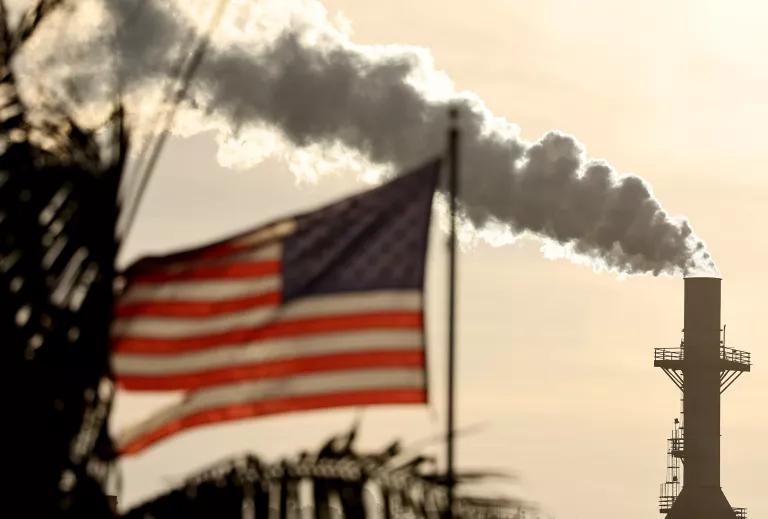
When Lee Zeldin, President Trump’s head of the U.S. Environmental Protection Agency (EPA), announced “the greatest day of deregulation” in U.S. history in March, he made grand promises to lift burdens on industry.
But as he and other administration officials have unveiled one extreme rollback after another, they are getting pushback from an unlikely source: American industry. A parade of businesses and associations are telling them that their attacks on climate and energy standards go way too far.
Take Administrator Zeldin’s proposal to repeal the EPA’s endangerment finding, the scientific finding that carbon dioxide and other greenhouse gases harm our health and well-being. This determination, which the National Academy of Sciences calls “beyond scientific dispute,” is the basis for climate pollution standards for cars, power plants, and oil and gas operations. The EPA’s proposal to axe the endangerment finding rests on a report cooked up in secret by five fringe scientists—a report that dozens of other scientists have thoroughly debunked.
American companies and trade groups are saying no thanks. Ford Motor Company told the EPA: “Pragmatically, eliminating standards altogether is not likely to provide the industry with the long-term stability we need to make historic investments in America and compete globally.”
LEARN MORE



More raspberries from the Edison Electric Institute, speaking for investor-owned power companies: “The power sector could be further exposed to competing and conflicting regulations through a patchwork of state regulations” and face increased common-law litigation.
And even the American Petroleum Institute, the face of the oil and gas industry, declared that it “believes EPA has authority to regulate” greenhouse gases, and it “supports the continued direct federal regulation of methane emissions from new and existing oil and natural gas sources.”
Zeldin also wants to terminate companies’ obligation even to measure and report their climate-changing emissions, which Congress expressly mandated more than 15 years ago. The EPA proposal claims industry will save hundreds of millions of dollars a year. But major industry groups say the savings would be negligible and the benefits of reporting are clear.
The U.S. Chamber of Commerce told the EPA that the emissions reporting program “serves important market, regulatory, and competitiveness functions for American business.” The American Gas Association said its members need the data to meet state and local government requirements and investor needs. And, once again, the American Petroleum Institute warned that the existing program “benefits the U.S. oil and natural gas industry,” and any alternative program is unlikely to “command the same combination of characteristics and produce the same slate of benefits.”
Industry has also come out against Zeldin’s plan to let the nation’s supermarkets keep using the harmful refrigerants called HFCs. Thousands of stores have already adopted safer alternatives. The industry’s two main trade groups told the EPA that delaying the transition to cleaner products will hurt American manufacturers that have already invested in producing the next generation of refrigerants and equipment. They warned that the rollbacks will cause more imports of damaging HFCs made by foreign rivals.
Hillphoenix, a Georgia-based manufacturer of refrigeration equipment, reported that major supermarket chains—including ALDI, Costco, Kroger, Target, and Walmart—are already installing safer systems in new and remodeled stores. The company chided the EPA for catering to a few stubborn chains that lag behind the rest of the industry.
Over at the U.S. Department of Energy, Secretary Chris Wright has proposed eliminating 17 energy efficiency standards for household and commercial appliances, including microwaves, ovens, and dishwashers. These rollbacks would let imports of energy-hogging appliances undercut the most innovative domestic and foreign companies, said the Association of Home Appliance Manufacturers, which represents companies like GE, LG, and Whirlpool. Plus, efficiency standards save huge amounts of electricity and cut homeowners’ utility bills by more than $570 a year—no small benefit when power demand and utility bills are surging.
Appliance makers, big box stores, and others raised a similar alarm when Zeldin proposed killing the popular Energy Star program. Energy Star labels and web-based product ratings save consumers $40 billion a year, more than 1,000 times the program’s $32 million cost. The backlash from business and congressional Republicans was so intense that the EPA had to abandon that effort.
To be sure, many companies want changes to current standards. But they don’t want the uncertainty that comes from a full-scale demolition derby. They’re asking themselves: Will these radical plans hold up in court? What will happen when the political pendulum swings back toward health and environmental protection? How can we invest in new factories and jobs when everything is in flux?
Environmental and consumer organizations like NRDC support these commonsense standards, which cut pollution and save consumers money at the same time. Affordable energy and climate protection go hand in hand. While we have plenty of differences with polluting industries, we’re aligned in fighting deregulatory excesses that make no business or environmental sense.
If the Trump administration stays hell-bent on this path, Administrator Zeldin’s “greatest day of deregulation” will end up a mirage, opposed by environmentalists and industry alike, and be overturned when challenged in court.

Add your name: I stand with climate science and the law
NRDC is fighting back in court to stop the EPA’s illegal giveaway to polluters. Help us get to 25,000 signatures for climate protections. Join us in demanding that the EPA respect climate science and the law, uphold the endangerment finding, and protect people from dangerous vehicle pollution.
Related Blogs
The EPA Cooks the Books in Trying to Cook the Planet

The Nuclear Regulatory Commission Is Rewriting the Rules That Are Supposed to Keep Nuclear Safe
