Connecting the West to a More Stable Clean Energy Future
The WestTEC 10-year study reveals the actionable transmission report that’s critical for a resilient western grid.

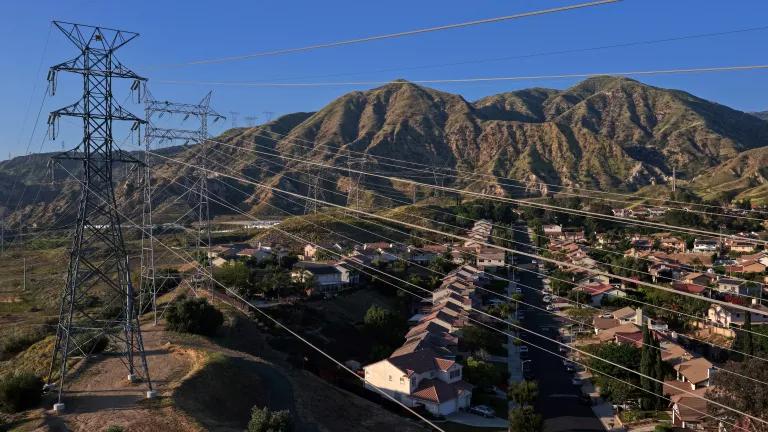
High voltage power lines entering the San Fernando Valley in Los Angeles

As we navigate an era of intense cold spells, record-breaking heat waves, and increasing demand for electricity, the reliability of our power grid has never been more critical.
For years, the West* has been operating with a fragmented grid, but today marks a major milestone in changing that. With the release of the Western Transmission Expansion Coalition (WestTEC) 10-Year Horizon Report, we have a data-driven, actionable road map that shows western states the interregional transmission necessary for a reliable, affordable, and decarbonized future.
Why we need this now: Electricity demand is surging
For nearly two decades, electricity demand in the United States has remained relatively flat, but that plateau is officially over. In 2022, projections for demand growth were less than 1 percent per year, but those projections spiked to more than 4 percent in 2025. Over the next decade, western peak electric demand is expected to increase by 30 percent—that’s three times greater than the increase in peak demand that the West has experienced over the past decade.
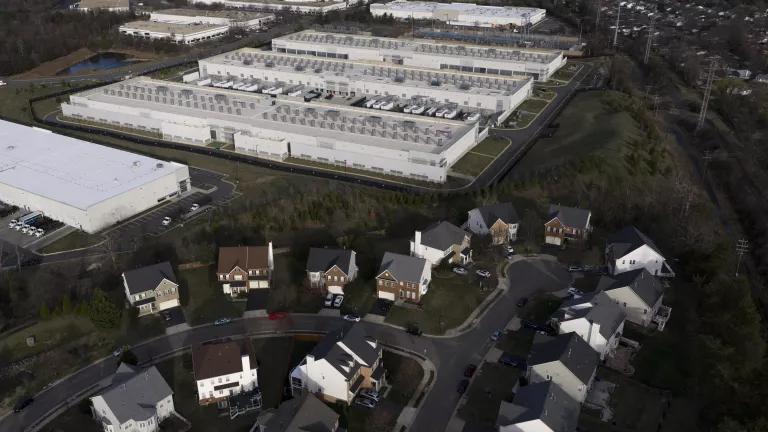
Two main factors drive this demand: rapid electrification and the massive growth of data centers. At the same time, many of our existing coal and gas generation units are aging out as cheaper renewable energy and storage drive a necessary transition to cleaner resources. Renewables already meet more than 25 percent of global demand and are projected to meet more than 50 percent by 2035. But the West cannot use this new, lower-cost clean energy if we cannot move it to where it is needed. Currently, there isn’t sufficient existing or planned transmission in the West to tie together the region’s growing energy loads and new clean generation to meet the needs of the fast-approaching future.

WestTEC brings unified transmission planning
This coalition is an unprecedented partnership among utilities, Tribal Nations, state regulators, environmental advocates—including NRDC—and others focused on closing the interregional planning gap. For too long, transmission in the West has been planned in silos within a single state or utility boundary. It became clear to western states’ that existing transmission planning frameworks simply were not producing enough new transmission across the region’s many utility territories to keep up with the changing needs of the grid.
Facilitated by the Western Power Pool, WestTEC provides a voluntary and transparent platform for harmonizing data across the entire Western Interconnection, which covers states from the Pacific Coast to the Rocky Mountains. WestTEC does not issue mandates but rather actionable recommendations for the parties that must collaborate to build out our grid.
After years of collaboration from its diverse partners, WestTEC’s 10-Year Horizon Report provides a mission-critical road map for the immediate upgrades needed by 2035 by identifying a comprehensive portfolio of projects. The total portfolio is estimated to add or upgrade more than 12,000 miles of high-voltage transmission. While this build-out requires a $60 billion investment, the annualized cost of the entire portfolio is $5.3 billion, when recovered over the 40-year useful life of these assets. This amounts to a very small fraction of the overall cost of electricity, yet it delivers long-term cost reduction and West-wide benefits. For the cost of this investment now, decades of benefits can be realized because the West will be able to accommodate the load growth and low-cost resource integration while maintaining reliability and enabling efficient dispatch. Essentially, this transmission investment can be considered a cost-containment measure against future cost increases caused by unnecessary operating costs, system congestion, and overbuilding or underbuilding to meet the needs of the future.
Additionally, the portfolio is designed to mitigate overloading transmission lines that would otherwise threaten stress on—or even the failure of—the high-voltage system. By addressing these vulnerabilities, this plan delivers significant operational improvements, including a $500 million per year decrease in power production costs and the ability to transfer an additional 10 gigawatts of power across interregional interfaces during times of need. This all contributes to a system, extended across western states, that has a low probability of interruptions or failures, even during extreme weather events that are becoming our new normal.
The path forward
The release of the 10-Year Horizon Report is a call to action for the entire Western Interconnection. It is an implementation plan for the utilities and developers, which must site and install the poles and wires, and for the regulators, which must navigate the land use trade-offs throughout the siting and permitting process.
For too long, the West has operated with a fragmented grid that is increasingly ill-equipped to handle the stressors of explosive demand growth and climate change. This 10-year portfolio is ready for action; it’s designed to be a direct input for utilities to propose projects in planning processes and to serve as a resource for state regulators when evaluating new infrastructure. NRDC is ready to work with partners in the planning processes across the western region to ensure this report is not put on the shelf and the grid does not remain fragmented.
While the 10-year portfolio focuses on immediate needs, we are also already looking toward the 20-Year Horizon Report, slated to be published later in 2026. This next phase will extend the vision out to 2045 and utilize scenario planning to navigate the uncertainties of long-term resource deployment.** By testing different futures, the 20-year portfolio will identify the projects that provide the highest value and fewest regrets, regardless of which path the future energy transition takes. Together, the current 10-year report and the upcoming 20-year report provide the data-driven foundation we need to build a resilient, efficient, and decarbonized western grid that supports our growing economy.
*For the purposes of this blog and the WestTEC study, the West is referring to 11 western U.S. states: Arizona, California, Colorado, Idaho, Montana, Nevada, New Mexico, Oregon, Utah, Washington, and Wyoming.
**NRDC was represented among the consultants and worked heavily with them in the scenario design process, especially in the Flux scenario, which stipulated an ongoing faster-than-recent-history load growth curve in parallel with commensurate rapid progress in developing and deploying clean generating and energy storage technologies.
Related Blogs
Market Boundaries Matter: Western Electricity Markets Can Better Share Affordable Power
Uncovering the Secret Documents Behind the Trump Administration's Clean Manufacturing Cancellations