
Assessing Global Effectiveness of Supply-Side Interventions for EVs
A review of global evidence in support of supply-side interventions and their applicability in India.

Freepik.com

This is a guest blog authored by Nitish Arora and Sahana L of NRDC India.
The World Sustainable Transport Day, November 26, highlights the importance of collective efforts to build cleaner, more efficient transportation systems. India, as the world’s third largest automobile market, is on a journey to transform its transportation sector, with a major goal to transition to electric vehicles (EVs). While initiatives like demand incentives and localized manufacturing programs have spurred the initial adoption of EVs, sustaining and accelerating this transition could require a renewed focus on overcoming supply-side challenges and building an inclusive ecosystem.
India’s strategies to drive EV adoption
India has employed a range of strategies to grow EV uptake—from incentives to drive EV adoption to setting up a localized EV ecosystem. Both national and sub-national governments have introduced a mix of fiscal and non-fiscal incentives to promote EV adoption, supported localization through phased manufacturing programs, and implemented production-linked incentive (PLI) schemes to strengthen the domestic EV supply chain. To complement these efforts, measures like transitioning to Bharat Stage VI standards have been introduced to improve the efficiency of internal combustion engine (ICE) vehicles.
As a result of these initiatives, India has made notable progress, with EV sales exceeding 1.5 million units in the last fiscal year. However, this figure still represents just 6.3% of total vehicle sales, which stood at approximately 24 million during the same period. While current policies and incentives are projected to enable 30-35% electrification of new vehicle sales by 2030, the International Energy Agency's 2023 report highlights the need for at least 50% EV adoption within the next decade to stay on track for the nation’s 2070 net-zero target.
The slow adoption of EVs can largely be attributed to higher upfront costs, a limited variety of EV models that match the performance of internal combustion engine vehicles, and a lack of widespread public charging infrastructure. To truly accelerate India's EV transition, addressing these challenges and ramping up supply-side efforts will be critical.
The potential of supply-side interventions
Globally, the discourse around EV policies is evolving. For years, countries have primarily relied on demand-side policies to stimulate electric vehicle adoption, offering subsidies and incentives to bolster demand. While these measures have helped kickstart the transition, they place a significant burden on government finances and fail to provide long-term market certainty for industry players. This underscores a critical reality: demand-side policies alone are insufficient to achieve the transformative inflection point needed for a full-scale transition to electric mobility.
Global evidence for effectiveness of supply-side interventions
The global shift toward supply-side interventions to accelerate the sales and production of zero-emission vehicles (ZEVs) has been significant. Supply side interventions can be broadly categorized into two types: performance-based standards (e.g., emission and fuel consumption standards) and sales/production-linked ZEV targets. Countries have been increasingly utilizing both these types of policy instruments. In 2021, 22 countries had established electrification targets for new vehicle sales or vehicle stock, alongside bans on ICE vehicles. Additionally, eight countries and the European Union (EU) pledged net-zero emissions. By 2023, this number increased to 29 countries with defined electrification targets or ICE vehicle bans.
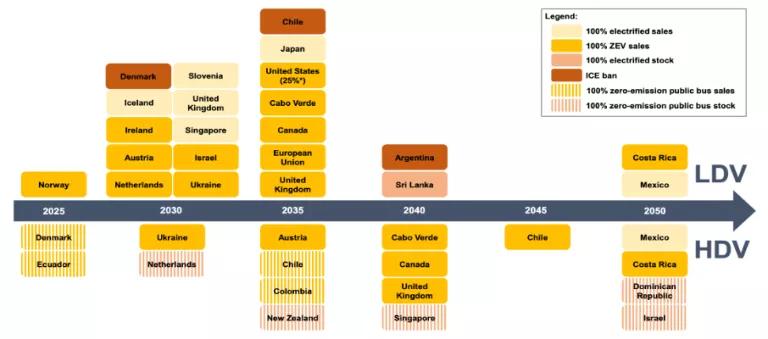
Figure 1. Global ZEV mandates & prohibitions on ICE Vehicles - 2023
As shown in Figure 1, 11 countries and the EU have committed to achieving 100% ZEV sales across various vehicle categories by 2035. While demand incentives for EV purchases remain, the focus has shifted towards building robust charging infrastructure and setting ambitious ZEV targets to support long-term growth.
Globally, more direct supply-side policy instruments have been deployed to chart a clear growth path for the EV industry. These include phased targets to phase out ICE vehicles, quotas for zero-emission vehicle production and sales, stricter emission regulations like CO₂ limits and fuel economy standards and integrating EV ecosystems into carbon markets and ESG frameworks to incentivize OEMs’ electrification efforts.
How supply-side interventions drive industry and market transformation
- Boosting Model Availability: Supply side interventions encourage manufacturers to expand their offerings. For instance, in California at the beginning of ZEV regulation in the 1990s, there were about three models of ZEVs available in the market. As of June 2024, California has close to 100 models of light-duty BEVs and PHEVs whereas states with lower levels of ZEV regulation and sales, such as Wyoming or North Dakota have less than ten models available in comparison.
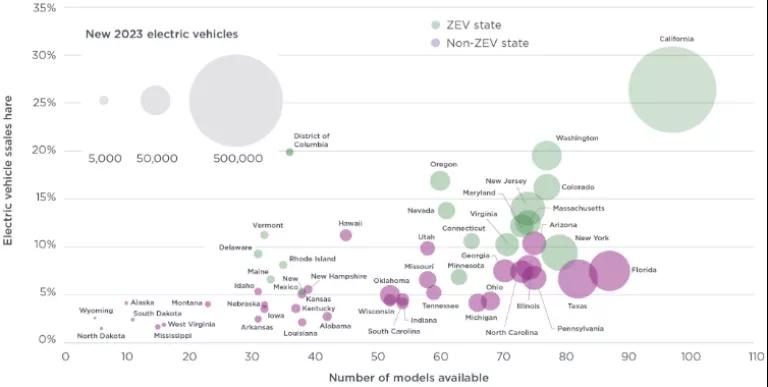
Figure 2: Electric vehicle sales shares of new vehicles and model availability in U.S. states and the District of Columbia, 2023
- Reducing Prices: Competitive pressures from supply side interventions lead to cost reductions. For instance, In the UK, manufacturers have reduced EV prices by up to 11% as of 2023 to comply with ZEV mandates, with prices dropping for nearly 7 out of 10 models. This pricing strategy has significantly boosted EV demand. Similarly, in the US, EV prices in the light-duty vehicle (LDV) segment have declined rapidly, with the average price in Q3 2023 being 24% lower than the peak price recorded in Q2 2022.
- Driving EV Sales: In the US, the implementation of ZEV regulations significantly boosted EV adoption. The combined sales share of BEVs and PHEVs in the light-duty vehicle (LDV) category reached approximately 12% in ZEV-regulated states (excluding California), double the 6% observed in non-ZEV states. California led the way with the highest EV market share in 2023, achieving a sales share of 26.4%.

Figure 3: BEV & PHEV sales shares in California, other ZEV states, and non-ZEV states, 2023
- Globally, regulatory measures have shown similar success. In the EU, after the introduction of CO₂ regulations, the market share of BEVs in Europe jumped from 3% in 2019 to 19% in 2021. Similarly, in China, the EV market share jumped from under 6% in 2019 to 29% in 2022 as the first two phases of the New Energy Vehicle (NEV) requirements came into effect.
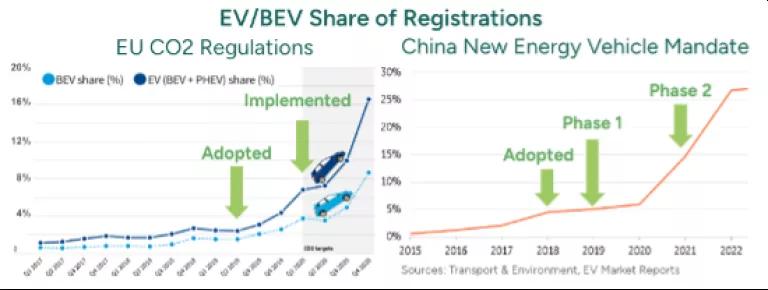
Figure 4: Share of BEV registrations in EU and China with implementation of supply side interventions
Transport & Environment, EV Market Reports
- Mobilizing Investment in Charging Infrastructure: By offering market certainty, ZEV policies have catalyzed significant investments in EV charging infrastructure. For instance, California invested USD 1.9 billion in charging infrastructure in 2023 alone. Similarly, the United Kingdom witnessed a 44% growth in the number of charging stations between 2023 and 2024, with an ambitious target of installing 300,000 charging stations nationwide by 2030.
- Increasing Employment Opportunities: The adoption of the Advanced Clean Cars II (ACC II) rule in California and 16 other Section 177 states is projected to generate 300,000 new jobs by 2050. In the UK, the growing adoption of ZEVs could create an estimated 12,000 Full-Time Equivalent (FTE) jobs annually, solely from the development and maintenance of ZEV charging networks.
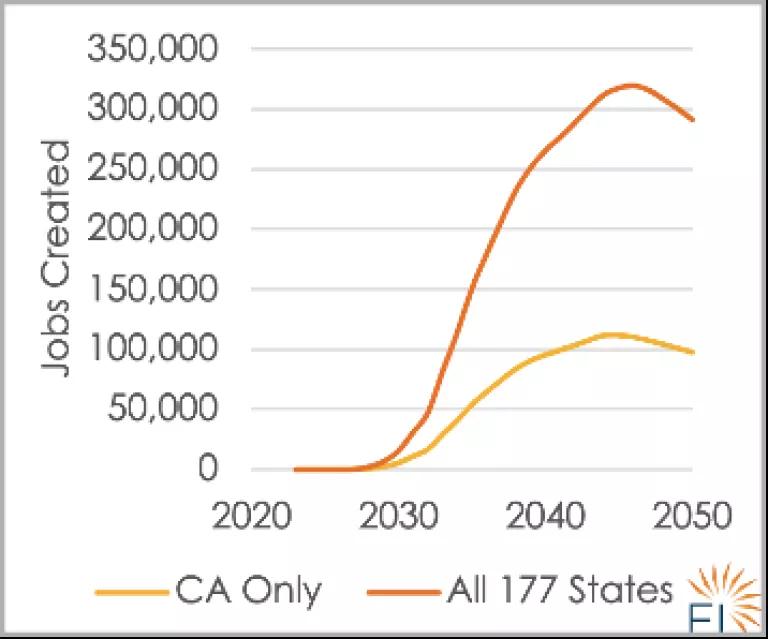
Figure 5: Domestic jobs created by ACC II adoption in the United States and California
Transitioning to supply-side interventions for a sustainable EV future
Countries leading in EV adoption have shown that complementing demand-side incentives with supply-side interventions not only sustains market growth but also accelerates adoption rates, even after demand incentives are phased out. 28 Indian states and union territories have notified EV policies—27 of which include EV market share targets. If implemented, additional supply-side measures would help to provide market certainty, improve ZEV model availability, and enhance affordability.
Related Blogs
Lessons from India’s Transition to Electric Vehicles

Accelerating EV Adoption in India: The Case for Institutionalizing Battery Aadhaar
