
Coal Pollution Spikes After Trump’s Free Pass to Pollute
In Texas, for example, six power plants that received presidential exemptions collectively increased their sulfur dioxide emissions last year by 48 percent.

Media Contact
From day one of President Trump’s second term, this administration has made propping up fossil fuels a top priority. NRDC and others have warned that this would lead to a spike in pollution and more health harms.
One year on, we now have the data. It shows that the Trump administration’s policies to prop up coal plants are making the air dirtier, harming our children’s lungs and increasing the risks of premature death. Exactly what is happening is a complicated story, but the facts are clear: Because of the actions by this administration, there’s more pollution from coal plants.
NRDC and its partners have sued to halt these actions. The new data shows why that is so important.
For a discussion of this data and what it all means, please see this podcast discussion below.
NRDC’s director of policy analysis, Amanda Levin, explains how coal plant pollution surged across the country last year, thanks to Trump’s presidential exemptions, and how that has subsequently created billions of dollars in public health costs for local communities.
Background
In 2024, the U.S. Environmental Protection Agency (EPA) updated its Mercury and Air Toxics Standards for coal plants. Set to kick into effect in 2027, these new rules lowered the amount of particulate matter that those plants could spew into the air. Particulate matter is used as a surrogate for toxic emissions like arsenic and mercury. While the limit was lowered to 0.010 lb/MMBtu, nearly all coal plants were already meeting the standards, and all but one (Colstrip in Montana) could meet the new standard with just tweaks to their systems.
But that didn’t stop the coal industry from griping—or the Trump EPA from agreeing to repeal these new standards. Even before it could finalize the repeal, the EPA announced that coal plant owners could email their requests for an exemption from the new rules. President Trump then gave 71 plants that asked for it a free pass to pollute.
But here is where the story takes a turn—and it shows how this EPA’s “see no evil, hear no evil” approach is having an immediate impact, even if it is not directly related to the rules at issue.
The EPA’s 2025 pollution data: A dramatic spike
Last month, the EPA quietly posted the 2025 emissions data submitted by power plants. The data includes hourly, monthly, quarterly, and annual carbon dioxide, nitrogen oxide, and sulfur dioxide (SO2) emissions for all major coal, gas, oil, and biomass power plants.
NRDC analysts pulled the data to aggregate emissions nationally and by state. The 2025 results were bad news for public health: Carbon dioxide emissions rose by 3.9 percent, nitrogen oxide emissions by 7.4 percent, and sulfur dioxide emissions by a whopping 18.3 percent between 2024 and 2025. For context: While power generation from coal was up 11 percent, the sulfur dioxide emissions from those coal plants rose by more than 18 percent.
This meant one thing: Coal plants were polluting more for every megawatt of electricity they generated, and since there are no new coal plants getting built, that means the old plants either failed to clean their emissions equipment or just plain turned it off and didn’t run it. The emissions intensity (pounds of sulfur dioxide per megawatt hour of coal generation) increased by about 7 percent last year.
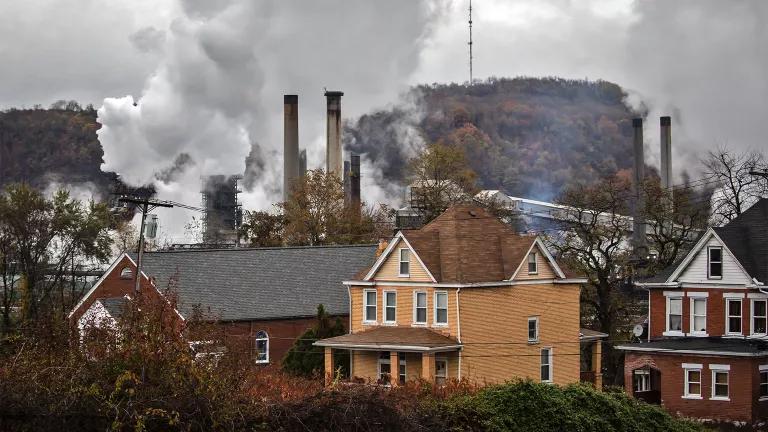
Coal plants spew a toxic mess of substances out of their smokestacks. This data is a key sign that they spewed a lot more of it in 2025. In fact, the 18 percent increase is the second-largest increase in sulfur dioxide emissions since the EPA started publishing this data 30 years ago. Thanks to Clean Air Act standards, this pollution has declined by 94 percent since 1995; on average, 9 percent a year. But now the EPA is rolling back commonsense standards—and power plant owners are making use of the leeway from the federal government to pollute.
Below are the states with the largest tonnage rise in sulfur dioxide emissions, with the total increase in pollution listed. For context, this increase of 20,654 short tons of sulfur dioxide pollution just in Texas added more than $2 billion in public health costs—from more ER visits and hospital admissions, more asthma attacks and respiratory issues, and even more premature deaths.
Well, that is interesting, but how is this tied to President Trump?
When NRDC’s analysts looked at which plants had the largest spike in emissions, they noticed something shocking: Those plants that were exempted from the Mercury and Air Toxics Standards saw the biggest jump in their pollution. Overall, the 71 plants given exemptions from Trump saw their sulfur dioxide pollution go up by 24 percent, nearly twice the rate of that of other plants.
The six Texas power plants that received presidential exemptions collectively increased their sulfur dioxide emissions last year by 48 percent (compared to 2024), while the rest of the state’s power plants actually saw their overall sulfur dioxide emissions decline in 2025.
The spike in emissions is due to two reasons: The plants ran more hours than they had in past years, and the power they produced was dirtier because they either were not running their pollution controls, running them less, or choosing dirtier coal.
Now, instead of investigating these plants and cracking down on this pollution, the Trump EPA has tried to dismiss this data: It told reporters this is just one blip in a 30-year story of falling pollution and that the mercury rules are totally separate from sulfur dioxide emissions.
This is both cynical and absurd. Yes, this is a one-year increase after 30 years of decline—but this one year is the first year of Trump’s second term and comes as his administration is doing all it can to keep coal plants alive. No matter what this administration might claim, coal is not clean or beautiful. Once we see the mercury data, we will have a closer look at what happened with that pollution. But what we can see with this data is that the administration has bent over backward to give coal plants a free pass to pollute, and those plants have taken them up on the offer.
If the Trump EPA is serious about making coal clean, then it should tighten its pollution standards and protect our health. If not, communities from Jewett, Texas, to Davis, West Virginia, are going to feel the impacts of more pollution in the air they breathe.
RELATED CONTENT

A Free Pass to Polluters: Presidential Exemptions Using the Clean Air Act
Mercury’s Journey from Coal-Burning Power Plants to Your Plate
