Proposed Wood Pellet Export Project Draws Critical Comments from Community Members
More than a dozen groups push the lead agency to provide better protections for clean air in Stockton, California.
Author

Media Contact
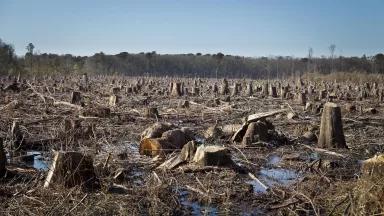
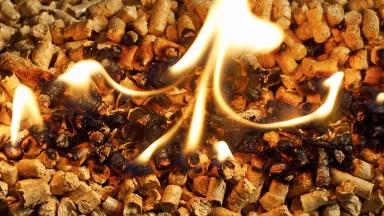
Golden State Natural Resources’ (GSNR) proposed wood pellet project, sprawling across numerous counties in California, Nevada, and Oregon, aims to log large areas of California’s forests and construct two of the nation’s largest wood pellet mills to ship pellets out of the Port of Stockton to be burned for fuel overseas.
This project is opposed by more than 185 groups because of its serious health and safety risks to the environmental justice community of South Stockton, its significant climate and air pollution, and its threats to forest wildlife and forest carbon storage. This purely commercial wood pellet venture is being sold to the public—falsely—as a wildfire protection tool.
The California Environmental Quality Act lead agency, Golden State Finance Authority, released the draft environmental impact report (DEIR) and closed public comments on January 20, 2025. We are waiting for the final environmental impact report.
Learn More: Biomass
Stockton—the proposed port location for the project—faces some of the highest air pollution levels in California due to the transport of goods and a legacy of racial discrimination. Due in part to these concerns, the coalition seeks clarification on the project’s impacts at the Port of Stockton and lays out additional mitigations that GSNR must undertake to not further burden the Stockton community.
Concerningly, the GSNR DEIR included only a cursory description of the environmental setting for the Port of Stockton and the surrounding community. As such, more than a dozen organizations—led by NRDC and community-based organizations in Stockton, including Little Manila Rising, Catholic Charities of the Diocese of Stockton and Valley Improvement Projects—submitted a letter to the lead agency to further address the environmental justice aspects of the project. Specifically, the letter focuses on clarifying and mitigating transportation-related emissions from heavy-duty trucks, oceangoing vessels and other port equipment, and locomotives, as well as mitigating fugitive dust and the threat of fires and explosions.
Read the full coalition letter
Stockton advocates have been fighting for clear air for years now and have spent years trying to build trust with the state via protections promised from under AB 617 after Stockton was designated as a disadvantaged community under SB 535 and AB 1550.
Negatively, the GSNR project will increase localized transport emissions. For instance, the facility will need 29 more oceangoing vessels in and out of Stockton to export wood pellets, which will create a 27 percent increase in traffic. The increase will cause an estimated 178,397 metric tons of CO2e a year. GSNR’s DIER shows that shipping will exceed the San Joaquin Valley Air Pollution Control District’s annual NOx threshold.
Furthermore, the storage site will have two 140-foot-tall domes, each carrying 350,000 metric tons of wood pellets at a time. The DEIR mentions the domes will have high-capacity “pellet aeration systems and dust control systems” to mitigate fire risk but doesn’t reveal how that will be monitored and by what metric they believe this will reduce fire risk best. Of the 15 largest existing U.S. biomass facilities, at least eight had fires or explosions between 2014 and 2022.
The coalition’s letter calls for GSNR to do better: The mitigations proposed are not enough.
Related Content
Impact Groups Address Insufficient Draft Environmental Impact Report for Dangerous Wood Pellet Project