
Turn On the Tap
Water affordability programs can increase participation through data sharing.


Coauthored with Olivia Wein, National Consumer Law Center
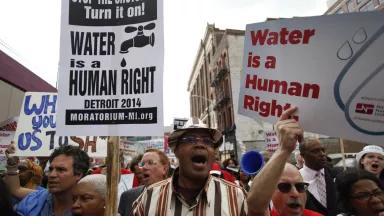
The U.S. Environmental Protection Agency has estimated that 12 to 19 million low-income households (9.2 to 14.6 percent of all U.S. households) face unaffordable water bills.
Programs that provide ongoing water bill discounts for low-income households are a critical part of the solution. However, these programs often struggle with low enrollment due to barriers in the application process.
One uniquely effective way for low-income water discount programs to increase their participation rates involves sharing data with various income-based social services programs that are funded or administered by local, state, or federal agencies or by utilities. In some cases, low-income water discount programs have used data sharing to add tens of thousands of new participants in a single city in less than a year or to achieve participation rates above 70 percent of all eligible households across large regions of a state.
Learn More


In this report, we use case studies to explore how low-income water affordability and assistance programs around the country are using data sharing to increase participation by making the application process easier and faster—or even by eliminating the need for many households to submit an application. Additionally, for program administrators, we show how data sharing can reduce the staff time needed to review and approve applications and lower the amount of data that has to be maintained on program participants.
View our webinar on the report
Using Data to Deliver Water Affordability: How Cities Are Automatically Enrolling Eligible Residents webinar
List of case studies
- Water
- Philadelphia: Coordination across city agencies for automatic enrollment and shutoff protections
- New York City: Municipal water utility sharing data with other city agencies
- Westminster, Colorado: Municipal water utility sharing data with a state-run energy assistance program
- California: Cross-enrollment between utility-run water and energy assistance programs
- Pennsylvania: Enrolling Low Income Household Water Assistance Program (LIHWAP) recipients in utility-run water assistance programs
- Virginia and Puerto Rico: Data sharing for rapid enrollment in LIHWAP
- New York State: Legislation requiring data sharing between state programs and utility-run assistance programs
- Jackson, Mississippi: Unsuccessful attempt at data sharing between municipal water system and a state agency, with an opportunity to try again
- Energy
- New Jersey: Coordination between state agencies for automatic enrollment in energy assistance programs
- Massachusetts: Utility-run assistance programs sharing data with state programs
- Maryland: Legislation prompting data sharing for automatic enrollment in a state-run energy assistance program
Related Resources

Political Control of Research Funding Threatens Sound Science
Governors, Legislators, and Utility Affordability: Broadening the Frame to Water
