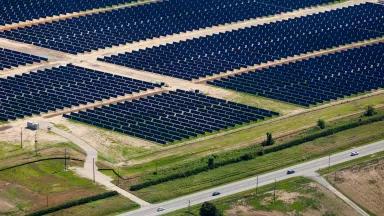
Senate Environment and Public Works Committee Chairman Tom Carper (D-Del.) put forward a proposal today that would strengthen the federal review and approval process for clean energy projects and power grid improvements.
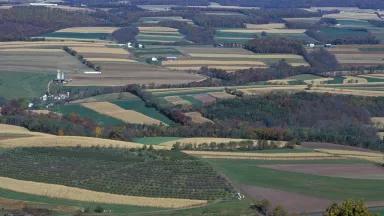
A key bicameral bill to incent the use of cover crops across the country was re-introduced today. The Conservation Opportunity and Voluntary Environment Resilience (COVER) Program Act, which would provide a $5 per acre discount on crop insurance for farmers…
ReportUnited States, Delaware, Illinois, Indiana, Kentucky, Maryland, New Jersey, North Carolina, Ohio, Pennsylvania, Tennessee, Virginia, West Virginia, Washington, D.C.Dana Ammann
New NRDC analysis has found that even under recent reforms, the country’s largest grid operator is unlikely to approve new renewable projects quickly enough to meet even mandatory minimum state standards.
The pressure is immense and the clock is ticking to ensure the course correction needed to stave off the worst climate and biodiversity impacts predicted for our industrialized world. A new collective, called the Restore, Assert, Defend (or RAD) Network…
Zero Food Waste Coalition toolkit outlines the gold standard for state policy to reduce food loss and waste, including model language for a dozen policies.
NRDC (Natural Resources Defense Council) and SWACO (Solid Waste Authority of Central Ohio) have partnered with the City of Columbus and Franklin County to announce the recipients of the Central Ohio Food Waste Reduction Capacity Grant, supporting community-driven initiatives that…
House members may begin today to sign onto a discharge petition for a resolution that offers a path to averting a looming federal default and the disastrous consequences it would bring.
Today the U.S. General Services Administration (GSA) announced a six-month pilot of new requirements for the carbon intensity of materials, including steel, used in eleven GSA construction projects.
These interim standards will allow GSA to pilot its “Buy Clean” program…