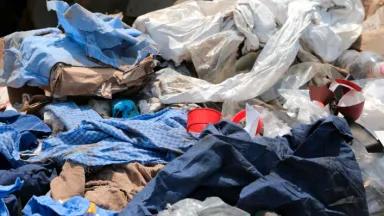
NRDC (Natural Resources Defense Council, Inc.), Fashion FWD, and U.S. PIRG Education Fund released a first-of-its kind scorecard ranking PFAS policy commitments from a swath of leading retail and apparel brands. Levi Strauss & Co. earned the highest mark for…
Despite their known threat to our people and planet, PFAS continue to be used widely in the apparel industry to make products waterproof, stain-resistant, and breathable.
North Carolina can avoid 679 hospital visits and save $92 billion by transitioning to zero-emission electric vehicles and trucks, according to a new report. North Carolina Transportation Electrification Roadmap illustrates North Carolina’s pathway to develop light-, medium-, and heavy-duty vehicle…
A group of more than 20 environmental organizations developed a guide for environmental monitoring that will be crucial to advancing offshore wind responsibly.
The Government Services Administration will set a new standard for contractors to use low embodied carbon concrete, and new standards for environmentally preferable asphalt—part of a federal Buy Clean policy to reduce industrial emissions via public procurement.
A decade-long court order to protect residents of Dickson, Tenn. from the toxin trichloroethylene (TCE) wound down last week. The court has ordered that remaining settlement money be used by the county for ongoing water monitoring and related purposes.
Representative Sirota, Senator Fields, and Senator Winter have introduced a bill that would get the lead out of drinking water in childcare centers and public schools by adding filters to drinking water taps.
Canada is taking a page out of industry’s playbook by characterizing all of its voluntary certifications as being strong indicators of sustainable forestry.
Canada has one of the world’s highest rates of logging primary forests, which are irreplaceable ancient forests that have never been industrially disturbed.
Even without any new offshore lease sales, there is enough oil and gas in existing leases in the Gulf of Mexico that production at current levels could continue for more than a decade.