Governor Newsom announced the administration’s proposed budget today, highlighting an ongoing public health and science-based response to the coronavirus pandemic, support for children, families, schools and vulnerable communities, and investments to improve our state’s resiliency in the face of the…
Governor Roy Cooper released his climate and equity executive order today, laying out how the state of North Carolina will address some of the most pressing energy and environment issues facing the state.
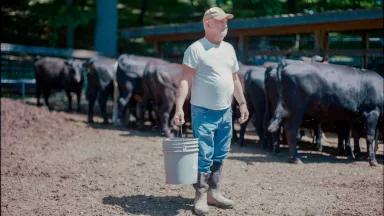
Commenting on Biden's Action Plan for a Fairer, More Competitive, and More Resilient Meat and Poultry Supply Chain, NRDC called on the administration to break up the power of big corporations.
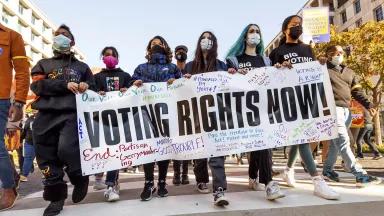
One year after the violent attacks on the U.S. Capitol, it’s time for the Senate to defend democracy by passing the Freedom to Vote Act and the John R. Lewis Voting Rights Advancement Act.
We know that, much as the strength of democracy has a direct bearing on NRDC’s mission, efforts to undermine it benefit those seeking to block environmental protections.
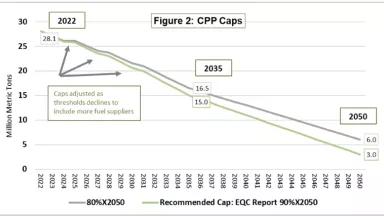
In 2021, fifteen years after California made climate history by becoming the first US state to adopt an economy-wide carbon emissions cap, Oregon and Washington completed a West Coast hat trick by becoming the second and third. Well, almost.
New York is closing out 2021 with a big climate and clean air win—becoming the fifth state in the country to adopt the Advanced Clean Trucks (ACT) rule.
Amid a sharp cost-of-living increase this winter, Virginia's largest energy provider brought a significant glimmer of good holiday news for its ratepayers.
On December 22, 2021, Governor Hochul signed a bill (S2122-A/A-160-B) that would improve New York State’s program to reduce lead in drinking water in public schools. The bill had passed the State Legislature unanimously.
Governor Kathy Hochul made New York the second state in the nation to eliminate millions of single-use bottles in hotel rooms. Bill S543/A5082 prohibits hotels and motels with more than 50 rooms from providing single-use plastic toiletry bottles smaller than…
Destructive Bristol Bay mega-mine is all but dead following EPA’s re-start in 2021 of Clean Water Act 404(c) process for region’s lasting protection, long sought by Bristol Bay tribes and communities.
A new scientific publication provides recommendations on how to monitor ocean sounds and will help the offshore wind industry advance in a smart way that is protective of the marine environment.
Expert BlogCaliforniaSandy Aylesworth, Helen O'Shea
California once again has an opportunity to lead the country with visionary conservation efforts that put equity and access at the forefront of decision making.