Following President Biden’s day one executive order, the United States today officially rejoins the landmark Paris Agreement, positioning the U.S. to once again be part of the global climate solution—not the problem.
The Federal Reserve went from largely avoiding talk of climate change a couple of years ago to creating a Supervision Climate Committee that will work across the entire Federal Reserve System to consider climate risks for two of its main…
With the health of wildlife and communities hanging in the balance, EPA must change its approach to approving pesticides by fixing its cost-benefit analysis.
As the 2021 legislative session gets into gear, NRDC will once again be engaged on bills related to environmental health and reducing exposures to toxic chemicals.
As Governor Pritzker delivers his 2021 budget address against a backdrop of multiple crises facing Illinois, the need has never been greater for bold, equitable, legislation that creates jobs and grows our clean energy economy. Illinois needs leadership from the…
California's 2022 CEC state building code update should unleash a cleaner, cheaper, and faster way to build homes, helping to mitigate the climate crisis and alleviate our state’s housing affordability challenges.
A recommendation for America to “invest in energy efficiency and productivity” leads a new blueprint for “Accelerating Decarbonization of the U.S. Energy System” by the National Academies of Sciences, Engineering and Medicine. This is the latest confirmation of a resounding…
Congressmen Mike Simpson (R-Idaho) recently unveiled a proposed $33 billion Columbia Basin Fund that would, among other aims, safeguard salmon and clean energy, restore the lower Snake River, increase the states’ and Columbia Basin tribes’ resource management authority, and support…
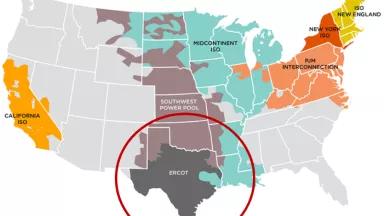
Freezing cold temperatures put the Texas electric grid into distress this week, with likely dozens of deaths and other human suffering, more than 4 million losing power, and more than 40% of the state’s gas, coal, and nuclear fleet offline…
New study shows that a Clean Cars Nevada program will lead to a jackpot of savings to new vehicle owners, avoid millions of tons of climate pollution annually, and help improve public health through reductions in smog and toxic air…
A report released today shows that Nevada can reduce greenhouse gas emissions by up to 10.8 million metric tons and avoid more than 900 tons of health-threatening pollutants every year by 2050 by getting more Nevadans driving clean cars.