
My Quest for Energy Affordability and Housing Justice Is Both Personal and Professional
Accessing basic energy needs and a comfortable home shouldn’t be a luxury. But for families like mine, the barriers are built in.
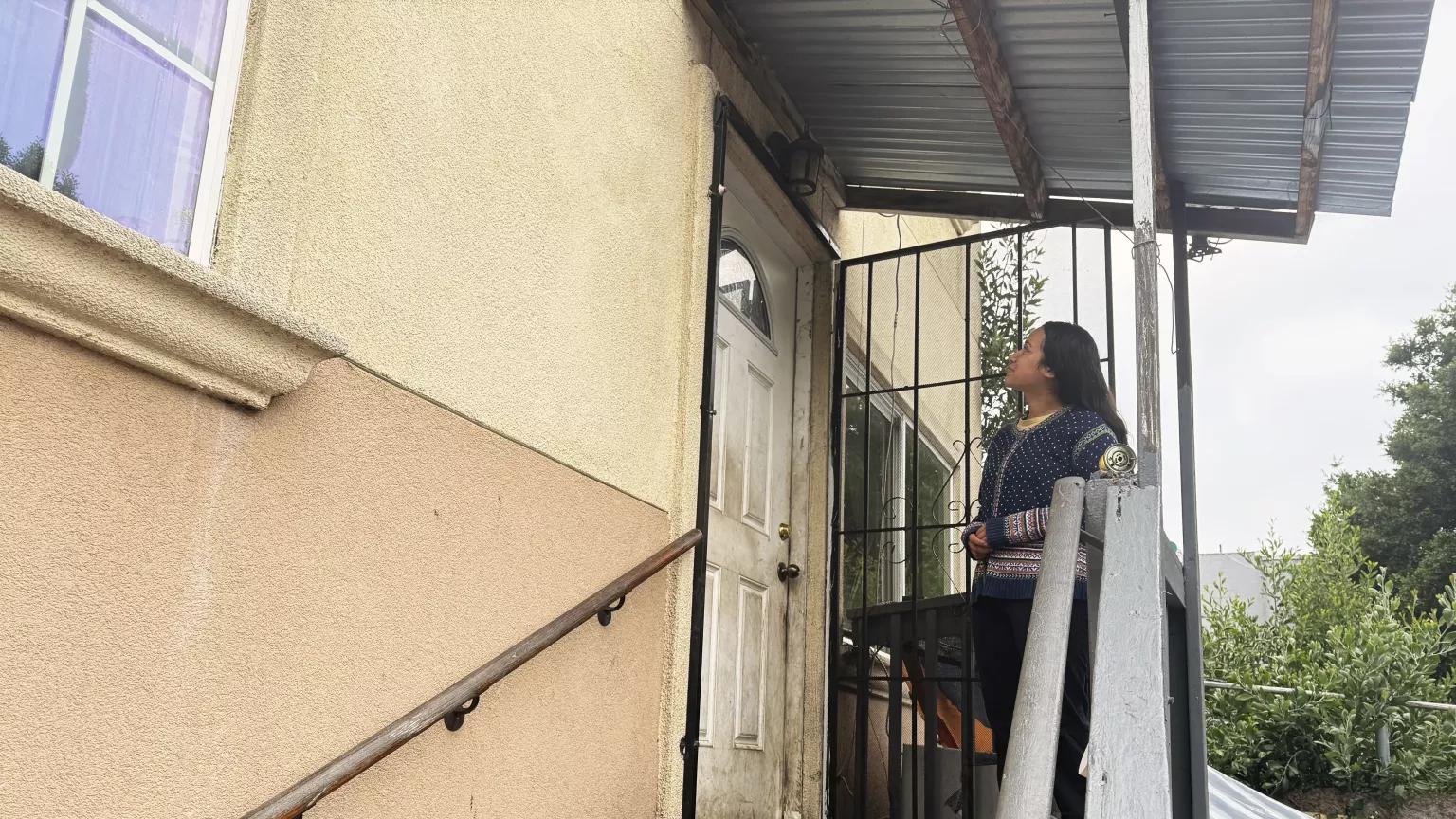
My family’s home in Oakland, California, was built in 1931. It’s an old single-family house that we call a duplex because two families have lived here for years, side by side. In our half, we’ve built our routines around the traditions we’ve carried across generations. On some days, that means cooking with my grandmother and learning recipes as she shares stories from her life. On others, we’ll be deep cleaning the house with her favorite songs from Juan Gabriel or Chelo playing in the background. At night, we gather to watch the movies my dad and I grew up with, passing those memories down to my little sister in our own way. When family comes over, we play lotería (a traditional Mexican card game) or sit outside together for a carne asada. These are the rhythms of our home, the everyday energy that keeps us feeling alive.
Our family home is full of life and love, but it also reflects years of disrepair and neglect. There are unfinished repairs and mold. The windows are cracked and provide little insulation, and few of the electrical outlets function. There is no central heating or cooling, so the house gets unbearably cold in the winter and extremely hot during summertime. Pests and spiders have become a normal part of life.
Despite all this, like so many other U.S. households, we’ve come to expect high energy bills at the end of every month. And the accumulation over the months has made it difficult to catch up.
I know my story represents the lived reality of so many low-income immigrant families in California and across the country. We are renters in a system that assumes everyone has access, time, knowledge, or homeowner status to navigate complicated energy affordability, housing, and weatherization assistance programs. But these programs don’t help families like mine.
As part of my internship at NRDC, which began shortly after I graduated college, I’ve been documenting these overlapping challenges: from environmental health exposures like mold and poor air quality to structural racism, immigrant-related barriers, and a long history of disinvestment in our communities. What started as a personal reflection became an effort to demonstrate how the most vulnerable families are often excluded from the programs meant to serve them.
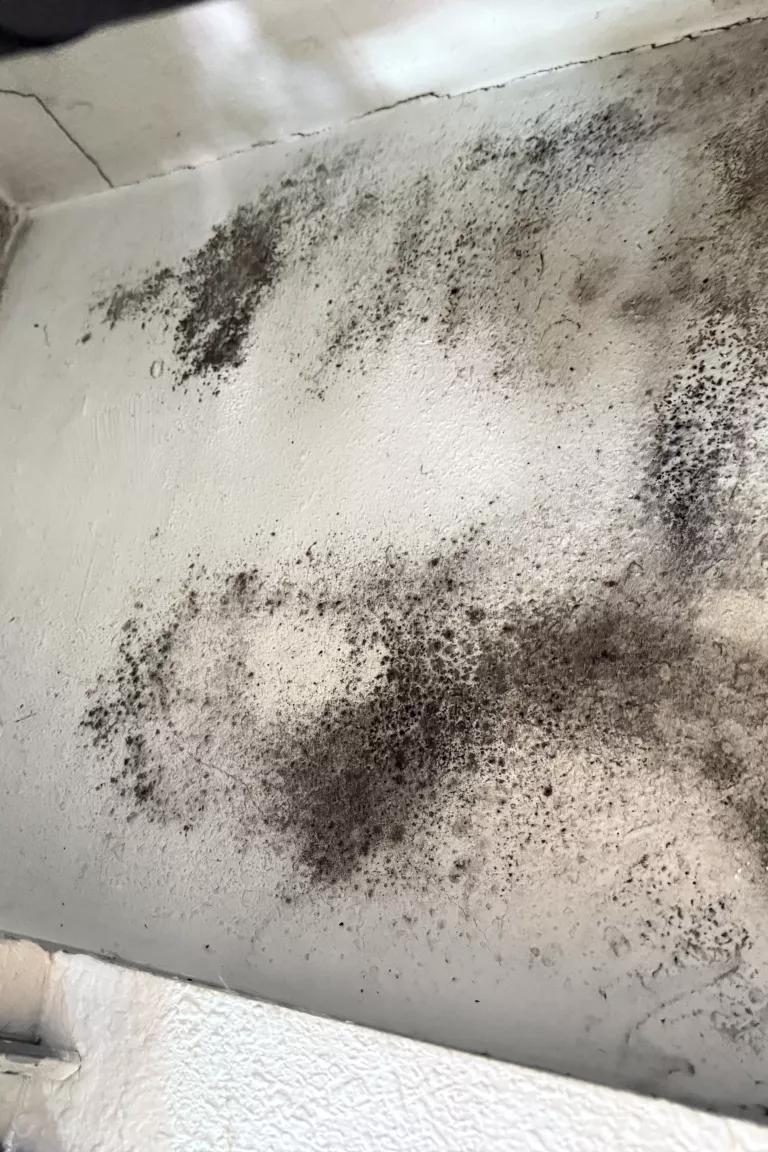
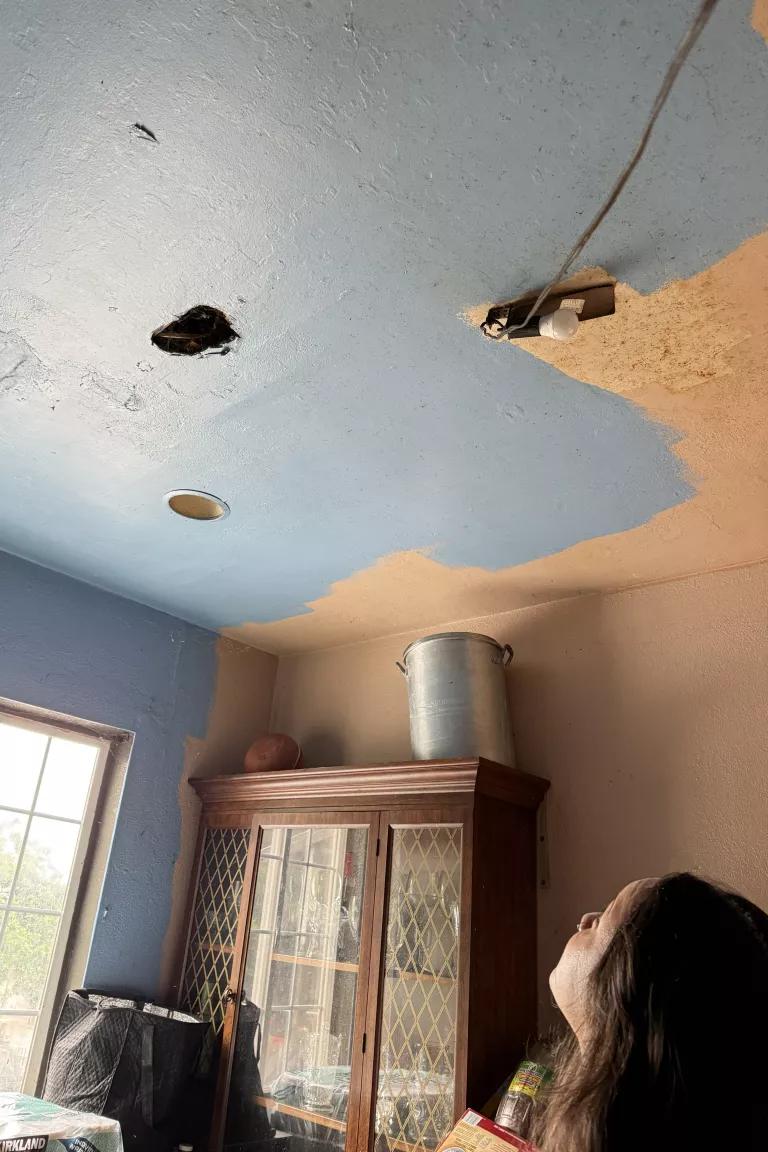
From left: Mold on the walls in Valdovinos’s home; Valdovinos looking up at holes and exposed wires in the ceiling of her family home
When housing injustice and health issues intersect
When I left for college, I left behind more than my home. I left behind the role of caretaker, housekeeper, and translator. Without someone to maintain the home or advocate on behalf of my family, the disrepair and stress escalated. No one in the house has the time or capacity to complete multistep online applications, follow up with agencies, or understand which programs apply to renters.
Now that I’m living back at home, I’m watching the numbers on our monthly PG&E bills continue to climb, stacked with past-due balances we haven’t been able to catch up on. We’ve faced a few disconnection notices and experienced a shutoff last year. In that case, we relied on a generator that a family friend let us borrow to power our refrigerator and phones while we scrambled to pay the minimum amount required to restore service.
Every attempt to feel “comfortable” in our home translates into a higher bill. We have relied on portable electric heaters during the winter, which consume a lot of energy but still leave the house cold. During the summer, we open windows and run the fans. There’s no ventilation system, limited weatherproofing, and very little protection from outside temperatures.
The physical conditions directly impact my family’s health and daily functioning. My grandmother has multiple health issues, including living with diabetes. She relies on insulin that must remain refrigerated, even during outages. She is unstable on her feet and struggles to navigate a home that is not designed to support someone with mobility limitations.
Before passing away in late 2024, my grandfather collected recyclables to help provide for our family, even after being medically advised to avoid unsanitary conditions after a kidney transplant. My father works long hours outdoors and has neither the time nor the legal protections needed to navigate repair programs or rental protections. My younger sister is growing up surrounded by instability, and I worry about what that means for her development.
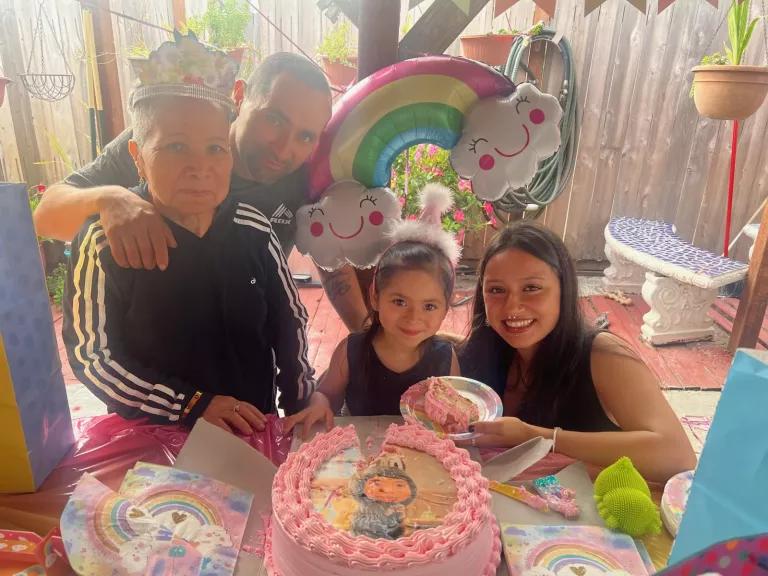
Valdovinos with her family (from left: Valdovinos's grandmother, father, and sister) at her younger sister's birthday celebration
Low-income assistance programs: Complicated applications, limited relief
Once the primary account holder for our PG&E service, my late grandfather qualified for Medical Baseline, a program designed to lower electricity costs for households that rely on life-supporting medical equipment. My grandmother, who now manages our PG&E service, is also enrolled in the CARE program (California Alternate Rates for Energy), which provides a discounted rate for low-income households.
We didn’t learn about these programs through direct outreach or support. Instead, we chanced upon them through community conversations and small notes printed on the back of our PG&E bill. The application process was manageable over the phone, but ongoing participation has been confusing. Little guidance is available in Spanish, my grandmother’s primary language, about how to recertify benefits, access additional support, or navigate the system as a renter. Even when Spanish is available, the forms are dense and bureaucratic, filled with terms like dwelling unit and utility burden that don’t translate clearly. These words prompt questions you can’t ask a form.
And because neither of these programs offered enough relief, I spent time researching other options that might help reduce our energy bill or improve our home’s condition—programs like LIHEAP (Low Income Home Energy Assistance Program) and ESA (Energy Savings Assistance Program). Some require landlord permission, which creates another barrier for families who need to advocate for themselves or who fear retaliation for asking a landlord for help. Or they turn applicants away more directly: “Due to limited funding and high demand, a priority plan is in effect. Some income-eligible households may be denied,” warned the LIHEAP website when I clicked through.
Others promise only long delays. The federally funded WAP (Weatherization Assistance Program) sounds ideal on paper. It offers services that could really help our home, like sealing drafts, repairing windows, and improving insulation. However, not only is its online portal complicated but the forms are also filled with technical jargon. The application isn’t something you can even complete on a phone, which a lot of people in my community use as their main source of Internet access, with no computer available.
Through my research on the program’s accessibility, I also discovered that in some counties, only 1 in 20 eligible households actually receive upgrades. (The nonprofit American Council for an Energy-Efficient Economy found that nationally, 60 percent of those who sought repairs were eventually served, after being initially deferred.) Some customers get placed on a wait list, and even if they’re approved, the processing time can take 8 to 10 weeks before anything moves forward.
How I’m advocating for change
At NRDC, I’m pushing for better solutions. What’s missing is a system designed around real people. We need built-in protections for renters with unresponsive landlords. Solid alternatives for undocumented families who can’t submit everything a program asks for. Community-based social workers who make home, school, or church visits to walk you through the steps in your language. Grace for households who fall behind, not because they’re irresponsible but because they’re busy surviving. We don’t need more programs on paper; we need programs that meet people where they are.
I’ve sat in classrooms discussing climate resilience while knowing my family was relying on a borrowed generator during blackouts. I’ve read about federal funding for weatherization and efficiency programs while wondering how many families like mine ever get through the front door of those systems.
I started this work during my internship, while researching energy burden and housing resilience. Even as I stepped into the professional role of advocating climate equity, I couldn’t ignore what was happening at home. It’s difficult to do this work from both sides: living the crisis while trying to solve it. That emotional and practical split is what makes this experience so exhausting—and so personal.
These programs are often designed with a very different kind of household in mind; a household with a responsive landlord, a working computer, quiet space, reliable Internet, English fluency, a sense of safety, and the mental bandwidth to manage a complex application process. That’s not the reality for so many families like mine. We live in unstable homes. We share devices. We work long hours. We care for children and elders. We are grieving, struggling, undocumented, and scared of eviction. If climate and energy justice efforts truly want to serve vulnerable communities, they have to start with what our lives actually look like, not what policy writers imagine them to be.
Based on everything my family has experienced, there are two areas where I believe we need urgent shifts:
- Create community-based navigation and advocacy systems: Trusted community organizations should be funded to host in-person workshops (scheduled with work hours in mind), provide home visits, and help residents complete applications step-by-step, in their preferred language. These navigators could assist with everything from gathering documents to advocating with landlords and following up with government agencies. This support must go beyond one-time assistance; it needs to be sustained, relational, and culturally responsive.
- Make programs renter-accessible, trauma-informed, and flexible: Programs like ESA and WAP should no longer require landlord approval as a default. If renters are the ones living with mold, leaks, and broken insulation, they should be able to initiate improvements directly, especially when health is at risk. We also need to remove unnecessary documentation barriers, minimize technical jargon, and create alternatives to online-only applications. For communities living with grief, disability, mental health issues, language barriers, or immigration concerns, the process must account for the emotional and material realities they face. Flexibility is not a luxury—it’s a requirement for equity!
Finally, stories like mine should not be side notes to the data. They should be drivers of the design. I hope that, by sharing my experience, other families like mine won’t be left behind. I hope that it helps move us closer to the equitable future we all deserve.
This NRDC.org story is available for online republication by news media outlets or nonprofits under these conditions: The writer(s) must be credited with a byline; you must note prominently that the story was originally published by NRDC.org and link to the original; the story cannot be edited (beyond simple things such as grammar); you can’t resell the story in any form or grant republishing rights to other outlets; you can’t republish our material wholesale or automatically—you need to select stories individually; you can’t republish the photos or graphics on our site without specific permission; you should drop us a note to let us know when you’ve used one of our stories.
The Clean Energy Expert Bringing Black Voices to the Table
A Commitment to Equity—in the City, the Classroom, and Even the Jungle
A Mammoth Biomass Project Withers in California