
What the Latest SCOTUS Decisions Mean for Our Climate
Some recent climate wins have emerged from the Supreme Court’s interventions. But a wave of consequential rulings for the EPA and other federal regulators will continue to challenge environmental progress.

Climate activists rallying outside the Supreme Court as it hears from coal companies and their partisan allies who are trying to gut the Clean Air Act and block climate action, February 28, 2022
Leigh Vogel/Getty Images for NRDC

While the U.S. Supreme Court (SCOTUS) hears only a small number of arguments each year, as of late, the environmental movement has had a big stake in many of them. And attorneys like NRDC’s Meredith Hankins, who has spent much of their career on issues pertaining to air pollution, are increasingly seeing their cases land on the justices’ desks.
“I'm lucky enough to work on the really big rules that the Court cares about,” says Hankins, a member of the NRDC team currently defending multiple Clean Air Act rules from simultaneous challenges in the D.C. Circuit and the Supreme Court.
That’s why, in the midst of a dizzying string of deregulatory SCOTUS decisions in recent years, Hankins has had a window into what it all means for climate action. And the evidence piling up suggests the Court will continue to play a central role in deciding how quickly and aggressively our nation can tackle what remains one of the greatest challenges to the stability of our planet—and our daily lives.
SCOTUS and air pollution regulations: A moving target
Under the Court’s increasing scrutiny are various federal emissions standards for the fossil fuel industry—in particular, those to regulate power plants. These facilities, of course, play an outsize role in our climate crisis.
The Court’s involvement in the regulations dates back to 2016, when an unusual 5-to-4 majority decision blocked an Obama-era rule intended to shift coal and gas power plants to cleaner energy sources. That was the U.S. Environmental Protection Agency’s (EPA) Clean Power Plan, which would have kicked in starting in 2022 and required the industry to cut carbon pollution by a third by 2030.
Even though the Supreme Court wasn’t on board, market forces drove the industry to slash emissions faster than the EPA had originally targeted. The industry met that 2030 target more than a decade early, in 2019.
But that didn’t stop the Court from intervening further. In 2021, with EPA Administrator Michael Regan poised to write a new rule on the regulation of power plant emissions, the Court agreed to hear a challenge to that authority. It followed up with the 2022 West Virginia v. EPA ruling, stating that the agency could not orchestrate a sector-wide shift in the electrical grid away from plants that generate power using dirty sources (like coal) in favor of those that use cleaner ones (like wind and solar). Instead, the Court majority said, the EPA had to base standards on pollution-control technology that makes individual power plants cleaner.
The EPA listened carefully. The agency has now adopted new national standards for dirty power plant emissions based on tools like carbon capture and sequestration, in line with the Supreme Court’s decision. And they build on market trends and tax incentives amped up by the 2022 Inflation Reduction Act that make it easier to clean up high-polluting sectors.
The impacts of the standards are significant: For starters, they’ll cut emissions by another 1.4 billion tons over the next two decades. They’ll also deliver $390 billion in climate and health benefits, 20 times the cost to industry.
But still, the goalposts keep moving.
Learn More: The Court & the Environment
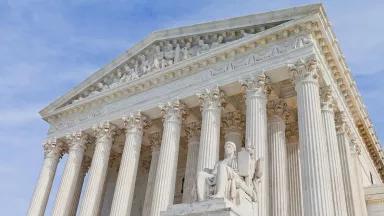
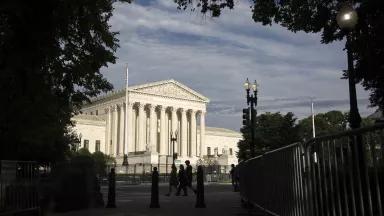
Alliances of anti-environment attorneys general and fossil fuel interests have challenged the carbon rule and asked the Court of Appeals in Washington, D.C., to block it while their suit plays out. But the appeals court said “no.”
Determined to spare themselves the cost of complying, the opponents then appealed to the Supreme Court on its emergency docket. (NRDC and its partners filed a response opposing the request for a stay.) The alliance’s move gave the Court the power to decide on an expedited timeline whether to halt the rule’s implementation, without hearing oral arguments.
On October 16, following nearly two months of internal deliberations, the Court denied the emergency motions in a one-line order, allowing the rule to go into effect while the litigation plays out. For now, the case will proceed in the lower court, and states and companies will need to comply with the rule.
Of course, industry opponents may be back in front of the Supreme Court next year if they don't get the results they’re after. And at least two justices signaled what they might do, noting they believed the stay applicants had “shown a strong likelihood of success on the merits as to at least some of their challenges."
Hankins considers appeals like these to be brazen, given that the lower court firmly denied the requests to halt the rule. (It also issued an order explaining its reasoning.) “We're seeing hyperbolic claims about how the EPA is overreaching its authority—but it’s doing exactly what the Supreme Court told it to do two years ago,” Hankins says. “These interventions are more about the Supreme Court than the actual substance of the rules. While the Court saw through the hyperbole this time, I worry about the precedent set by the increased use and abuse of the shadow docket this year.”
2024
The Court rules that plaintiffs can sue over some regulations for up to six years after they are affected by them, instead of six years after the regulations take effect.

The Kingston Fossil Plant in Kingston, Tennessee, spilled a massive amount of coal ash in 2008, harming people's health and the surrounding environment.
Mark Humphre/AP Photo
The Court ends Chevron deference, shrinking the ability of federal agencies like the EPA to set rules and enforce environmental protections, instead giving federal judges greater power to decide what a law means.
After hearing challenges on its shadow docket, the Court puts a hold on the Good Neighbor Plan, which was meant to protect public health by requiring fossil fuel–burning power plants in 23 states to curb their smog-forming air pollution that travels downwind, across state lines.
Ruling in a case concerning securities fraud, the Court requires a range of proceedings that were formerly handled by agency administrative law judges to move to the federal court system instead.
2023

A rosette spoonbill and a tricolored heron in a wetland at Lakewood Ranch, near Sarasota, Florida
Joseph Corl
The Court seizes an opportunity to dramatically weaken the Clean Water Act by deciding for themselves, without scientific support, which wetlands deserve protection. The ruling leaves at least half of an estimated 110 million acres of wetlands in the continental United States vulnerable to pollution and destruction.
2022
The Court issues a setback to the EPA’s ability to curb carbon pollution from the power sector, stating that the agency cannot direct a sector-wide shift in the electrical grid away from plants that generate power using dirty sources in favor of plants that use cleaner sources. Only Congress can authorize such an action, it says.

American Electric Power's John Amos coal-fired plant in Winfield, West Virginia, located nearby residential homes
John Raby/AP Photo
Four consequential decisions put climate in the hands of judges
A particularly impactful recent environmental ruling was the Supreme Court’s reversal of the Chevron doctrine. Based on the 1984 Chevron USA, Inc. v. NRDC decision, the doctrine gave explicit deference to agency experts in reasonably interpreting and executing the laws passed by Congress, including those that regulate climate pollutants.
But in its Loper Bright Enterprises v. Raimondo ruling this June, the Supreme Court handed that power back over to individual judges, who lack the same breadth or depth of expertise. That decision overruled a 40-year precedent that has shaped how our government functions.
As Justice Elena Kagan wrote in her scathing dissent: “In one fell swoop, the majority today gives itself exclusive power over every open issue—no matter how expertise-driven or policy-laden—involving the meaning of regulatory law. As if it did not have enough on its plate, the majority turns itself into the country’s administrative czar.”
This judicial power grab could have a reverberating impact on a wide range of issues beyond climate change too. These include everything from the approvals of prescription drugs and consumer products to designations of endangered species habitats to the enforcement of fair labor standards.
"Part of what makes the Loper Bright decision so significant is that it applies across the board to much of the work of the federal government," says Ian Fein, senior counsel for NRDC’s litigation strategy. “And when you consider not just Loper Bright but the overall trend line of this Court’s recent rulings, it’s hard to overstate the bad news. The Supreme Court is deliberately trying to make it harder for agencies to function.”
The risks posed when courts take the lead on interpreting law for technical issues pertaining to pollution, specifically, was made abundantly clear last year, when the Supreme Court issued its Sackett v. EPA ruling. The decision changed which bodies of water are protected by the Clean Water Act, with the Court ignoring robust agency science and declaring that wetlands shouldn’t qualify for the same protections as other waterways, like rivers, lakes, or streams.
“When you consider not just Loper Bright but the overall trend line of this Court’s recent rulings, it’s hard to overstate the bad news. The Supreme Court is deliberately trying to make it harder for agencies to function.”
Ian Fein, senior counsel for NRDC’s litigation strategy
In doing so, the justices discarded the fact that wetlands are intrinsically connected to adjacent waterways and thereby impact the health of nearby water sources, including those that provide drinking water or that we fish and swim in. What’s more, the unfounded decision poses lasting climate ramifications too. That’s because it leaves intact wetlands—many of which have potent carbon-storing powers—vulnerable to the whims of developers and polluters.
“The effects will be cumulative,” says Jon Devine, NRDC’s Freshwater Ecosystems director. “Each wetland or stream lost will add to the total damage. In effect, the Court has unleashed a slow-motion catastrophe.”
Two more SCOTUS decisions this summer made matters even worse for agencies—and climate action. In Securities and Exchange Commission v. Jarkesy, the Court limited the power of regulators to enforce their own rules. While agencies typically prosecute violators like corporate polluters internally, using their own administrative courts, the Court has ruled that some defendants are entitled to jury trials in federal court. This could dramatically reduce the total amount of government enforcement, allowing more lawbreakers off the hook.
Meanwhile, in Corner Post Inc. v. Board of Governors, SCOTUS substantially widened the window during which plaintiffs can legally challenge some agency rules under the Administrative Procedure Act. That’s the piece of long-standing legislation that dictates how federal agencies may draw up and enforce regulations and gives the public an opportunity to weigh in. According to the Court’s decision, plaintiffs who could formerly challenge a rule only up to six years after it was finalized can now object six years after the time they say they were harmed.
“It would be naive to assume that our opponents aren’t going to try to use that decision to reopen and litigate things that, up until this last year, had been considered resolved and decided,” Fein says.

Activists celebrating the EPA's new air quality standards for soot pollution, February 2024
U.S. EPA
A few silver linings
Despite these setbacks, agencies aren’t powerless. “The Supreme Court's recent decisions do not change the fact that federal agencies like the EPA have legal obligations to address climate pollution, even if the decisions do make it harder for the agencies to carry out those duties,” Fein adds. After all, Congress already delegated clear authority to the EPA under the Clean Air Act to help solve our air pollution problems.
But post-Chevron, the EPA will need to be that much more scrupulous in its rulemaking process. This is where NRDC’s administrative advocacy experts, like Fein and Hankins, can help. Developing durable federal standards that will stand up in court is part of the job.
Encouragingly, a majority of the judges in the lower circuit courts—the arena in which most battles over climate protections are fought—remain nonideological and interested in respecting precedent, Hankins says. “In most of the circuits, I think you still have a fair shot.”
Ironically, the reversal of Chevron could pose just as many headaches for agencies that seek to undermine regulations by defining their own novel interpretations of a law. For example, if a future EPA chose to, say, interpret the Clean Air Act in a way that gives more leeway to polluters, environmentalists would be ready to challenge the move, and more likely to prevail in court. Then, too, a judge—not the agency—would get the final say.
The Court’s lengthy shadow docket
Concerningly, the Supreme Court is also pouncing on cases that have yet to be decided by the lower courts by issuing more and more emergency stays. These orders temporarily block a law from going into effect while the case against it in a lower court proceeds. This move used to be reserved for cases in which there’s an immediate risk of irreparable harm, such as in death penalty cases.
Now the Court is increasingly opening up this route for stakeholders in cases concerning financial harm from regulatory compliance, as with the various air pollution regulation objections. “That means that the justices are trying to make a decision about these highly technical cases without the benefit of full briefing or a lower court decision,” Hankins explains.
That’s also what SCOTUS did in June, when it blocked yet another EPA clean air regulation, known as the Good Neighbor Plan. The regulation, which was just beginning to be phased in, requires fossil fuel–burning power plants in 23 states to curb their smog-forming air pollution that travels downwind, across state lines. The intervention means the rule could now be caught up in years of delay.
“The number of these cases and the normalization of this process is what seems unprecedented,” Hankins says. While NRDC and its allies were successful in beating back shadow docket challenges to three EPA rules this fall—not just the power plant carbon standards but also safeguards around mercury emissions, methane, and other air pollutants—it required an intensive mobilization.
“I did the math, and we responded to 17 separate applications totaling more than 10,000 pages of briefs and attachments, all in the space of a single month,” adds Hankins. And all in the name of defending modest environmental standards that are already years overdue.
The damage from granting any of these shadow docket challenges can add up. Choosing to halt environmental rules like these before they go into effect ultimately harms the people they are meant to help. Advocates have estimated the Good Neighbor Plan would prevent an estimated 1,300 premature deaths in 2026 alone, the year it would’ve expanded to industrial sources. Now, downwind communities will be left with higher rates of asthma and other respiratory illnesses, as well as increased risks to their cardiovascular and metabolic health.

Wind turbines for the South Fork Wind Farm being assembled in New London, Connecticut, October 2023
Susan Haigh/AP Photo
Other avenues for climate action
While the makeup of the Supreme Court or its deregulatory bent aren’t expected to change anytime soon, NRDC’s climate advocates don’t see their hands as tied.
For one, strong rulemaking at the state and local levels have become that much more important, explains Rebecca Riley, managing director of NRDC’s Food & Agriculture program. In fact, when states take the lead, they can act as “laboratories for new, innovative policies,” she says, with the states often passing more ambitious protections than you might see at the federal level. To name just one recent example, in 2021, Illinois passed its landmark Climate and Equitable Jobs Act, offering a model for the nation on what a just and equitable transition away from fossil fuels can look like.
Strong regional coalitions, too, can be a pathway to remarkable climate emissions reductions, freeing states with shared interests from relying on federal rulemaking. Take the Regional Greenhouse Gas Initiative—a market-based initiative that curbs power plant pollution across 11 states in the Northeast and mid-Atlantic. That program has halved carbon pollution from the region’s power plants since its start in 2009. At the same time, it’s created thousands of new jobs and saved consumers hundreds of millions of dollars on energy bills.
International climate agreements will also continue to push the United States to meet its climate goals. We have already committed under the Paris Agreement, for example, to take steps to substantially reduce global greenhouse gas emissions in ways that will limit global temperature rise to 1.5 degrees. The Montreal Protocol and its subsequent Kigali Amendment also create obligations outside of the federal rulemaking process, around the phasedown of heat-trapping climate pollution.
And of course, everyday people—in their roles as voters, consumers, community members, and advocates—have proven, time and again, their crucial role as climate activists.
For more than a decade, a plan to build the notorious Keystone XL pipeline threatened the climate, waterways, and health of communities along its proposed 1,200-mile route across Montana, Nebraska, and South Dakota. While the fight over the pipeline ping-ponged between courts and across administrations, a diverse coalition made up of thousands of environmental activists, landowners, and Indigenous leaders persevered in their loud opposition, underscoring the project’s risks. Their continued efforts eventually encouraged President Biden to revoke the pipeline’s permit on his first day in office. TC Energy, the company behind the project, called off its plan the following year.
Successes like these buoy Hankins’s resolve as they chart the path ahead. The ability of NRDC and its allies to think “creatively and expansively,” they say, remains key. And while there’s no denying we’re in a newly challenging fight for climate progress nationally, our goals cannot change. But our tactics can.
This NRDC.org story is available for online republication by news media outlets or nonprofits under these conditions: The writer(s) must be credited with a byline; you must note prominently that the story was originally published by NRDC.org and link to the original; the story cannot be edited (beyond simple things such as grammar); you can’t resell the story in any form or grant republishing rights to other outlets; you can’t republish our material wholesale or automatically—you need to select stories individually; you can’t republish the photos or graphics on our site without specific permission; you should drop us a note to let us know when you’ve used one of our stories.
How to Become a Community Scientist
Five Ways the GOP-Led Congress Plans to Attack the Environment
Finally, a Legislative Check on a Runaway White House