
California’s Landmark Tire Efficiency Standards Are a Win for Consumers, Climate, and Public Health
The state just adopted the nation’s first efficiency standards for replacement tires.
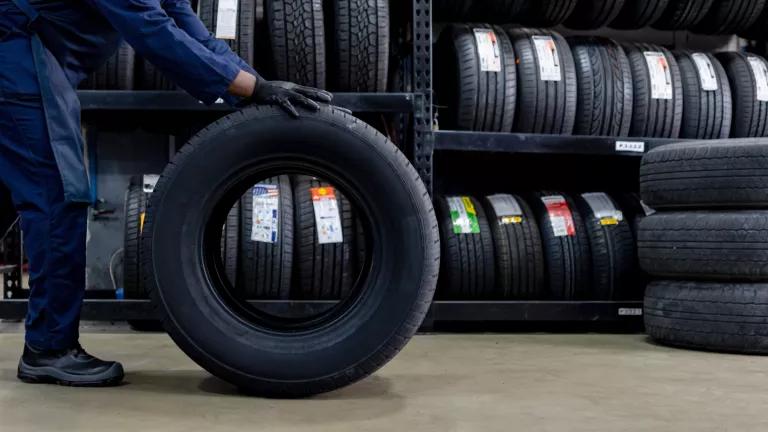
California is demonstrating something increasingly important for climate policy: Reducing pollution and addressing affordability can and should go hand in hand.
This week, the California Energy Commission (CEC) unanimously adopted the nation’s first efficiency standards for replacement tires. The standards will lower costs for drivers, cut pollution, and improve the efficiency of both conventional and electric vehicles.
At California’s scale, the benefits are substantial. CEC estimates the program will ultimately save Californians about $1 billion each year in energy costs while cutting greenhouse gas emissions by roughly 2 million metric tons annually—equivalent to taking about 400,000 gasoline-powered cars off the road.
That makes the standards a genuine win-win-win: good for consumer affordability, good for public health, and good for the environment.
These standards are also a milestone that has been years in the making. NRDC helped sponsor the California legislation that first authorized replacement tire efficiency standards more than two decades ago. For years, NRDC has argued that minimum efficiency standards could make the replacement tire market work better for consumers while reducing energy use and pollution.
California has turned that vision into reality—creating a first-in-the-nation model with implications well beyond the state.
Where the rubber meets the road on vehicle efficiency
Every time a tire rolls, some of the vehicle’s energy is lost through rolling resistance. More efficient tires reduce that waste, allowing a vehicle to travel the same distance using less energy.
For gasoline-powered vehicles, that means burning less fuel and producing less climate and air pollution. For drivers, this means fewer trips to the gas station and lower fuel costs. For electric vehicles, it means using less electricity—lowering charging costs, improving range, and getting more miles from every kilowatt-hour.
That matters because California must do two things at once: rapidly transition to zero-emission transportation while making the millions of vehicles already on the road as efficient and clean as possible.
Replacement tires offer a practical way to do exactly that. Because they continually cycle through the existing fleet, better tires can begin reducing energy use and pollution well before every vehicle on the road is replaced.
The public health benefits are significant too. Cutting unnecessary fuel consumption means less nitrogen oxide and particulate pollution in a state where transportation emissions continue to contribute to unhealthy air, particularly in communities near heavily traveled roads and freight corridors.
Lower costs, less pollution
Some opponents have portrayed the standards as another expense for Californians at a time when affordability is rightly a major concern. But focusing only on the up-front price misses what efficiency means for consumers over the life of a product.
Californians already have to replace their tires.
The relevant question is not the full cost of a replacement tire; it is the additional cost of making that tire more efficient, and whether consumers save more through lower energy use than they pay up front.
CEC’s analysis shows that they do. At the stronger second phase of the program, CEC estimates an added cost of about $6.50 per tire, or $26 for a set of four, while a gasoline-vehicle driver would save roughly $179 over the life of those tires. That means the added up-front cost would pay for itself through fuel savings in about seven to eight months, depending on the weight of the vehicle.
A product that costs a few dollars more upfront but saves consumers substantially more over its life is not contrary to affordability. That is an affordability benefit.
This is why efficiency policy belongs at the center of the affordability conversation. Reducing wasted energy can lower household costs and reduce pollution at the same time.
Strong standards without sacrificing safety or choice
Consumers should not have to choose between efficiency, safety, durability, and affordability. California’s standards are designed so that they do not have to.
CEC analyzed laboratory data from more than 150 popular tire models, along with real-world lifespan data, and found that improving efficiency does not require shorter tire life. The program also includes a minimum wet-grip standard, an approach proposed by the tire industry itself, that will help remove some of the poorest-performing tires from the market.
And this is not a standard dependent on speculative future technology. Popular and affordable tires already meet the strongest efficiency requirements today, and manufacturers have more than six years to adapt their remaining product lines before those requirements take effect. In fact, efficient tires that meetng these levels are already commonly installed on new vehicles and sold in California. The regulation essentially ensures that consumers don’t lose that efficiency when the time comes to buy replacement tires. Tire companies routinely redesign and improve their products; assuming the market in 2033 will simply mirror today’s shelves misunderstands how performance standards—and product innovation—work.
Major industry participants have also recognized that the final program is achievable. Michelin supported the efficiency goals and concluded the thresholds were technically feasible within the implementation time frames while Bridgestone described the revised program as technically feasible and Discount Tire supported the regulation. That industry support reinforces what the technical record shows—the standards are ambitious but achievable.
The goal is straightforward: Set a reasonable performance floor and allow innovation to move the market toward better products.
Developed through evidence, engagement, and refinement
In the final stages of the rulemaking, some opponents argued that CEC was moving too quickly and should delay adoption. The history says otherwise.
CEC spent more than five years engaging tire manufacturers and other stakeholders, reviewing technical information, testing products, holding workshops, and considering repeated rounds of feedback. The final rule bears the marks of that process: CEC extended implementation timelines, refined the treatment of specialized tire categories, incorporated an industry-proposed wet-grip requirement, and reflected real-world data provided by retailers and manufacturers.
The first phase will not begin until 2029, and the strongest requirements will not take effect until 2033. Calling that process rushed simply does not square with the record. It is what effective regulation should look like: Set a meaningful, public interest objective, build a strong technical record, listen to affected stakeholders, make changes where the evidence supports them, and act.
A first-in-the-nation model with national potential
California’s leadership matters because the benefits of these standards do not have to stop at the state line.
Tire manufacturers operate in national and global markets. As companies expand efficient product lines to meet California’s requirements, those improvements can benefit consumers and address affordability elsewhere as well.
Just as important, California has now done the hard policy work of demonstrating how replacement tire efficiency standards can be designed around affordability, safety, durability, and realistic implementation timelines. Other jurisdictions no longer have to start from scratch.
That is how state climate leadership can scale: Demonstrate what is achievable, show that consumers benefit, establish a workable policy model, and make it easier for others to follow. Other states can build upon California’s example, and successful implementation can help strengthen the case for national action.
Turning the standard into real-world results
The commission’s unanimous vote deserves to be celebrated. But adoption is also the beginning of the next phase. Strong implementation, compliance, and enforcement will be essential to turning the standards’ projected savings and pollution reductions into concrete results. New real-world data should also help CEC continue refining the program and evaluate opportunities to extend its benefits to additional tire categories over time. NRDC looks forward to continuing that work with the commission and other stakeholders.
But the broader lesson from this week’s vote is already clear. More than two decades after California first authorized replacement tire efficiency standards, the state has turned that vision into a first-in-the-nation program.
At a moment when policymakers are confronting household affordability, dangerous air pollution, and a worsening climate crisis, California has demonstrated that we do not always have to choose which problem to solve.
Helping vehicles waste less energy means helping consumers waste less money. It means less climate pollution warming our planet. And it means less harmful pollution in the air that Californians breathe.
California’s new tire efficiency standards show what practical climate leadership can look like: lower costs, cleaner air, less climate pollution—and a policy model with the potential to deliver benefits far beyond California.
This NRDC.org blog is available for online republication by news media outlets or nonprofits under these conditions: The writer(s) must be credited with a byline; you must note prominently that the blog was originally published by NRDC.org and link to the original; the blog cannot be edited (beyond simple things such as grammar); you can’t resell the blog in any form or grant republishing rights to other outlets; you can’t republish our material wholesale or automatically—you need to select blogs individually; you can’t republish the photos or graphics on our site without specific permission; you should drop us a note to let us know when you’ve used one of our blogs.
Related Blogs

Breathing in Harm: The Toll of Freight Pollution in California

Breathing Easy: Truckers’ Health and the Rise of Zero-Emission Trucks