In North Carolina, Opportunities to Protect People—Not Just Insurance Profits
The state can expand proven models that protect homes and keep costs down for families and insurers.

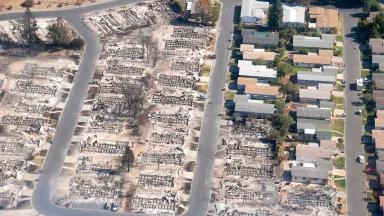
Damaged and destroyed homes in Chimney Rock, North Carolina, after Hurricane Helene swept through the area

North Carolina is facing a rapidly growing insurance crisis. From the coast to the mountains, the very insurability of homes is in question as increasingly frequent and severe disasters collide with homes that were built for less risky times. The state has endured more than 40 disasters since 2018 that have each cost more than $1 billion, causing widespread damages and destabilizing local economies. As storms intensify, families need stable, affordable insurance more than ever to protect their homes, their mortgages, and their ability to recover. Without meaningful investment in risk-reducing measures, damages will continue to mount.
LEARN MORE

Insurers should be incentivized to help reduce risk; safer, more resilient homes mean fewer claims and lower costs for families and insurers alike. Yet instead of investing in proven measures that would make communities safer, many insurers are doing the opposite: raising prices, withdrawing from markets, and cutting back on what their policies cover.
One insurer, however, shows what a better path looks like. The North Carolina Insurance Underwriting Association (NCIUA), the state-created insurer of last resort for coastal counties, has demonstrated that helping homeowners strengthen their roofs before the next storm hits reduces losses for both residents and the insurer. Its approach proves that when insurer incentives align with resilience, everyone wins.
North Carolina should build on this success—not settle for a system that leaves families exposed. Residents need stronger homes, fairer insurance, and a state legislature willing to act before the next disaster.
NRDC’s director of insurance and financial risk, Alfonso Pating, breaks down how homeowner’s insurance works and why climate change is making it unaffordable.
The cost of insurance is rising
Insurance premiums in North Carolina are rising fast. Regulators approved back-to-back rate increases for 2025 and 2026—averaging 7.5 percent each year—following an industry request in 2024 for even larger hikes. This trend will continue. Insurance Commissioner Mike Causey told WLOS, “The rates we’re seeing now are the result of the damage paid out during Hurricane Florence in 2018, so there’s always a lag time.”
North Carolina’s rate-setting process is unique: The North Carolina Rate Bureau (NCRB) proposes a statewide “manual rate” on behalf of all insurers operating in the state, which the insurance commissioner must review and approve. Once approved, insurers must use this rate as their starting point—though a homeowner’s actual premium varies based on property-specific and individual underwriting factors, such as location, construction type, coverage selections, claims history, and credit score.
Rate negotiations in North Carolina make headlines, but they are only the beginning of the story. The state’s consent to rate (CTR) rule allows insurers to charge up to 250 percent more than the state-approved manual rate. The intent of CTR is to give insurers a tool to price truly exceptional or high-risk properties—cases where the standard, regulator-approved rate does not adequately reflect the risk—but its use has increased dramatically. In 2012, about 20 percent of homeowners’ policies were written using CTR. By 2024, the figure had increased to more than 55 percent—meaning most policyholders are now paying more than the negotiated rate, often without realizing it, because their properties have been deemed high-risk. Since 2019, written consent from the policyholder is no longer required for CTR on residential property. Policyholders can check their bill to see if they have a CTR policy.
In 2024, insurers collected an additional $789 million from North Carolina policyholders by writing CTR policies above the negotiated rates. On average, the 1.4 million CTR policyholders paid an additional $553 in annual premiums. Additionally, the widespread use of CTR makes an already opaque system even more inscrutable in terms of understanding insurance affordability and the health of the market. Even when the state negotiates lower rate filings, premiums continue climbing because CTR effectively renders those settlements optional.
People are getting less from their coverage—when they can get it at all
While prices rise, coverage across the state is shrinking. More families are losing insurance altogether, either because premiums have become unaffordable or because insurers are dropping them due to growing risks. These so-called policy nonrenewals are rising sharply. In 2023, Nationwide announced it would drop more than 10,000 policies in eastern counties, but the problem is statewide. Thirteen inland North Carolina counties rank in the top 100 for nonrenewals among U.S. counties, with more than 10,000 policies not being renewed in 2023, according to data collected by the U.S. Senate Committee on the Budget. There is also evidence that policies are being dropped in western counties following Hurricane Helene. Households across the state are now being dropped with as little as 30 days' notice, forcing them to scramble for coverage or accept even more expensive last-resort options.
Even those who keep their coverage will see their protections erode. Starting in June 2027, new statewide rules will shift many roof damage claims from full replacement cost to depreciated values through standardized roof payment schedules. For damage to roofs more than four years old, insurers will not pay the full replacement cost—only a percent that decreases over time—potentially leaving families with thousands of dollars in unexpected expenses. Insurers are also adding new exclusions, such as cosmetic damage limitations, unless homeowners purchase “buyback” endorsements.
Families are paying more, getting less, and shouldering more financial risk that insurance was meant to absorb. An estimated 7 percent of North Carolinian homeowners remain uninsured altogether, leaving them totally exposed when disaster strikes. For families across North Carolina, the gap between what insurance should provide and what it delivers is growing dangerously wide. The NCRB pointed to rising losses, higher construction costs, and costly reinsurance as justification for increasing rates and the expanded use of CTR. At the same time, the property insurance industry recorded a $35 billion net underwriting gain in the first nine months of 2025. Meanwhile, many people are forced to choose between paying for today’s necessities and protecting their home from future damage.
A working model already exists in North Carolina
The path out of this crisis starts with reducing damage. The NCIUA, which writes the majority of homeowners' policies in the state's 18 coastal counties, is modeling how to do exactly that. The Strengthen Your Roof and Strengthen Your Coastal Roof programs—developed and administered by the NCIUA—offer grants of up to $10,000 to policyholders on the barrier islands and $6,000 in other coastal areas to help homeowners install Insurance Institute for Business & Home Safety FORTIFIED roofs. More than 20,000 FORTIFIED roofs have been installed through the programs since 2018.
The results are striking. An evaluation by North Carolina State University found that FORTIFIED roofs:
- Reduced claims from named storms by 35 percent
- Reduced losses per claim from named storms by 23 percent
- Reduced claims from non-named storms by more than 60 percent
“We have found storm after storm after storm, [FORTIFIED roofs] perform better than even brand-new code roofs,” said Don Hornstein, a professor at the University of North Carolina at Chapel Hill School of Law and a member of the NCIUA’s board of directors. “And we save money doing it. We save money as an insurance company.”
The NCIUA also pays the cost to upgrade to a FORTIFIED roof when a covered roof must be replaced after a claim. Policyholders across all 18 coastal counties, whether insured by the NCIUA or private carriers, receive premium discounts for installing these roofs.
This model works because it aligns incentives. Families get a better roof, which means a safer home and fewer losses in the future for the insurer, and the state reduces long-term disaster costs. “It’s more about people having homes to come home to,” said Gina Hardy, CEO of the NCIUA. “These FORTIFIED roofs are really making a difference in hurricane-type situations. It’s something we feel very passionate about investing in.”
The NCIUA has already proven that a people-centered, financially stable, resilience-focused insurance system is possible.
North Carolina’s path forward
Without intervention, the trends of rising rates, diminishing protection, and sudden nonrenewals will continue. Efforts to keep rates affordable are necessary, but debates that focus solely on how much rates are rising miss the structural issue: As long as homes are built to outdated standards, losses will continue to flow through to premiums, and insurers will continue to retreat. The durable path to insurance affordability is to reduce losses before they happen—by strengthening requirements for new home construction and investing in risk-reduction retrofits for existing homes. Homeowners, insurers, builders, and state government must all work together.
Yet in recent years, the state has moved in the opposite direction. North Carolina is adding housing faster than nearly every other state, with hurricane-prone Brunswick County alone adding more than 100,000 new residential units in 2024. By passing legislation that freezes residential building code updates until 2031, lawmakers have ensured thousands of new homes will be built to outdated standards that don’t match today’s risks. Weaker codes mean greater damage during storms, which leads to higher losses, higher premiums, and, ultimately, fewer insurance options for homeowners. In other words: With every house built to outdated codes, the state is making a hard problem even more difficult.
Changing course requires action from the state government, which controls building standards, regulates the insurance industry, and allocates funding for resilience investments. The success of the Strengthen Your Roof programs shows what’s possible when the focus is on reducing damage before a disaster, not arguing over who pays for it afterward.
It’s time for the state to:
- Invest more heavily in proven risk-reduction programs that lower losses and stabilize premiums.
- Make private insurers true resilience partners by increasing incentives and requirements for investing in and rewarding risk reduction.
- Rein in harmful market practices, including the overuse of CTR and sudden nonrenewals.
- Collect and publicly disclose data on pricing, underwriting, claims, and nonrenewals by census tract, mirroring the transparency required in the mortgage industry.
- Update building standards, so new homes are built to withstand current and future risks.
NCIUA has already proven that a resilience-focused, people-centered insurance system is achievable. The next step is scaling that progress to ensure that every household in the state benefits from a fairer, safer, and more stable insurance future.
Related Blogs

Overshoot Demands a New Era of Adaptation, Loss and Damage, and Climate Justice

More Housing or More Sustainable Housing? It’s a False Choice—Let’s Do Both!