The Third-Hottest Summer Yet Just Got a Little Safer
California’s state legislature, the County of Los Angeles Board of Supervisors, and New York City Council pass lifesaving cooling bills.

The Westlake neighborhood of Los Angeles, where the majority of residents are renters

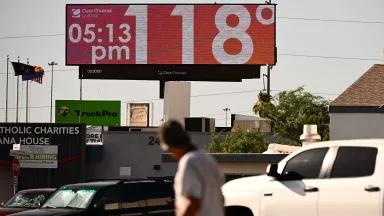
The federal government’s Fifth National Climate Assessment reported that the number of heat waves that hit major U.S. cities has doubled in frequency since the 1980s. Data from the Maricopa County Department of Public Health in Arizona show that heat has driven emergency room visits to the record levels reached during the height of the COVID-19. According to the U.S. Environmental Protection Agency, the number of days above 95 degrees Fahrenheit is expected to increase across the United States, with multiday heat waves expected to be longer, affect more of the country, and become more severe. We need to protect people from the impacts of extreme heat now, starting with the people who feel the impacts most strongly.
This summer, NRDC worked with cities and states across both coasts to pass legislation to protect people from the impacts of extreme heat. We had the privilege of supporting the partners who are spearheading this work to make our communities more climate resilient.
In Los Angeles County, encouraged by a wide range of environmental justice and climate groups alongside tenants’ and labor rights organizations, the Board of Supervisors voted 4-to-0 to pass the county’s first cooling requirement in rental housing. California state law has long included access to water, electricity, and heating under the minimum habitability standards for rental housing; however, lifesaving access to cooling has historically been ignored. Beginning in 2027, this ordinance will require landlords to maintain a maximum indoor temperature of 82 degrees for their tenants.
Learn More

In California, NRDC, along with 44 organizations led by our partners at Leadership Counsel Action, helped to pass Senate Bill 655 through both houses in the legislature. This measure would require state agencies to consider California’s goal of ensuring that homes can maintain a safe indoor air temperature as they are engaging in their existing and ongoing efforts to address and prepare for extreme heat, promote energy efficiency, and secure safe and healthy housing. Governor Gavin Newsom has until October 12, 2025, to sign this bill into law.

A cooling center in the Harlem neighborhood of New York City
Across the country in New York City, thanks in large part to organizing from WE ACT for Environmental Justice and advocacy from a wide range of stakeholders, including members of the Extreme Heat Coalition, the New York City Council passed Introduction 998-A to codify the city’s cooling center program. This bill requires the commissioner of the New York City Emergency Management (NYCEM) to designate at least seven cooling centers per 100,000 residents, including considerations of heat-vulnerable populations. NYCEM is responsible for submitting a cooling and communication plan before the summer of 2026 as well as an annual report with recommendations for increasing accessibility of cooling centers. The bill would require NYCEM or the Department of Health and Mental Hygiene to post health alerts during heat emergencies and easily facilitate public feedback on the cooling centers.
Both at-home cooling and public cooling centers are crucial parts of a comprehensive extreme heat strategy. Strategic Actions for a Just Economy’s 2025 A Renters’ Right to Cooling report details the physical and mental health impacts experienced by tenants, including headaches, dizziness, asthma attacks, nosebleeds, anxiety, and heat rashes. The absence of a working air conditioner was the most important risk factor for heat-related deaths. According to the 2025 New York City Heat-Related Mortality Report, published by the city’s Department of Health and Mental Hygiene, the majority of people who died from heat stress did so in an unair-conditioned home. Since indoor temperatures fluctuate far less than outdoor temperatures, residents without air-conditioning often experience prolonged exposure to unsafe heat and humidity during heat waves.
Cooling centers are another essential tool in combating extreme heat, especially for low-income communities and unhoused individuals, who lack access to cooling devices at home and face higher rates of energy insecurity. Visiting a cooling center on a day of extreme heat can reduce the risk of heat-related deaths by 66 percent.
We commend the L.A. County Board of Supervisors, California State Assembly and Senate, and the New York City Council for taking action on extreme heat and passing these ordinances. We ask that Governor Newsom take a step forward in making Californians healthier and safer in their own homes by signing SB655.
We strongly urge local officials—especially in Los Angeles and New York City, where there are rights-to-cooling bills already introduced and waiting to be passed—to listen to your residents who are asking for help in combating extreme heat. To these officials, we urge you to work to ensure that the costs of purchasing and installing cooling devices aren’t passed down to tenants or used as an excuse for eviction; reduce energy burdens on households so that tenants can actually afford to run these cooling devices; and expand resources allocated toward public initiatives like cooling centers so that they can remain open outside the 9-to-5 window and on weekends. This summer may have been a temporary reprieve in the cycle of each summer being “one of the hottest summers yet,” but we are not home free.
Related Blogs

Overcoming Decarbonization Barriers in Los Angeles’s Affordable Housing
Time for New York City to Act on Extreme Heat