
The Law Requires States to Plan for Climate Impacts
As a deadly heat wave blankets parts of the country, it's more important than ever that states prepare for such extreme weather hazards.
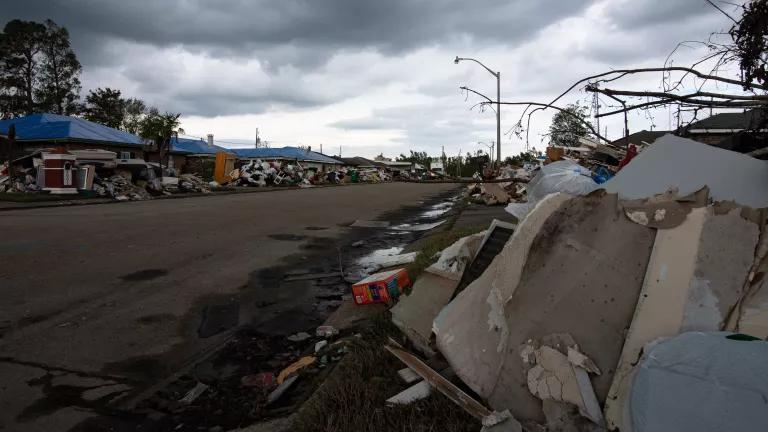

Currently, dangerous heat is baking much of the eastern United States, with heat indices in some areas forecasted to exceed 100 degrees Fahrenheit. Unfortunately, climate-driven disasters are becoming more frequent and severe across the nation. Floods and droughts are increasing, hurricanes are intensifying, and extreme heat waves, like the one happening now, are becoming commonplace.
In response, human mortality and morbidity rates are rising, and property damage costs are skyrocketing. As the climate continues to change, these risks will only grow, presenting grave challenges to our nation’s cities, towns, and neighborhoods when disasters strike.
NRDC and the Sabin Center for Climate Change Law released a new report reaffirming that the Federal Emergency Management Agency (FEMA) has a legal duty to require consideration of climate change in state hazard mitigation plans. Under the Stafford Act—a federal law that governs disaster preparedness and recovery efforts—states must prepare these plans to be eligible to receive federal hazard mitigation funding. The act sets out requirements for the contents of the plans, which include analysis of all natural hazards that can affect the state.
Learn More

Planning for these disasters can mean the difference between life and death. By anticipating emergencies, states and local communities can significantly reduce risks to health, minimize property and economic losses, and lessen the psychological trauma of an unexpected crisis. Comprehensive hazard mitigation planning is a proactive approach for reducing risk.
When communities fail to fully prepare for future disasters, not only do they lose the opportunity to effectively invest their resources, but they also put lives and property at risk.
Yet, in the spring of 2025, FEMA, under the second Trump administration, removed all mentions of climate from the state mitigation planning policy guide. The state planning guide contains current information on FEMA’s policy priorities when awarding hazard mitigation assistance and includes detailed technical guidance on what to include in state plans. Past versions of the guide have recognized that consideration of climate change is a critical component of state hazard mitigation plans to adequately “identify the natural hazards, risks, and vulnerabilities of areas in the State,” as required by the Stafford Act.
The 2025 guide merely states, “The risk assessment must provide an overview of the probability of future hazard events, including types, location, range of anticipated intensities, frequency, and/or duration of each natural hazard.” The former references to climate change–related increases in probability were removed.
Regardless of the guide’s departure from explicitly referencing the impacts of climate change on future hazards, the Stafford Act still requires such consideration. Failure to account for the impacts of climate change is inconsistent with the text and purpose of the law and will have costly consequences. FEMA must adhere to its legal duty and only approve plans that consider climate change’s impact on natural hazards.
This NRDC.org blog is available for online republication by news media outlets or nonprofits under these conditions: The writer(s) must be credited with a byline; you must note prominently that the blog was originally published by NRDC.org and link to the original; the blog cannot be edited (beyond simple things such as grammar); you can’t resell the blog in any form or grant republishing rights to other outlets; you can’t republish our material wholesale or automatically—you need to select blogs individually; you can’t republish the photos or graphics on our site without specific permission; you should drop us a note to let us know when you’ve used one of our blogs.
Related Blogs

Political Control of Research Funding Threatens Sound Science

Death by a Thousand Cuts: FEMA Under the Second Trump Administration
