The Immense Societal Burdens of PFAS “Forever Chemicals”
We all pay the price for industry’s continued use of PFAS.

Water flowing into the Lower Minnesota River from a St. Cloud Wastewater Treatment Facility outfall pipe


Today—on the heels of the U.S. Environmental Protection Agency’s (EPA) announcement that it plans to repeal standards for four of the six federally regulated PFAS found in tap water and to delay implementation of the standards for PFOA and PFOS—NRDC released an analysis of quantifiable costs from PFAS pollution for California.
NRDC’s senior scientist Anna Reade walks us through the pervasiveness and stubbornness of toxic PFAS “forever chemicals” and offers suggestions on how to swap out PFAS-laden household items for cleaner alternatives.
Learn More

We found that $571 million has already been spent on drinking water and environmental remediation and $1.13 billion in future projects have been identified. Health care expenditures in California are estimated to be $5.5 to $8.7 billion annually, and the expected costs to clean up just six PFAS to the level of the federal drinking water standards established in 2024 are estimated to be $161 to $217 million annually.
However, the enormous burden to society from PFAS pollution extends beyond California, and many of these costs have not been well quantified to date. Below, we catalog some of the multiple burdens (both quantifiable and not) to society that flow from PFAS production, use, and disposal.
What are PFAS?
PFAS (per- and polyfluoroalkyl substances) are a class of more than 14,000-plus man-made chemicals that are widely used in consumer and industrial products. Due to their extreme persistence (thus, their nickname of “forever chemicals”) and widespread use, PFAS contaminate most of our environment and even our bodies.
In addition to their extreme persistence, PFAS are highly mobile (making their contamination hard to contain and clean up), can bioaccumulate, and are linked to a host of serious health harms. Existing contamination, as well as the continued production and use of PFAS, has resulted in immense costs to our society, from the health care costs of treating diseases caused by PFAS exposure to the costs to remove PFAS from drinking water and beyond.
Continuing use of PFAS results in health harms with enormous costs
PFAS exposure is associated with several health concerns, all of which cost individuals, families, and our society an exorbitant amount of money—from time missed at work due to illness or caring for a loved one and traveling long distances for specialist appointments to costly medications and treatments, and even premature loss of life.
The U.S. Environmental Protection Agency (EPA) recently estimated the benefits of protecting against three health effects attributable to removing just two PFAS (PFOA and PFOS) from drinking water at $1.17 billion per year (2022). This analysis only included estimates of the health care costs associated with reduced birth weight, cardiovascular disease (including heart attacks and strokes), and kidney cancer. EPA also noted that there are numerous non-quantified health benefits from implementing the federal drinking water standards.
A more comprehensive analysis has estimated that the U.S. health care costs from total exposure (through drinking water and other sources) to a broader group of PFAS, and covering additional health impacts than the EPA analysis, could total $37 to $59 billion annually (2021). Despite being more comprehensive, this estimate, like the EPA’s estimate, did not include potential costs due to other health effects associated with PFAS exposure, like immune system dysfunction, testicular and other cancers, infertility, or an inability to breastfeed.
Neither estimate included costs incurred by individuals who suspect they may have high PFAS exposure, e.g., the costs of blood tests for PFAS or the costs for additional health monitoring as recommended by the National Academies of Sciences, Engineering and Medicine’s clinical recommendations for PFAS exposure.
To avoid these health harms, we must reduce exposures (though doing so is expensive)
We are exposed to PFAS through our food, water, air, soil, and consumer products. To reduce exposure and future health harms, we must take steps to clean up PFAS contamination in our environment and limit our use of PFAS in products.
However, to fully remediate PFAS is impossible—most cleanup methods simply move PFAS from one part of the environment to another—and likely prohibitively expensive. Traditional waste disposal options, including incineration and landfilling, do not effectively destroy PFAS waste. Emerging research into PFAS destruction is promising but likely to be more expensive than traditional waste disposal options. This makes it even more important to turn off the tap on these harmful chemicals by stopping their use wherever possible.

An environmental engineer gathering soil samples for PFAS contamination testing on Marine Corps Base Camp Lejeune in North Carolina
Some exposure pathways can be addressed through cleanup to protect public health and help prevent further widespread contamination, and it is important that we take these steps. Some of these actions include:
Drinking water is a major source of PFAS exposure, especially in highly impacted communities near manufacturing sites, landfills, locations where PFAS-containing firefighting foam has been used, and places where PFAS-contaminated biosolids have been spread on the land.
While exposure can be reduced by installing water treatment technologies, this remediation can be costly. In April 2024, the EPA finalized drinking water standards for six PFAS and estimated that up to 105 million people will have improved drinking water as a result of lower levels of PFAS in public water supplies. This regulation requires public water providers to monitor for the presence of the six PFAS, and if the chemicals are found above certain levels, they must either identify new water sources or install water treatment.
The EPA estimated that costs to comply with these new standards nationally would total about $1.5 billion per year, including capital costs of installing treatment as well as maintenance, administrative, and testing costs.
The EPA announced on May 14, 2025, that it plans to repeal standards for four of the six regulated PFAS found in tap water and to delay implementation of the standards for PFOA and PFOS, which would be unlawful under the Safe Drinking Water Act’s “anti-backsliding” provision. Regardless of how the EPA proceeds, some states have been moving to adopt the agency’s 2024 standards in their own statutes or regulations.
Moreover, regardless of the EPA’s actions, these estimates indicate the low end of what it would take to clean up PFAS to truly protect public health.
Landfills are a major source of PFAS contamination through runoff, leachate, and off-gassing, as current landfills are not designed to contain PFAS.
The EPA recently estimated that more than 95 percent of landfills are a source of PFAS contamination. It is expensive to monitor for PFAS in landfill leachate, collect and treat leachate, improve landfill containment to prevent runoff, and treat landfill gases. As regulations develop, PFAS waste may be required to be sent to hazardous waste landfills, which are more costly than municipal waste landfills.
Most wastewater treatment facilities are not currently designed to remove PFAS from the water they treat. Minnesota has developed cost estimates for scenarios where wastewater facilities have to treat PFAS, which range from $2.7 million per pound to $18 million per pound of PFAS removed from effluent, depending on facility size. Based on these estimates, Minnesota estimated PFAS cleanup for its wastewater treatment facilities could cost between $14 and $28 billion over 20 years. That’s just one state.
If PFAS contamination is not cleaned up prior to entering a wastewater treatment facility, the resulting sludge will also likely be contaminated. Municipal waste is often returned to the soil for land application as fertilizer (sometimes referred to as “biosolids”), where it may lead to contaminated ecosystems, agricultural land, and crops.
Regulations that limit sludge/biosolids can lead to a loss of end-use markets for utilities, a loss of these materials that could be used as agricultural fertilizer, and significant additional costs for monitoring and cleaning up PFAS in sludge/biosolids.
There are more than 57,000 potential PFAS contamination sites in the United States, due to the presence of industrial facilities, waste treatment and disposal sites, current or former military sites, and major airports. Cleanup of any of these sites could involve extensive monitoring, soil remediation, remediation of groundwater or surface water, construction of physical barriers to contain pollution, and the provision of clean water to affected residents. Some of these sites may be designated as Superfund sites under the Comprehensive Environmental Response, Compensation, and Liability Act, potentially incurring additional cleanup requirements and costs.
Other important impacts to consider:
In addition to the health harms and related health care costs described above, individuals could be impacted by increased utility rates (for example, from treating drinking water), a drop in housing prices in contaminated areas, the possibility of paying higher prices for PFAS-free products, and the need to purchase and maintain at-home water filters. For certain communities, PFAS contamination could lead to a loss of food sources, such as local fish and game.
There are thousands of studies on PFAS exposure and its health and environmental effects, use, environmental fate, and remediation. Much of this research is publicly funded and could have been used for other societal priorities. Government funding is also used for PFAS-related legislation and regulatory efforts, as well as for data collection, analysis, and hosting.
PFAS are found in air, rain, surface water, and soil, even far from human activity. Like humans, many wildlife species are known to be adversely affected by PFAS. As it would be technologically and financially impossible to clean all contaminated air, water, and soil, the resulting ecological harm and loss of biodiversity from PFAS have undetermined impacts.
In an effort to hold polluters responsible, PFAS chemical producers have been implicated in thousands of lawsuits. Litigation costs for PFAS polluters have been increasing in recent years, with estimates of settlements in the United States for drinking water and environmental cleanup litigation approaching $20 billion; modeling suggests this could eventually exceed $100 billion.

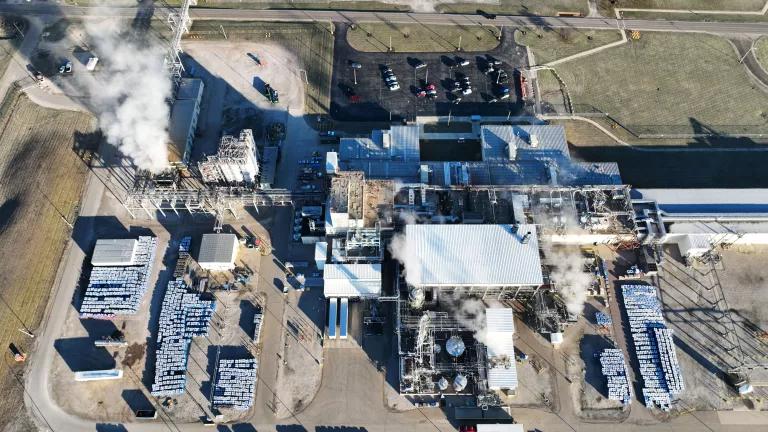
3M’s Cordova chemical facility, which has released discharges containing PFAS dating back to the 1970s
In considering continued PFAS production, some companies have chosen to shut down PFAS production, while others are expanding production or have spent millions lobbying against PFAS restrictions. Liability for PFAS pollution is spreading downstream to product manufacturers that use these chemicals—they are now facing litigation and a loss of insurance coverage for harms that may come from their use of PFAS.
Moving forward
The impacts—both economic and non-economic—of PFAS pollution are astronomical; they likely far exceed the value of the global market for these chemicals. The companies responsible for PFAS pollution have imposed the majority of the true health and economic costs of PFAS onto the public for their own profit. Settlements to date have been insufficient to cover these costs.
When looking at the impacts of PFAS comprehensively, it becomes clear that the impact on society of the continued use of PFAS is staggering and should be a central consideration in future decisions on how to address this problem. Phasing out unnecessary uses of PFAS and incentivizing safer alternatives for the remaining uses is the most cost-efficient and health-protective approach to reducing harms from PFAS. Even then, scientists, health care professionals, governments, and impacted communities will be dealing with the consequences of forever chemicals for decades to come.
Related Blogs

When States Act, Markets Follow: The Ripple Effects of PFAS and Chemical Safety Policies
PFAS Settlement Money for Water Utilities Poised to Evaporate