PFAS Settlement Money for Water Utilities Poised to Evaporate
Up to $13.6 billion is available from settlements, but key actions to claim funds must be taken by January 1, June 30, and July 30 in 2026.
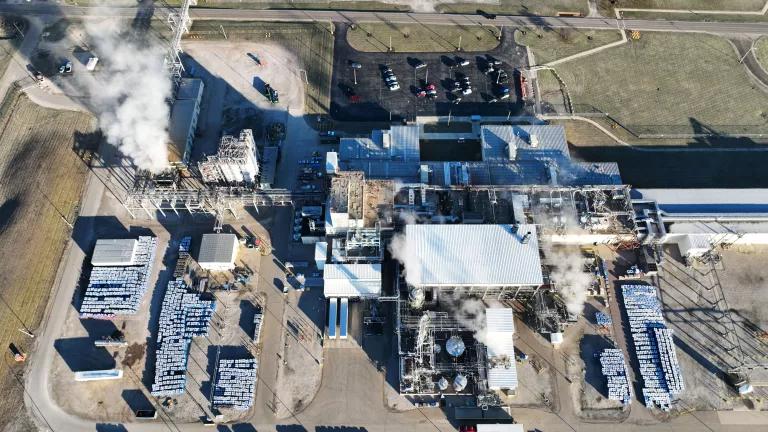
A DuPont plant in Pickaway County, Ohio


“Free money” is hard to come by these days. But potentially hundreds of water utilities across the country could be eligible to receive substantial funding to address toxic PFAS (“forever chemical”) contamination from a settlement by 3M and a separate settlement by Dupont. In 2024, 3M agreed to pay up to $12.5 billion to support PFAS remediation for public water utilities that detect the forever chemicals at any level. Under a similar settlement, Dupont agreed to $1.185 billion.
Subject to certain important deadlines and restrictions, any public water systems that are required to test for PFAS under the U.S. Environmental Protection Agency’s (EPA) unregulated contaminant monitoring rule or that serve more than 3,300 people and have detected PFAS in their water sources are allowed to participate in the settlements. Funds from the settlements are to be used for water testing and treatment. Money can also be used to construct filtering systems and support other infrastructure to remove PFAS.
Looming deadlines
Water utilities that had detected PFAS in their water source prior to the settlement date (“Phase 1” systems) were required to file a claim by 2024. But systems that have not yet detected PFAS or have more recently detected PFAS (“Phase 2” systems) must initiate the claim process by 2026. Specifically, all Phase 2 water systems must file a claim no later than January 1, 2026, to be compensated for their PFAS baseline testing of their water sources, under both the 3M and Dupont settlements. To file a claim for treatment and costs against the Dupont fund, Phase 2 water systems must file by June 30, 2026. To file such a claim against the 3M fund, these systems must file by July 31, 2026. Phase 2 systems can file a single claim form against both the Dupont and 3M funds for treatment of PFAS in their systems.
The settlements also include an ambiguous provision seeming to require systems to file their claims within 45 days after they detect PFAS—except in extraordinary circumstances, though exactly what this means is unclear. More details about the 3M settlement can be found here and info and forms for the Dupont settlement are here. Utility officials should be aware that there are some firms trying to sign up clients that are not well informed about the settlements; utilities should check the settlement website and ensure that whatever firm they hire to help is knowledgeable about the settlement’s details.
Background on PFAS
PFAS are a class of more than 14,000 man-made chemicals and are linked to a wide range of health risks, including cancer (kidney and testicular), liver and thyroid problems, immune system suppression, and abnormal fetal development. The vast majority of water systems in U.S. states have been contaminated with PFAS. The contamination comes from several sources, like the industrial or government dumping of PFAS-laden wastewater directly into rivers, lakes, and streams (which is still often legal) or the seeping of PFAS into groundwater from industrial, military, and commercial facilities, airports, or landfills. And this pollution is often even more intense in already overburdened environmental justice communities, according to the NRDC report Dirty Water.
Recent regulatory actions on PFAS
The EPA has known for decades that PFAS endanger human health. After extensive advocacy from environmental and public health advocates, in 2024, the EPA decided to regulate six toxic PFAS chemicals commonly found in drinking water for the first time. Unfortunately, organizations representing the chemical industry and water utilities, like the American Water Works Association, filed lawsuits challenging these new PFAS limits in drinking water.
Subsequently, the Trump administration’s EPA announced that it will abandon its previous defense of its determinations to regulate four of the six PFAS chemicals, along with the tap water limits on those four PFAS chemicals. The agency also said that it would extend the deadline for compliance with the remaining two PFAS tap water standards by two years, until 2031. NRDC, Earthjustice, and impacted community partners have intervened in that case to preserve these valuable health protections.
PFAS contamination is dangerous to our health and our communities. Drinking water is a major source of PFAS exposure, especially in highly impacted communities.
What can you do?
- Encourage your utility to file a claim ASAP. Urge it to get the money your community deserves to address PFAS in your drinking water. These funds can be especially helpful if you get your water from a small, rural, or Tribal water system.
- Tell your water utility you support the PFAS drinking water safety standards that regulate forever chemicals and help keep your drinking water safe.
- Ask your water system to demand that its trade organizations (like the American Water Works Association and Association of Metropolitan Water Authorities) stop their lawsuit trying to overturn drinking water safety standards for PFAS.
Related Blogs

The Immense Societal Burdens of PFAS “Forever Chemicals”

What to Watch for in the EPA’s Final PFAS Drinking Water Rule