Making CITES Great Again?
Despite some bad behavior at COP20, the United States may have outlined what needs to happen if we are to successfully halt international trade in endangered species.

A black rhino in Etosha National Park, Namibia, Africa
The parties to the Convention on International Trade in Endangered Species of Wild Fauna and Flora (CITES) met in Samarkand, Uzbekistan, in November 2025 for their 20th Conference of the Parties (COP20) under a cloud of uncertainty. The United States, widely regarded as the founder of the CITES treaty (or the “Washington Convention,” as it was known back in the 1970s), pulled all funding for CITES as part of Congress and the Trump administration’s clawback of foreign aid funding, leaving a 22 percent budget shortfall for implementation of the treaty. Nonetheless, the meeting ended with an increase in vital protections for more than 75 threatened species and a push from the United States to focus CITES on its core mandate to ensure trade in wild species of animals and plants does not threaten their survival.
Global wildlife trade is a leading driver of the biodiversity crisis currently gripping our planet—it’s the leading cause of marine species loss and the second-leading cause of terrestrial species loss, according to a 2019 landmark global assessment on the status of global biodiversity. CITES bans international commercial trade in species that are “threatened with extinction” and “are or may be affected by trade” and limits trade in other species that could become threatened unless trade is regulated. CITES has saved hundreds of species that might have gone extinct because of rampant, uncontrolled trade in things like elephant ivory, rhino horn, tiger skins, medicinal plants, exotic hardwoods, tortoise shell, and countless other products.
Unlike most other multilateral environmental agreements—especially the United Nations treaties on climate change, biodiversity, and desertification—CITES is regulatory rather than signal-setting in nature, which means that it has legally binding commitments to enforce treaty provisions and compliance mechanisms that are effective in actually forcing changes in markets and behavior.

CITES Secretary General Ivonne Higuero making her closing remarks on the final day of CITES COP20
There’s no other environmental treaty like CITES, which is why it still gains so much attention now, more than 50 years after it entered into force. As a specific tool designed to address a specific problem, it provides an effective way to address one of the top drivers of the biodiversity crisis within the time frames necessary to avoid the catastrophic impacts of ecosystem collapse over the next several decades. And critically, key players—including the United States, China, and the European Union—actively engage in CITES implementation, even as they are the major markets for wildlife products and drivers of the trade, legal and illegal.
Despite its success at staving off extinctions, CITES is not yet doing everything it can to address the direct exploitation of wild species, in part because too much time, energy, and resources are spent on work that only tangentially relates to the core purpose of CITES. That needs to change.
Here are some key takeaways from CITES COP20:
-
The COP increased protection for many species that need help.
Several marine species were protected, including: manta and devil rays; gulper, whale, and tope sharks; some sea cucumbers; and guitarfish. And the parties banned trade in critically endangered oceanic whitetip sharks, which were finally put on Appendix I, where they belong. Iguanas, two-toed sloths, songbirds, geckos and other species that are traded as pets were also protected, and efforts to allow trade to resume in elephant ivory and rhino horn were defeated.
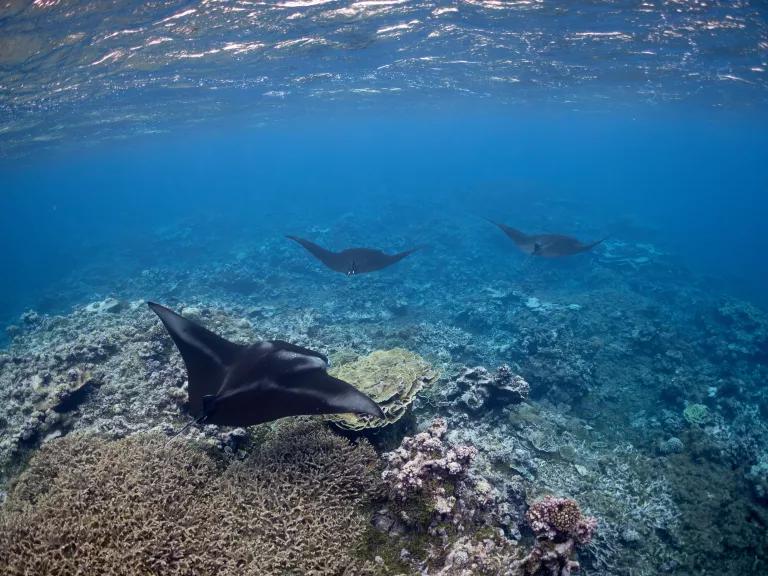
Manta rays in Palmyra Atoll in the Pacific Remote Islands National Monument
-
The pace is just too slow to keep up with the scope and scale of the problem.
Oxford University, the International Union for Conservation of Nature and Natural Resources (IUCN), and the U.N. Environment Programme World Conservation Monitoring Centre (UNEP-WCMC) presented updated data on species that are likely threatened by international trade. Not surprisingly, the number of species that remain unprotected by CITES has increased. Almost half of the species deemed threatened by international trade are not covered by the treaty, which is something NRDC is working to address.
-
The United States’ overall approach to CITES, introduced at COP20, was promising.
The United States took to the floor early to highlight that it wanted to refocus CITES on its core mandate. Most of its positions along these lines were good, at least insomuch as they opposed spending time and attention on things that did not relate directly to compliance with and implementation of CITES’ core purpose, which is to ensure that global trade in wild species does not threaten their survival. NRDC has long supported a back-to-basics approach focused on enforcement, compliance, and capacity building. This means ensuring that species get the protections they need under CITES and that parties focus on closing these gaps and working toward more effective implementation.
- But let’s not kid ourselves: The United States still took some awful positions on species proposals and other issues.
- For the first time that anyone could remember, the United States advocated for barring outside observers from a key working group on the effectiveness of CITES and CITES committees.
- It urged the removal of references to gender, health, climate change, or other multilateral agreements (most of which the United States hasn’t ratified) in COP decisions, though this was mostly ignored by the parties.
- It amended its position on allowing trade in some iconic species such as saigas and giraffes, lending its support for proposals to allow trade in species that it had supported for increased protection at previous COPs.
- It tried and failed to end the Sponsored Delegates Project, which allows CITES funds and other donations to be used to pay for delegates from developing countries to attend CITES meetings. Participation by all parties is core to CITES’ effectiveness.
-
Ambition at CITES has to mean something.
Side events at the meeting highlighted the need for all species to be protected that qualify for protection. That is because it won’t matter for biodiversity overall if CITES doesn’t catch up and cover all species that are in decline and affected by trade and increase protection for listed species that are still declining to the point of no return. Thankfully, some parties are starting to band together and look at this issue, so there is hope for change at future COPs. A delegate from the Bahamas said it best: “Critically endangered has to mean something. We must remember that the next classification after critically endangered is extinct in the wild.”
Given the myriad threats they face, the planet's wild species can no longer withstand the current business-as-usual approach to wildlife exploitation taken by many parties to CITES and important stakeholders. However, the answer may not be a brand-new approach but rather clearing away everything that is extraneous and refocusing on effectively implementing CITES’ core mandate to ensure that markets do not drive extinction. The U.S. approach may help, but it will take bold leadership from among the parties and forward-looking partners to place CITES on a clear path that’s fit for the next 50 years; one focused on ambitious and effective action to halt extinction and recover threatened species.
Related Blogs

The Trump Administration Is Racing to Launch the Deep-Sea Mining Industry, Despite Huge Risks and Broad Opposition

Aligning Global Action for Nature, Wildlife, and People at the IUCN World Conservation Congress
