The Fight for Clean Air in Albuquerque’s Most Polluted Areas
After years of advocacy, Albuquerque communities secured a long-overdue rule to protect against the cumulative impacts of air pollution. Now, it’s time to protect that rule.

Albuquerque, New Mexico


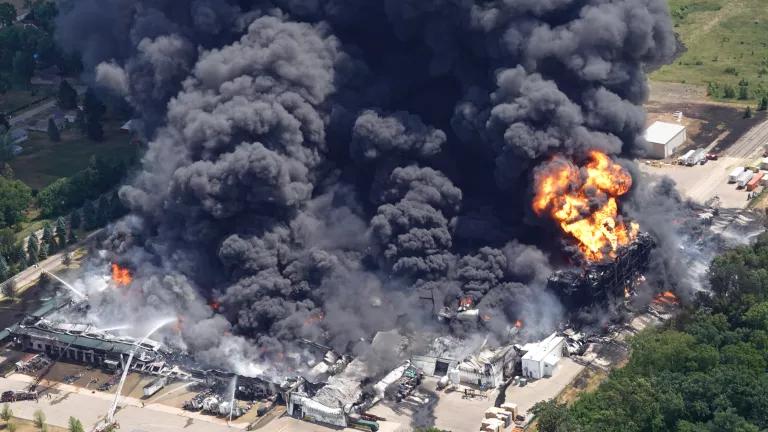
In the heart of Albuquerque, thick clouds of pollution drift into neighborhoods where residents breathe in pollutants they cannot see, but whose effects they will endure for a lifetime. Industrial sites, transportation-related emissions, and other pollution sources have long contributed to unhealthy air quality, which disproportionately harms historically marginalized communities across the country, including several communities in and around Albuquerque.
After years of demanding change, community advocates finally got Albuquerque regulators to implement a rule requiring cumulative impacts analysis. Now, we need to protect that rule from industry attack.
A rule rooted in community and science
The Health, Environment, and Equity Impacts Rule (HEEI Rule), adopted by the Albuquerque–Bernalillo County Air Quality Control Board (Air Board) in response to a petition led by community groups from the Mountain View area, is a significant step toward environmental justice in the Albuquerque–Bernalillo County area and its surrounding communities.
Bernalillo County is home to some of the worst air quality in the United States. The city of Albuquerque, located within the county, ranks among the 25 worst cities in the nation for ozone pollution, with high levels of particulate matter that increase the risk of respiratory diseases, cardiovascular conditions, and reduced life expectancy.
The distribution of this pollution is far from random. Approximately 36 percent of active industrial air permits in Bernalillo County are concentrated in just four zip codes, even though these neighborhoods account for only 21 percent of the county’s population. These neighborhoods—San Jose, Mountain View, Greater Gardner, Martineztown, and the International District—are also communities of color.
For decades, residents in these neighborhoods have borne the brunt of industrial pollution while also facing barriers to health and recovery. Members of these communities have been advocating tirelessly for stronger protections over the past few decades, which have been spent facing worsening air quality and growing health disparities perpetuated by the absence of cumulative impacts analysis in traditional air permitting.
Among several efforts to address these inequitable conditions over the years, residents in the most affected communities petitioned the Air Board to regulate cumulative air pollution impacts, leading to the adoption of the HEEI Rule. The rule ensures that new or modified pollution sources within a one-mile radius of an overburdened area must implement emissions controls that account for real-world conditions. The residents of New Mexico spoke, and the Air Board listened.
A key component of the HEEI Rule is the requirement that the city’s Environmental Health Department (EHD) create and maintain a map identifying the overburdened areas in the county. This map serves as a crucial tool for addressing environmental injustices because it incorporates localized vulnerability factors. In addition to mapping pollution burdens, the HEEI Rule strengthens public participation by requiring EHD to notify residents in or near these overburdened areas about new or modified permits.
Defending the HEEI Rule against industry challenges
Despite its importance, the HEEI Rule faces challenges from industry groups that argue that social determinants of health—like income level, literacy levels, and other factors that affect access to health care—have no place in air pollution regulation. This argument ignores the reality that public health is shaped not only by air quality but also by the economic and social conditions that directly influence how pollution affects people’s well-being.
Learn More

Recognizing this, Los Jardines Institute (LJI), a grassroots organization focused on environmental, economic, and food justice in Albuquerque’s South Valley, along with LJI co-coordinator and longtime Albuquerque resident Dr. Sofia Martinez and the Pueblo of Isleta, a federally recognized Indian Tribe co-located in Bernalillo County, invited NRDC to join in providing legal support. Together, we filed an amicus brief in support of the HEEI Rule.
Our position is clear: New Mexico’s environmental regulators have a legal duty to prevent and abate air pollution, which requires considering social determinants of health, and the HEEI Rule is necessary to protect Albuquerque’s most impacted communities.
Why cumulative impacts matter
The HEEI Rule is a cumulative impacts regulation that considers the totality of exposures of chemical and nonchemical stressors that, combined, impact public health. This includes accounting for both physical pollution sources and social determinants of health, which shape an individual’s ability to recover from environmental harms. The HEEI Rule is part of a larger movement to ensure that environmental decision-making accounts for cumulative impacts.
Cumulative impacts are essential to understanding the full scope of environmental harms. Health outcomes are shaped not only by environmental exposures but also by a range of social factors, such as education and community safety, as well as access to health care, healthy food, and economic opportunities.
In addition to the well-documented relationship between air pollution and health impacts, federal agencies recognize that cumulative impacts are important to understanding the full scope of public health disparities. Socioeconomic factors can compromise an individual’s ability to cope with or recover from air pollution exposure; for instance, a child with asthma living near an industrial site is in a more vulnerable position when their family also lacks access to affordable, quality health care. The HEEI Rule takes these realities into account to ensure that air quality regulations protect real people and their daily lives.
The Clean Air Act sets standards for criteria and hazardous air pollutants but does not account for cumulative impacts that address localized pollution burdens. However, it grants states and local governments the authority to adopt stricter regulations beyond the federal floor. The HEEI Rule fills the gap in federal air emissions policy by recognizing that air pollution impact is not just a matter of emissions but also the result of combined socioeconomic factors that the statute’s air permitting process fails to acknowledge.
Cumulative impacts regulations like the HEEI Rule recognize that environmental regulators should consider the total pollution burden a community already faces, as well as the social determinants of health that make residents more vulnerable, to abate air pollution and protect public health.
Moving forward
Regulatory decisions must reflect the lived experiences of those most affected by pollution. The adoption of the HEEI Rule was an important step in addressing the cumulative impacts of pollution, but the fight for clean air is far from over. Overburdened communities in Bernalillo County and across the country continue to face barriers to environmental justice. That is why we need rules rooted in equity that protect the right of all people to breathe clean air. The HEEI Rule shows how environmental regulation can accomplish this aim by incorporating science that reflects lived experience to protect communities.
The approach to air quality regulation must continue to prioritize cumulative impacts to ensure that layered pollution sources and social stressors are taken into account. This means advocating for policies at the state and federal levels that recognize the lived experiences of those most affected by pollution. Through policies like the HEEI Rule, we are one step closer to making the right to clean air a reality for all.
Related Blogs
Campaign Pushes for Fresh, Local Food at Dollar General

Political Control of Research Funding Threatens Sound Science