

One-third of our food supply in the United States goes to waste.

Food is meant to be eaten, not tossed in the trash. Unfortunately, wasted food is the number one material in our landfills. When food decomposes in a landfill, it generates methane, a powerful greenhouse gas. And that’s not the only problem with wasting food: Wasting about a third of our food supply in the United States costs us $382 billion each year, and growing food that’s ultimately wasted swallows up 16 percent of our cropland and agricultural water. When one in seven American households are food insecure, wasting good food just doesn’t make sense.
Learn More

The food system is plagued by many issues—pesticide and nitrogen fertilizer overuse; water pollution around factory farms; child labor at meat processing plants—but reducing food waste is low-hanging fruit. We can address economic, environmental, climate, and social, issues in one fell swoop. While there is no silver bullet to slashing food waste, requiring that food be kept out of landfills and incinerators—through food waste diversion policies, also known as organic waste bans—is a good start.

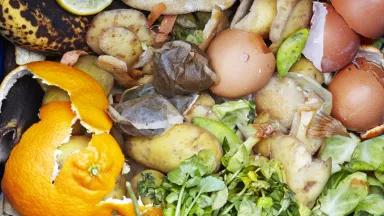
Compost can be made from a variety of organic materials, including food scraps that would otherwise end up disposed in landfills or incinerators.
Essentially, food waste diversion policies require businesses and institutions (and sometimes residents) to donate their surplus food and send their food scraps to be recycled (e.g., through composting), ensuring that food is kept out of landfills and incinerators. When food is donated, it gets another chance to nourish people, and when it is composted, its nutrients can replenish the soil. There is a tremendous opportunity for states to motivate businesses, municipalities, and individuals to treat their discarded food as the resource it is by passing food waste diversion policies.
It’s time to refocus our efforts on reducing food waste at the state level
That’s why, in the near term, we must concentrate our efforts on both passing food waste diversion policies in the few states that don’t already have them and improving existing state policies. NRDC plans to bring our expertise and resources to current efforts in these states and work in coordination with local partners. It’s important to note that while some states are primed to implement food waste diversion policies soon—with the proper rescue and recycling infrastructure, collection systems, and public support—some states will have a longer runway.
Learn More

In some states, we will need to lay the groundwork to make an eventual food waste diversion policy a success. This could mean ensuring that composting is cheaper than landfilling. Or in states where it may be politically challenging to pass such a bill, it could mean leveraging our longtime city-focused initiative, Food Matters, to catalyze widespread municipal action that will prompt the state to follow the cities’ lead. Through a combination of focusing on these high-impact states and simultaneously pushing federal and local solutions, we aim to reduce food waste by 50 percent by 2035.
Eleven states have already passed these policies in some shape or form. The data we have from these states show that these policies create jobs, spur green infrastructure development, generate more food donations, and significantly decrease the amount of food being disposed of. For example, Vermont's law resulted in 54 percent of its food being diverted from the landfill just three years into the implementation of the law; one major food bank in the state saw its food donations triple. More food being donated means more fresh, nutritious food for families experiencing food insecurity, which is critical when SNAP eligibility and funding for food banks are being cut.
Food waste is a problem we can solve
Americans want to compost their food scraps—more than two-thirds of those who don’t already compost say they would do so if it were available and convenient. For many people, eating or composting food that would otherwise go to waste in their own kitchens is their first exposure to individual climate actions. Everyone is connected to food, and reducing food waste is unifying—we all share an interest in ensuring that good food is eaten. And we can all make a difference by wasting less food, especially with the support of state-level food waste diversion policies that help get more good food to be eaten, grow local economies, and create more compost to build healthier soil.
Related Blogs

Food Waste Diversion Can Deliver Billions in Economic Benefits

2025 Wins in Food Waste and What’s Next in 2026
