Africa’s Energy Transition Minerals and Artisanal and Small-Scale Mining
This white paper examines how the rise in demand for energy transition minerals is reshaping artisanal and small-scale mining across Africa, a phenomenon that will influence the transition to an inclusive, just, and sustainable mineral future for the continent.


Coauthored with David Sturmes-Verbeek and Gustav Dahlqvist, the Impact Facility
The global demand for critical minerals is forecast to surge remarkably in the coming years due to the rapid global clean energy transition that is underway. This global energy transition from fossil fuel dependence to renewable energy and electrified, decarbonized economies is driving rapid growth in the demand for specific energy transition minerals (ETMs). As a major source region of these minerals—such as cobalt, copper, and platinum group metals (PGMs)—many African countries are poised to become central players in enabling the global energy transition. This increase in global demand is acting as a catalyst for the growth of the artisanal and small-scale mining (ASM) sector.
ASM remains one of the continent’s most important livelihood sectors. In sub-Saharan Africa alone, more than 10 million people are directly involved in ASM, with at least a further 60 million who are estimated to rely indirectly on the sector. As demand for ETMs expands, ASM is likely to become increasingly significant in the extraction and trade of cobalt, copper, lithium, tin, tantalum, tungsten, and other minerals.
A just and durable ETM transition in Africa will depend on whether ASM is meaningfully incorporated into governance, finance, environmental management, and market design. Existing initiatives, such as the planetGOLD program (which is focused on ASM gold mining), suggest that progress is most likely to occur where international coordination, locally adapted technology, socioeconomic incentives, and practical support to miners are combined. The key challenge ahead, though, is not simply to make ETM supply chains cleaner but to also ensure that the people and communities already extracting these minerals and relying on ASM for their livelihood are not excluded from the benefits of the energy transition itself.
Learn More
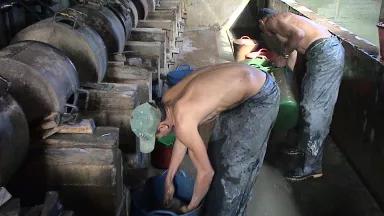

Below are a few key findings from the report:
- ASM is central to Africa’s energy transition mineral future: As demand for energy transition minerals grows, ASM is becoming an increasingly important part of Africa’s mineral economy. ASM should be viewed not only as a governance challenge but also as a major socioeconomic reality that will shape how inclusive and sustainable the continent’s mineral future becomes.
- Critical minerals are not universally defined: Mineral criticality is often defined differently by different stakeholders. While external actors frequently prioritize supply security and clean energy technologies, African governments tend to emphasize national development, industrialization, value addition, and public revenue. These differing priorities influence investment decisions, governance approaches, and the role that ASM plays in mineral strategies.
- ETM mining is expanding unevenly across Africa: ETM-related ASM is not developing uniformly across the continent. The Great Lakes region remains important for tantalum, tin, and tungsten; the Central African Copperbelt is a key source of cobalt and copper; southern Africa is gaining prominence for chromium, graphite, and lithium; and West Africa could play a growing role in future ETM supply chains.
- Challenges remain across the sector: Informality, environmental impacts, poor labor risks, and illicit activities continue to negatively affect the ASM sector. Gender inequities are another challenge, with women making up a significant share of the workforce but often facing barriers to assets, finance, and decision-making opportunities.
- Formalization is necessary but not sufficient: Most ASM operators work informally. Bringing these informal miners into formal regulatory and economic systems can improve livelihoods, environmental performance, and market access when such efforts are practical and tailored to ASM realities. However, overly complex approaches can deepen exclusion. Successful formalization requires broader support than legalization alone, including access to finance, geological information, technology, extension services, and viable market channels.
READ THE FULL WHITE PAPER
Related Resources

The Data Is Clear
Hidden Fossil Fuels: Plastic Production Drives Climate Change