Flooded Again: Flood Data Visualization Tool
Repeated flooding affects thousands of communities across the country. Changes to the National Flood Insurance Program can reduce their risk—and help us all adapt to the effects of climate change.


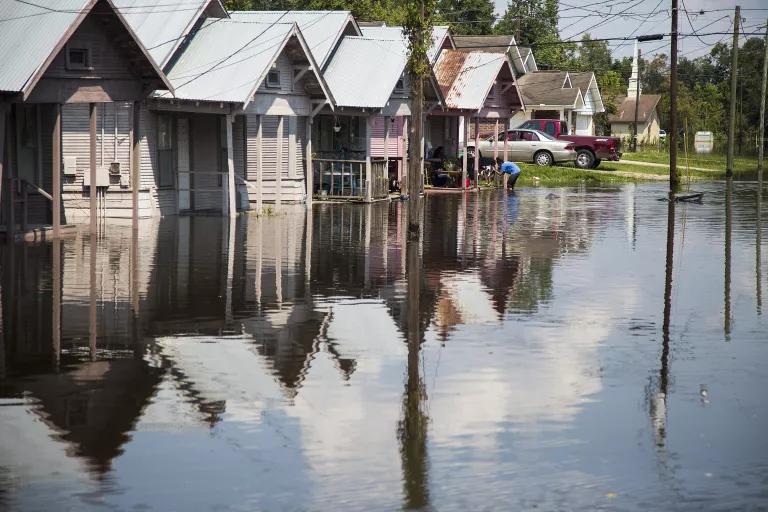
Hundreds of thousands of U.S residents have experienced the danger, stress, and expense of repeated flooding. Flooding happens in every state, but low-income communities and communities of color bear the brunt of flooding impacts and have the least access to the resources and support needed to reduce those harms. Data from the National Flood Insurance Program (NFIP) highlight areas that have the most repeated flood insurance claims and help us understand the ways in which the program falls short.
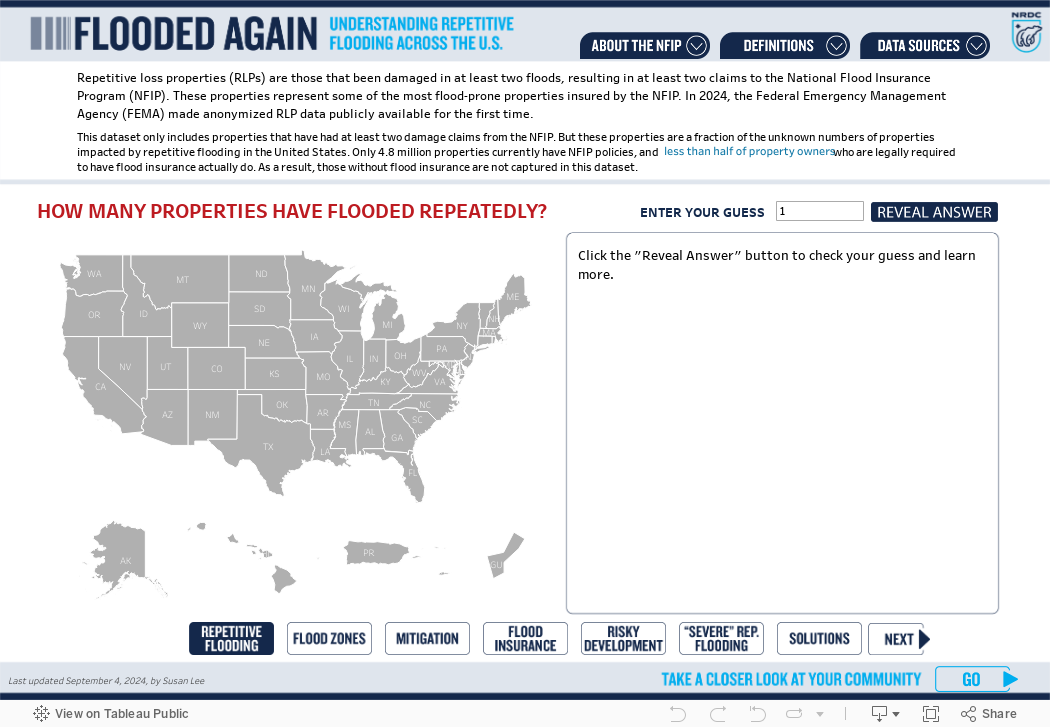
This interactive dashboard provides an introduction to Repetitive Loss Properties (RLPs), which have multiple flood insurance claims under the NFIP. Explore the maps to learn about trends in repetitive flooding and continue reading below for policy solutions to reduce flood risk.
How can we support communities that have experienced repeated flooding? How can we avoid putting more people in the same terrible situation? Some commonsense changes to the NFIP and related programs would go a long way toward helping the nation adapt to current and future flood risk.
Learn More: Flooding in America


Update the NFIP’s national floodplain development standards
The NFIP was created to provide affordable insurance against flood risk as well as to reduce the risk of floodingby setting the floor for floodplain development land-use decisions nationwide. Under the program, communities must adopt building codes and land use standards that are at least as stringent as the NFIP’s national floodplain development standards.
However, these national standards have not been comprehensively updated since the 1970s. As a result, rules intended to protect communities are decades out of date, ill-equipped to address the floods of today, and wholly insufficient for the impacts of climate change.
Ensure flood-risk maps are up-to-date and account for climate change
The NFIP’s flood maps guide where and how we build. These maps are the standard to which everyone turns; developers, engineers, banks, local land use officials, and homeowners all rely on these maps when siting, designing, or financing a project. However, NFIP flood maps often underrepresent current flood risk, and they completely lack any consideration of future climate impacts. That means communities are making development decisions based on the floods of the past, not the future.
Policy solution: FEMA must provide accurate and forward-looking maps of flood risk to better inform development decisions.
Make flood insurance more affordable for low- and moderate-income households
The NFIP is the main provider of flood insurance in the United States. Insurance is critical not only for rebuilding quickly post-disaster but also for accessing many federal grants that could reduce a home’s flood risk. However, as federal flood insurance policy premiums transition to rates that reflect actual flood risk, low- and moderate-income households could be priced out. These homeowners may not purchase new coverage or may drop existing coverage if the cost becomes too burdensome. FEMA has proposed solutions to make flood insurance more affordable, including creating an affordability program to reduce costs for the households that need it most. However, Congress needs to act to give the agency the authority to make those changes.
Policy solution: Congress must allow FEMA to create a flood insurance affordability program for low- to moderate-income households.
Grant home buyers and renters the right to know their home’s flood risk
Access to accurate information about past flood damages and future risks is critical. Unfortunately, it’s extremely difficult for homeowners, homebuyers, and renters to learn a property’s flood history. That’s because many states do not require home sellers and landlords to disclose past damages to potential buyers and renters. FEMA also does not make claims histories of flooded properties accessible to prospective residents. The more information a person has, the better equipped they are to avoid purchasing a flood-prone home or to take measures to reduce the risk of damage.
Increase funding for flood risk reduction and make it faster and easier to access
Multiple federal programs (including the NFIP itself) provide funding for projects to mitigate flood risk, like infrastructure improvements, home elevations, and voluntary buyouts. However, accessing these funds can take a very long time and often requires a substantial amount of effort on behalf of local governments. In addition to more funding for risk reduction, we need more accessible funding that works for both residents and localities and that serves the communities who need it most.
Policy solution: FEMA must invest in capacity building to improve funding access for flood risk reduction.
Ready for a deeper dive into flood damage data? Visit our Losing Ground dashboard to explore trends in severe repetitive loss properties, the subset of RLPs that have faced the most frequent and costly floods.
Related Resources

The Insurance Affordability Crisis: Risks, Resilience, and Solutions

Occupational Heat Safety Standards in the United States