Voluntary Lead Testing Leaves Kids Exposed
NRDC’s new study shows voluntary testing programs are ineffective, filters are our best option to protect kids.
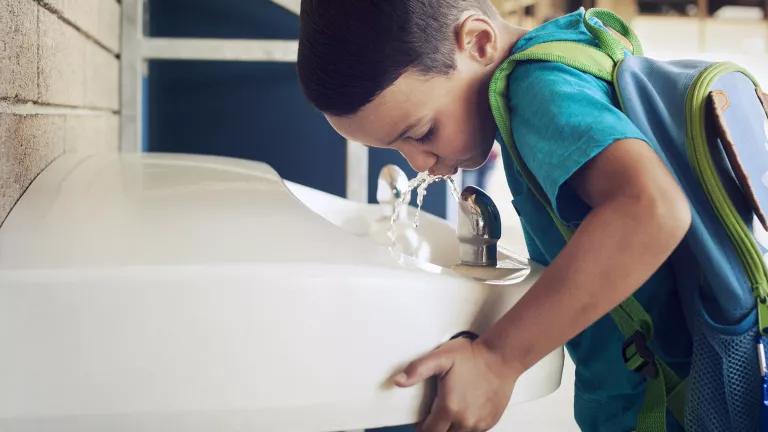

Infants and children spend hundreds of hours a year in childcare and at school, so it is critical to protect them from lead exposure in these places. There’s no such thing as a “safe” level of lead—even trace amounts of it in children’s bloodstreams can permanently and negatively affect them. But instead of drinking clean water, children across the United States are exposed every day to lead when they sip from the water fountains at their schools, eat cafeteria food, are fed formula at childcare, or fill up a water bottle in their classroom.
The federal government and the overwhelming majority of states rely on voluntary testing programs to identify lead in drinking water in schools and childcare centers. These programs have shockingly low enrollment. Schools and childcare facilities that have tested for lead in drinking water have typically found it.
NRDC reviewed data collected from states by the U.S. Environmental Protection Agency in 2023 and found that 26 percent of states did not test a single school for lead, and 28 percent of states did not test a single childcare center. Moreover, 34 states tested fewer than 100 schools, and 29 states tested fewer than 100 childcare facilities. All of these states relied on voluntary testing programs or had no testing program at all.
It is clear that voluntary testing programs are a failed experiment. Rather than waiting for testing that rarely materializes, we should proactively reduce exposure by installing certified lead-reducing filters in all schools and childcare facilities. Federal legislation that requires this and provides the necessary funding is the best and fastest way to protect our kids from lead in drinking water in the places they go to grow and develop.
Read the Full Issue Brief
Learn More: Lead in Schools
Lead and Copper Rule School Report Card: No Sign of Improvement

Get the Lead Out of Drinking Water in Schools and Child Care Centers

Colorado's Test and Chase Law Turns to the Chase
Related Resources

The Data Is Clear

NRDC to EPA: Get the Rocket Fuel Out of Our Water Already!