
What Happens in Vegas Should Inform the Rest of the Country
This research brief highlights lessons from Nevada’s workplace heat standard.

Coauthored with Barrak Alahmad and Yazan Alwadi, Harvard T.H. Chan School of Public Health
Most U.S. states lack formal workplace standards for dangerous heat. This long-standing gap puts millions of working people at risk every year, especially as climate change increases the intensity and duration of hot seasons across the country.
Many lawmakers and worker protection agencies are now trying to fill the gap, in part by learning from existing standards in California, Colorado, Maryland, Minnesota, Nevada, Oregon, and Washington State.
However, not all existing heat standards are created equal. Nevada’s workplace heat standard in particular lacks several evidence-based elements that are common to other states, including temperature thresholds that trigger specific safeguards. Instead, Nevada allows employers to decide at what point to provide heat protections to their workers—a choice that many industry representatives want replicated elsewhere.
This research brief uses heat complaints lodged by Nevada workers to make the case that there are, in fact, clear data-driven temperature thresholds that can be implemented across industries. These thresholds should be an essential part of any system of heat protections that includes water, rest, shade, acclimatization, and other safeguards on the job.
Learn More
Rising Temperatures, Rising Risks
Occupational Heat Safety Standards in the United States

States Can Act Now to Create Workplace Heat Standards
Related Resources
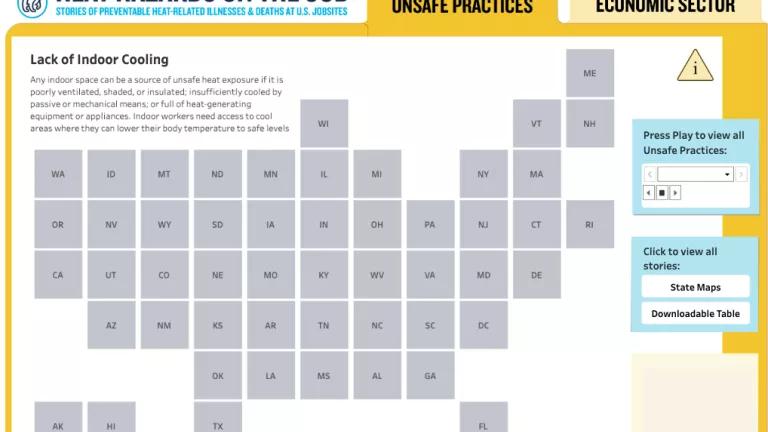
Heat Hazards on the Job
Occupational Heat Safety Standards in the United States
