Winds of Change
California’s ports must transform to improve public health and support equitable and responsible offshore wind.


California must upgrade its ports to support offshore wind energy
The urgency of the climate crisis requires immediate action, including the swift deployment of renewable energy to displace fossil fuel electricity generation. Offshore wind (OSW) is an important component of California’s future renewable energy portfolio, and the state has set ambitious targets for deployment: up to 5 gigawatts (GW) by 2030; 25 GW by 2045. To meet these goals, OSW is already moving forward in the state. In 2022, the federal government held its first lease sale on the U.S. West Coast, where five developers won leases to develop OSW farms off Humboldt Bay and Morro Bay.
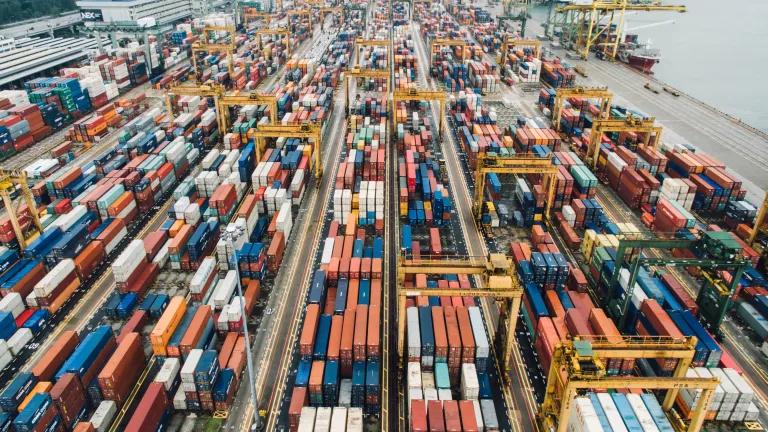
However, significant upgrades are required to ensure that California’s ports can handle the increased activity to create, transport, and maintain these turbines needed to support the state’s renewable energy generation targets. As construction moves forward to upgrade California’s ports, and as ports see their operations expand, it is important to avoid environmental and community-related risks. Communities surrounding the ports are already overburdened with air pollution from trucks, cargo ships, and diesel-fueled cargo handling equipment while being surrounded by mountains of abandoned cargo clogging neighborhood streets. The development and support of OSW must not add more harms to these communities, such as increased air pollution or truck traffic. Instead, we must ensure that the development of OSW energy reduces greenhouse gas (GHG) and criteria air pollutant emissions associated with both port operations and the electricity sector. Port development activities must be equitably designed in a way that protects cultural resources, public health and community well-being, and the biodiversity of coastal and marine ecosystems.
This report provides recommendations for the just, equitable, and environmentally responsible development of California’s ports to support OSW, emphasizing the opportunity to significantly reduce GHG and criteria air pollutant emissions in port-adjacent and Tribal Nation communities; create and support thousands of high-quality jobs; and actively reverse—rather than repeat—historical injustices to communities of color and low-income communities.
Learn more

READ THE FULL REPORT & FACT SHEET
Port development must be equitable and just
Port development activities, including construction and the resulting increases in vehicle and vessel traffic, could exacerbate existing environmental impacts—and cause new ones—on communities historically burdened by pollution and systemic injustice. Therefore, developers should strongly center equity during the planning process to ensure that nearby communities and Tribal Nations are not adversely impacted. This involves co-creating the planning process with community members. Since the co-creation process can be onerous, it is important to offer compensation for community members’ time, support for transportation to and from meetings, and access to childcare, which can often be a barrier to participation. This co-planning process should also identify the shared outcomes of port development, such as providing equitable job opportunities to underinvested communities and Tribal Nations and enacting strong pollution control measures to prioritize public and environmental health.
Port operations must be transformed to achieve climate and air pollution goals
Construction activities to support OSW and the resulting growth in operations threaten to increase overall emissions of GHGs and criteria air pollutants. To ensure that port development activities align with California’s climate and air pollution goals, ports should pursue a strategy of electrification to eliminate on-site GHG emissions and air pollution. In cases where this is not feasible, developers should take steps to reduce and mitigate sources of air pollution to protect human and environmental health.

Port development must protect coastal and marine ecosystems
Deepwater port construction, navigation channel alterations, and increased vessel traffic could negatively impact coastal and marine ecosystems. To reduce negative impacts on coastal and marine habitats, wildlife, and surrounding communities, port developers should implement a mitigation hierarchy (first avoiding, then minimizing, mitigating, and monitoring for adverse impacts); establish robust environmental monitoring and mitigation protocols; and pursue an adaptive management framework that is codeveloped with the host community and informed by the best available science, to adjust policies as more data are collected.
Port development should produce equitable job opportunities and economic impacts
Significant investments will be required to upgrade California’s ports to support OSW, and these funds could directly support thousands of high-quality jobs, provide community benefits, and effectively advance economic inclusion, justice, and workforce transition policies. Port developers should maximize local economic benefits while ensuring equitable and inclusive workforce practices, such as providing high-quality jobs, prioritizing local hiring, and pursuing strong community and Tribal Nation benefit agreements to ensure equitable port development.
This report will provide recommendations for the just, equitable, and environmentally sustainable transformation of California’s ports. While the recommendations in this report focus on California, they are relevant to all entities involved in developing ports to support OSW across the United States and beyond.
Related Resources
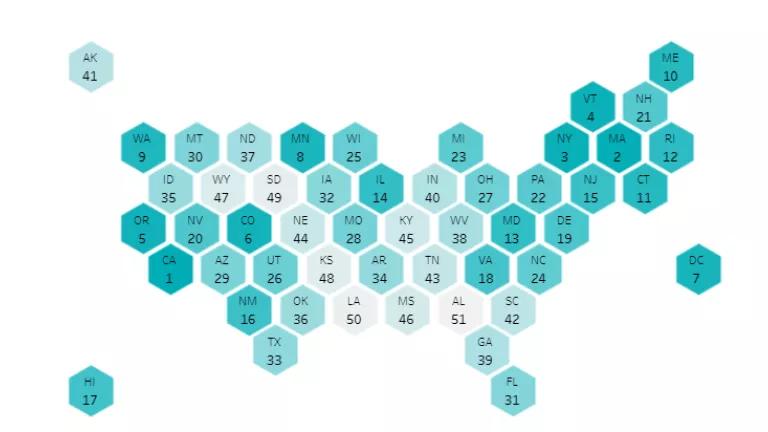
Climate Money Is Flowing, but Are States Ready for the Greenhouse Gas Reduction Fund?

Colorado Climate Progress: 2023 Year in Review