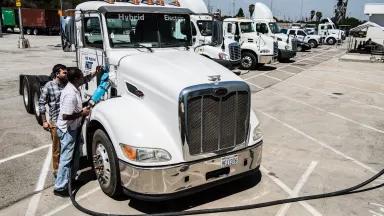
The White House is announcing new measures to cut tailpipe pollution from trucks and spur the spread of zero-emitting buses to communities across the nation.
The latest report by the United Nations Intergovernmental Panel on Climate Change (IPCC) confirms what housing advocates and activists have long known: healthy, decent, affordable, sustainable housing must be at the core of the climate transition.
We clarify the questions about electric truck availability, cost, and charging infrastructure, as well as concerns such as current supply chain issues.
Strong protective measures are required to protect critically endangered North Atlantic right whales and other marine wildlife during offshore wind survey activities.
The investments in the Infrastructure Act geared towards food waste reduction can help achieve several benefits, including reduced climate emissions, healthier soils, and job creation.
Expert BlogUnited StatesAlex Hillbrand, Pierre Delforge
A new study shows that a typical U.S. home can cut its heating-related climate pollution by 45 percent to 72 percent by swapping out a gas-fired furnace for an efficient, all-electric heat pump.
Expert BlogUnited States, California, Massachusetts, New York, New Jersey, Oregon, WashingtonPatricio Portillo, Heather Kryczka
Cutting tailpipe emissions and moving to zero emission vehicles can eliminate the diesel fumes causing childhood asthma, emergency room visits, and loss of life.
Without rapid, transformative action to wean ourselves off of fossil fuels, our hotter world will become increasingly dangerous, costly, and unpredictable—and widen health and economic disparities.
This call to action is the closest thing we have to an endorsement from the global scientific community to protect and restore at least 30 percent of the world’s natural areas by 2030.
Thanks for signing up. You’ll receive your first NRDC action alert and update email soon!