Up to forty percent of food in America is wasted and it costs our economy roughly $218 billion each year. At the same time, nearly 41 million people in the United States lack consistent access to adequate food.
Forty percent of food in this country is never eaten—wasting massive amounts of water, energy, land and other resources—yet 41 million people don’t have enough. And that makes no sense.
Over the past quarter century, standards for plumbing fixtures and appliances such as shower heads, washing machines, and toilets, have saved taxpayers billions of dollars while protecting water resources across the country—and they’re still working today.
When we waste food, we not only add organic materials to landfills (where they generate methane, a powerful global warming pollutant), but we also waste all the water, land, energy, money, labor, and other resources that go into growing, processing…
WASHINGTON - Commerce Secretary Wilbur Ross reportedly has submitted an analysis to White House officials on the potential for oil and gas development in some of the nation’s most cherished and protected publicly owned waters. The move comes after extensive…
All too much food goes to waste these days. At the same time, low income individuals in the U.S. lacked the resources to afford more than 7 billion meals last year—a huge gap that affects the health and well-being of…
Politicians running the Federal Highway Administration want to keep us in the dark by rolling back the rule that requires transportation plans to account for the carbon pollution that damages our health and our climate.
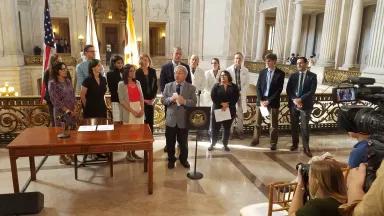
SAN FRANCISCO – San Francisco will now require large chain grocers to provide information about the antibiotic use associated with each line of raw meat sold in their stores. The “Right to Know” ordinance, authored by Supervisor Jeff Sheehy, seeks…
New York Governor Andrew Cuomo has just signed into law legislation that gives the New York State Department of Environmental Conservation (DEC) the power to prevent the siting of anchorages in the Hudson River. This bipartisan legislation is a major…
The aviation industry represents the transportation sector with the fastest growing greenhouse gas emissions. It is also not regulated under the 2015 Paris Agreement. Yet, it has set commendable goals to shrink its carbon footprint.
A new NRDC mapping analysis being released today shows that the summer heat of today simply isn’t like summers of the past, for many communities across the United States.