
The Arctic in Peril: The Story Behind One of TIME’s Top 100 Photos of 2025
As the Trump administration seeks to expand drilling and mining in northern Alaska, a photographer captures a glimpse of one of earth’s last great wild spaces.

Caribou crossing aufeis—a sheet-like mass of layered ice that forms from successive flows of ground or river water during freezing temperatures—on a river in the coastal plain of Alaska's Arctic National Wildlife Refuge, June 25, 2025
It was an aerial shot of a Porcupine caribou herd traversing an icy river that caught TIME magazine’s attention. The image—captured by photographer Acacia Johnson from a Cessna flying above Alaska’s Coastal Plain—recently earned a spot in the publication’s Top 100 Photos of 2025.
As with most of Johnson’s photographs from a five-day shoot commissioned by NRDC in June, there isn’t a person or town or road in sight. Though humanity isn’t completely out of the picture.

Mountains in Alaska's Arctic National Wildlife Refuge, June 25th, 2025
The Gwich’in and Iñupiat, for instance, have been living here for millennia, sustainably hunting caribou as migration season has come and gone. Also here, in a place warming four times faster than the rest of the globe, the mark of anthropogenic climate change permeates the landscape. Melting glaciers and permafrost. More wildfires in the tundra. Less ice in the sea.
And, confounding logic, there’s been a rash of recent political activity, swirling in and around Alaska’s North Slope, that seeks to expand some of the very same extractive industries that exacerbate this warming.


Clockwise from top left: Caribou migrating across the coastal plain of the Arctic Refuge; a family of muskoxen roaming the bank of the Jago River in the Arctic Refuge; aufeis covering a river in the refuge
This year, the Trump administration once again targeted the Coastal Plain of the Arctic National Wildlife Refuge for oil and gas drilling and revoked rules that would have protected more than half of Alaska’s 23-million-acre National Petroleum Reserve. This included safeguards for Special Areas, such as Colville River and Teshekpuk Lake—regions that are significant, both ecologically and culturally, to the people and wildlife who inhabit them.
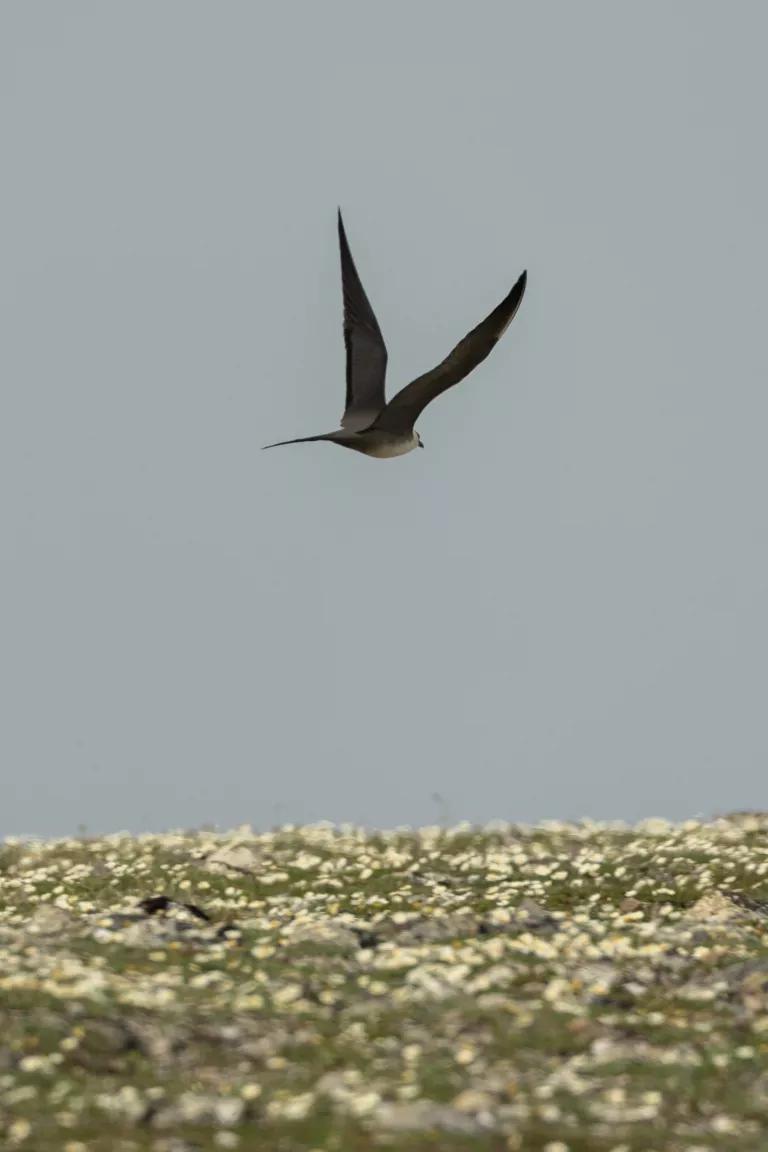

From left: A long-tailed jaeger in the Arctic Refuge; a Baird's sandpiper in the tundra of the refuge
Fossil fuels aren’t the only threat here. To the southwest, the Trump administration also approved the construction of a 211-mile-long mining road that would cut through the roadless wilderness of the Brooks Range and Gates of the Arctic National Park, segmenting caribou calving grounds, threatening salmon runs, and beckoning further destructive development. A coalition of Alaska Native Tribes fought the Ambler Road project for years and won. They now must prepare to do so again to protect their lands, food sources, and way of life.

Muskoxen in the refuge's Jago River Valley

A common redpoll foraging in a willow along a creek in the Jago Foothills in the refuge

A pair of harlequin ducks swimming along the edge of the Jago River
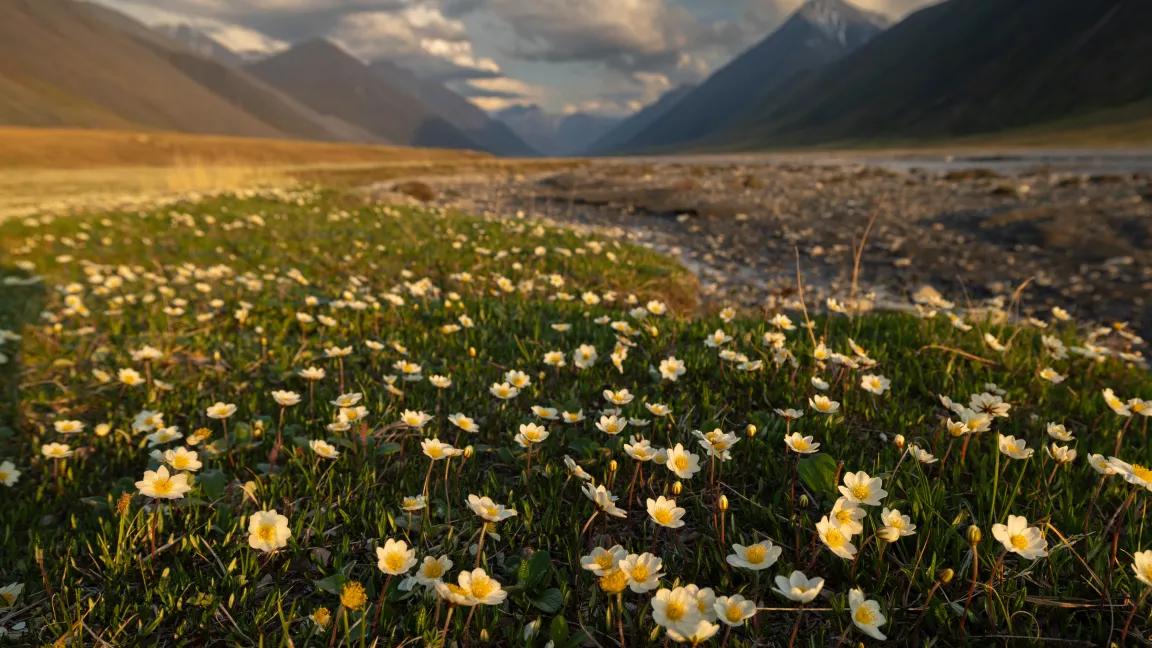
Entireleaf mountain avens blooming in the Jago River Valley

A willow ptarmigan sitting camouflaged on the shore of the Jago River

A ground beetle on the tundra of the Jago Foothills

Lapland azalea blooming in the Jago Foothills
This vast expanse—dubbed “America’s Serengeti”—shelters hundreds of thousands of caribou, millions of migratory birds from all over the world, and countless other species. All rely intensely on the integrity of the Alaskan Arctic, one of the few remaining undisturbed landscapes on earth.
“It was not lost on me that for many Americans, the idea of the Arctic National Wildlife Refuge can seem distant and abstract,” reflects Johnson in her photography blog, which takes readers behind the scenes of her Arctic shoot. “Why, someone might ask, could it possibly be necessary to preserve an area that big?”
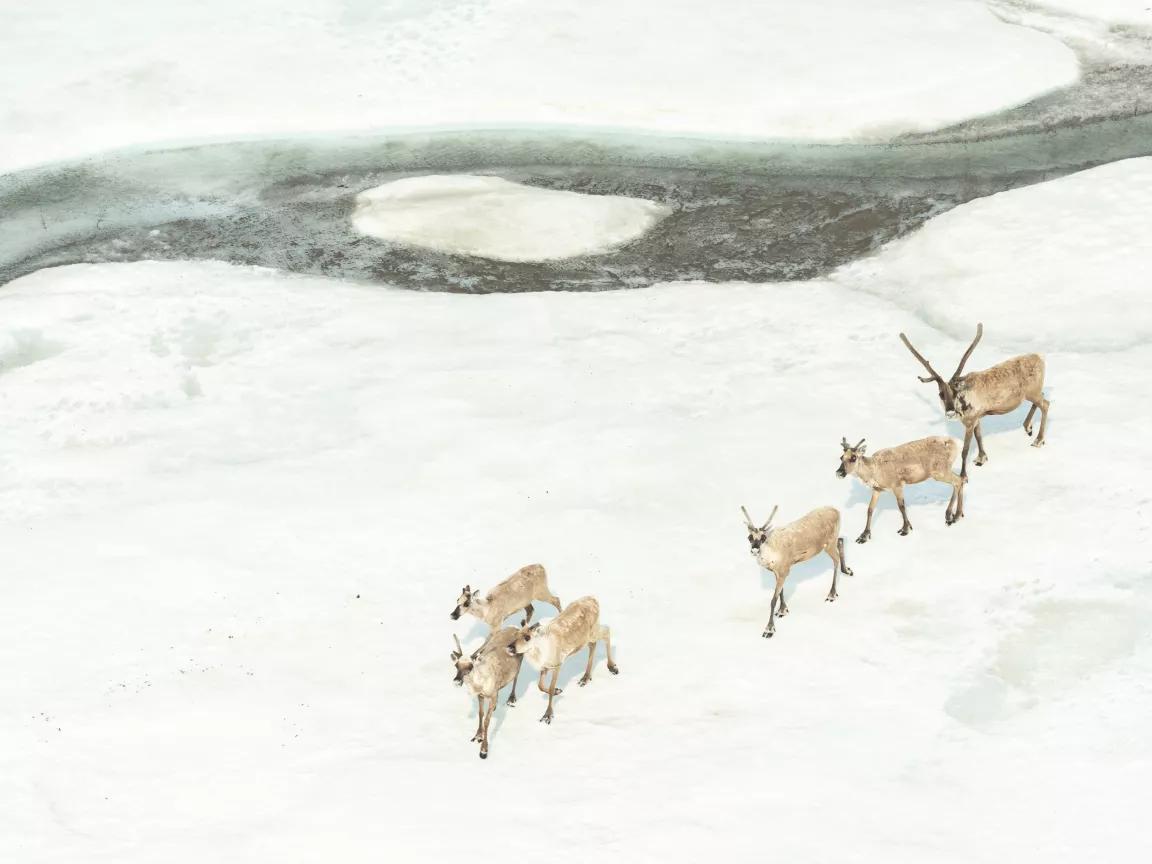
Caribou crossing the aufeis on a river in the coastal plain of the Arctic Refuge
The range of life captured in her images, from towering mountains to delicate flowers, makes that answer clear. Still, these rare glimpses of the far north only hint at the enormity of what humanity stands to lose here at the top of the world.
This NRDC.org story is available for online republication by news media outlets or nonprofits under these conditions: The writer(s) must be credited with a byline; you must note prominently that the story was originally published by NRDC.org and link to the original; the story cannot be edited (beyond simple things such as grammar); you can’t resell the story in any form or grant republishing rights to other outlets; you can’t republish our material wholesale or automatically—you need to select stories individually; you can’t republish the photos or graphics on our site without specific permission; you should drop us a note to let us know when you’ve used one of our stories.
Another Alarm Call from the Arctic: Its Rivers Are Turning Orange
The Long, Long Battle for the Arctic National Wildlife Refuge
The Trump Administration Seeks to Undo Protections for Millions of Acres of Arctic Alaska