
Another Alarm Call from the Arctic: Its Rivers Are Turning Orange
The once clean and clear waterways are rusting, a visually striking example of the catastrophic—and sometimes unpredictable—impacts of global climate change.
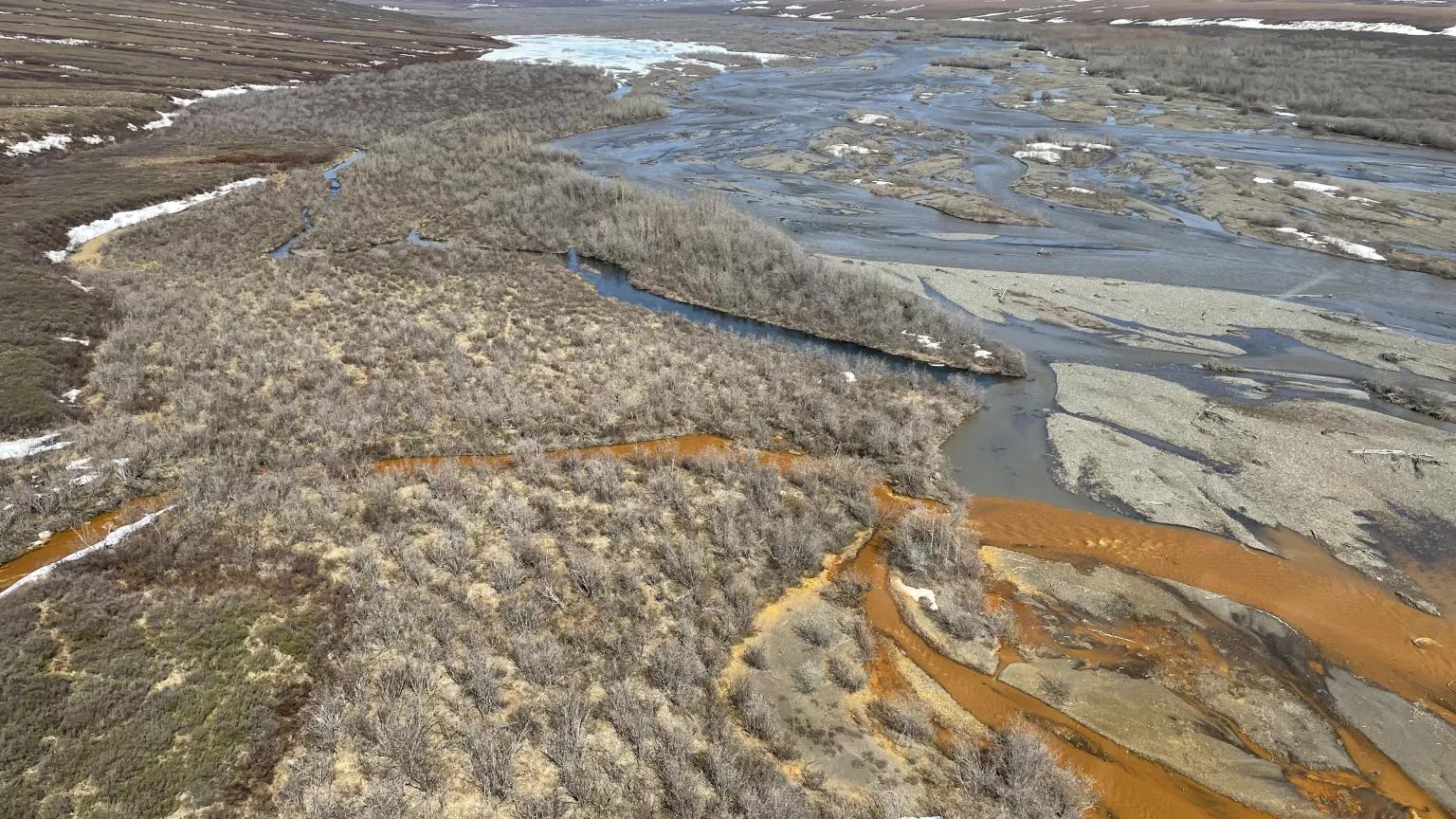
Orange streams are increasingly common in the Brooks Range of northern Alaska. The color reflects oxidized iron and often indicates elevated heavy metal concentrations.
Back when author John McPhee wrote his 1977 bestseller Coming into the Country, chronicling his journey through Alaska, he described the Salmon River as “the clearest, purest water I have ever seen.” Designated a National Wild and Scenic River a few years later, the Salmon is a protected waterway running through one of the most remote areas of the country, the Brooks Range.
So when ecologist Patrick Sullivan flew over the waterway in 2019, he was surprised, and disturbed, at what he saw: The Salmon River had turned bright orange.
“It was sad and disappointing,” recalls Sullivan. “And a little bit freaky.”
Seven years later, the Salmon River is still running orange, but it’s not alone in its dramatic change of hue. More than 200 formerly clear streams and rivers across the Brooks Range have gone orange and cloudy, most within the last 10 years. While this phenomenon isn’t entirely new to science, the sudden uptick in orange waterways is thought to be the result of thawing permafrost, a phenomenon that is accelerating with climate change. The rusty influx comes from iron, once trapped in frozen ground but now released by warming earth and flooding into the watershed. Alongside it, scientists have detected toxic levels of metals like copper and zinc—all of which are threatening wildlife, people, and ways of life that have persisted for millennia.
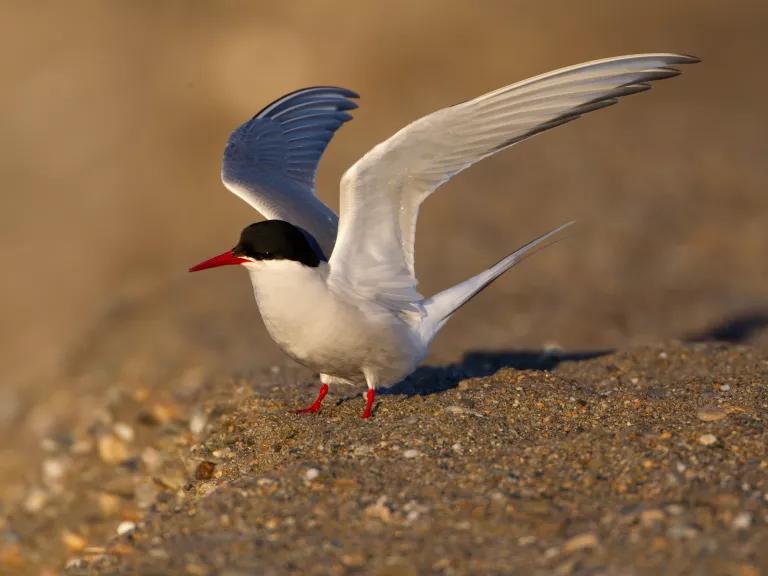
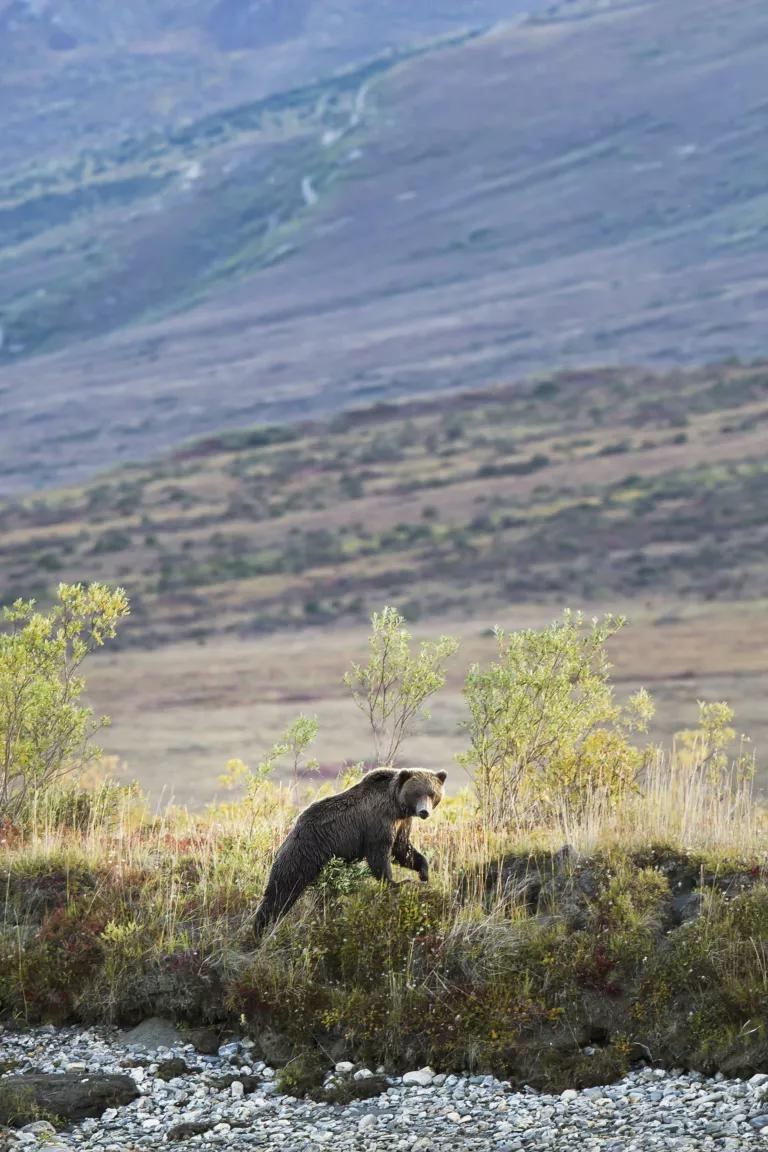
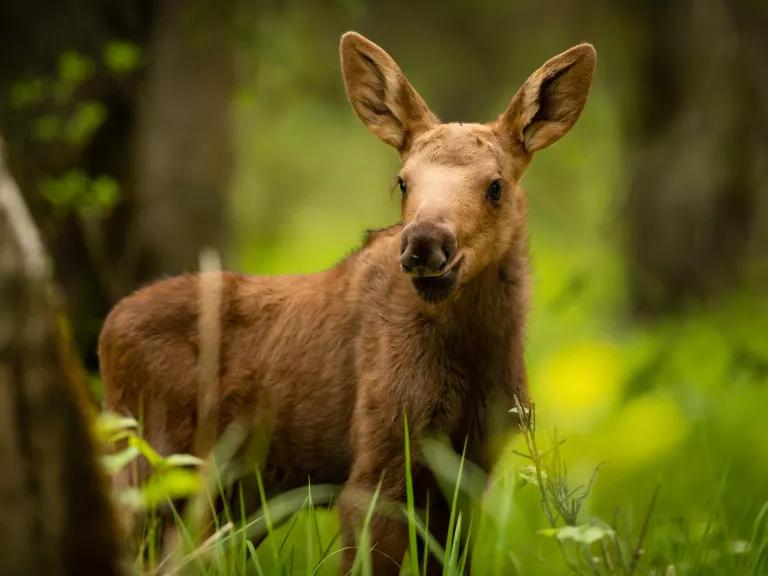
Clockwise from top left: An Arctic tern on the southern coast of the Seward Peninsula; a bear in the Brooks Range Gates of the Arctic National Park; a moose calf in Alaska
Orange rivers: A climate cascade
“While human beings have hunted, fished, and gathered wild food in this valley in small groups for centuries, they have not yet begun to change it,” wrote McPhee, referring to the Iñupiaq and Athabascan peoples, who have called these lands home for at least 11,000 years.
Arctic Alaska is still wild. During the summer, this vast expanse teems with life as insects and plants proliferate. Millions of migratory birds flock here from all over the world, taking advantage of its abundant food supply to raise their young. Herds of caribou roam the boreal forest and tundra, along with grizzly bears, wolves, wolverines, porcupines, moose, and Dall sheep.
Pacific salmon, Arctic grayling, and whitefish course through rivers that cut deep valleys through the rugged mountains of the Brooks Range, which forms a pointy belt across northern Alaska, stretching east to west from Canada’s Yukon to the Chukchi Sea. In the 600 miles in between, its peaks—some nearly 9,000 feet tall—rise through millions of acres of protected lands in the Arctic National Wildlife Refuge, Gates of the Arctic National Park and Preserve, Kobuk Valley National Park, and Noatak National Preserve. The entire range sits above the Arctic Circle, adding contour to a vast and seemingly untouchable landscape.
So when the waterways in these far-flung locales became so conspicuously contaminated, it immediately set off alarm bells. “Suddenly, all these streams were turning orange, and everyone was scratching their heads as to why,” remembers Sullivan, who directs the Environment and Natural Resource Institute at the University of Alaska Anchorage.
After a forced pause in fieldwork during the height of the COVID-19 pandemic, scientists returned to the Brooks Range in the summer of 2022 to collect water samples. Eventually, they pieced together the dominant climate-influenced hypothesis that describes the series of events leading to the stained waters.
“These startling scientific discoveries illustrate the complex, interconnected nature of polar ecosystems, where one harmful change sets off cascading impacts that are hard to even predict,” says Laurie Geller, an atmospheric scientist in NRDC’s Science Office.
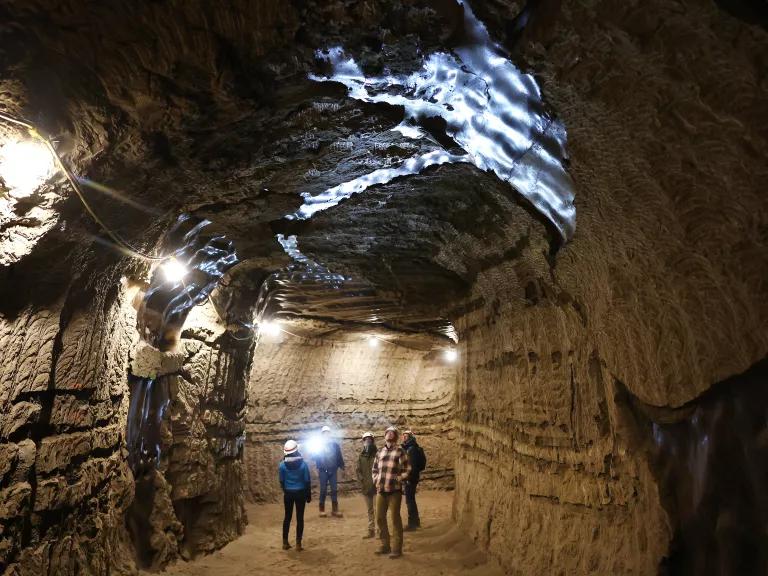
NASA researchers and pilots touring the Permafrost Tunnel Research Facility, which contains 18,000- to 43,000-year-old carbon-rich specimens from the last ice age, near Fairbanks, Alaska. The facility is one of the only places on the planet where researchers can walk inside the frozen earth.
Losing frozen ground
Permafrost is ground—a mixture of sand, sediment, soil, or rock—that remains frozen year-round. On top of the permafrost lies an “active” layer of soil that freezes in the winter and thaws during warmer months. While ground is considered permafrost when it remains at or below 32 degrees Fahrenheit for a minimum of two years, some has been frozen for much, much longer. Scientists have found permafrost that dates back hundreds of thousands of years.
As the third-warmest year on record, 2025 continued a trend of broken global heat records that has lasted more than a decade. Temperatures in the far north, though, are increasing more rapidly than any other region on earth—a 2022 study found that since 1979, the Arctic has warmed nearly four times faster than the rest of the globe. Melting glaciers and ice are one reason for the accelerated pace. In what’s known as the albedo effect, the white snow and ice that reflect sunlight are replaced by darker surfaces that absorb more of the sun’s heat.
And as permafrost thaws, the frozen barrier between the groundwater within the active layer of the soil and the bedrock below disappears. Groundwater can then penetrate more deeply into the rock and interact with long-isolated minerals. If the bedrock contains sulfide minerals, such as pyrite, these can react with dissolved oxygen in the groundwater to form sulfuric acid, a highly corrosive chemical compound. The sulfuric acid, in turn, leaches metals like aluminum, cadmium, iron, and zinc from surrounding rock, creating an acidic solution of dissolved metals that makes its way into streams.
When this acidic brew hits the more basic stream water, the iron falls out of the solution. In short, the water rusts. An analogous process, called acid mine drainage, pollutes water near mining operations. But in the case of these wild Arctic rivers, the contamination is geographically removed from the industries that are ultimately causing it.
“These extremely remote areas—that have layers and layers of protection from development—are being indirectly degraded by fossil fuel combustion and rising atmospheric carbon dioxide concentrations,” says Sullivan.
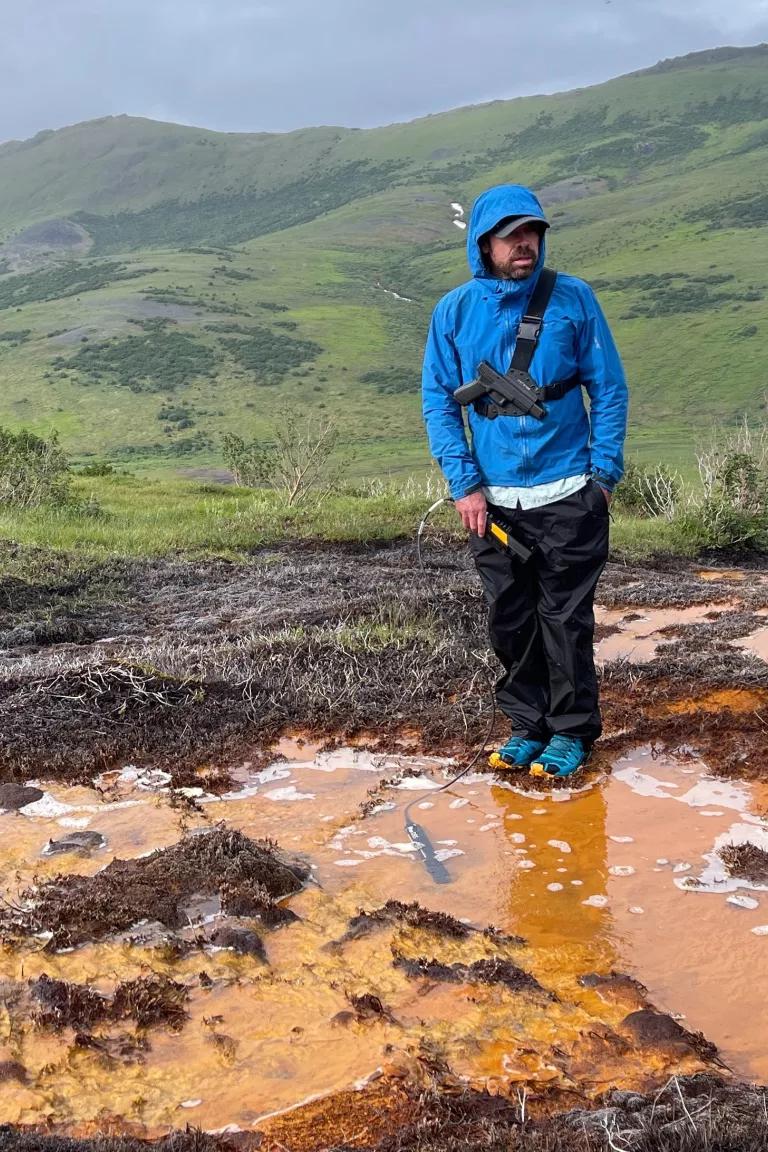
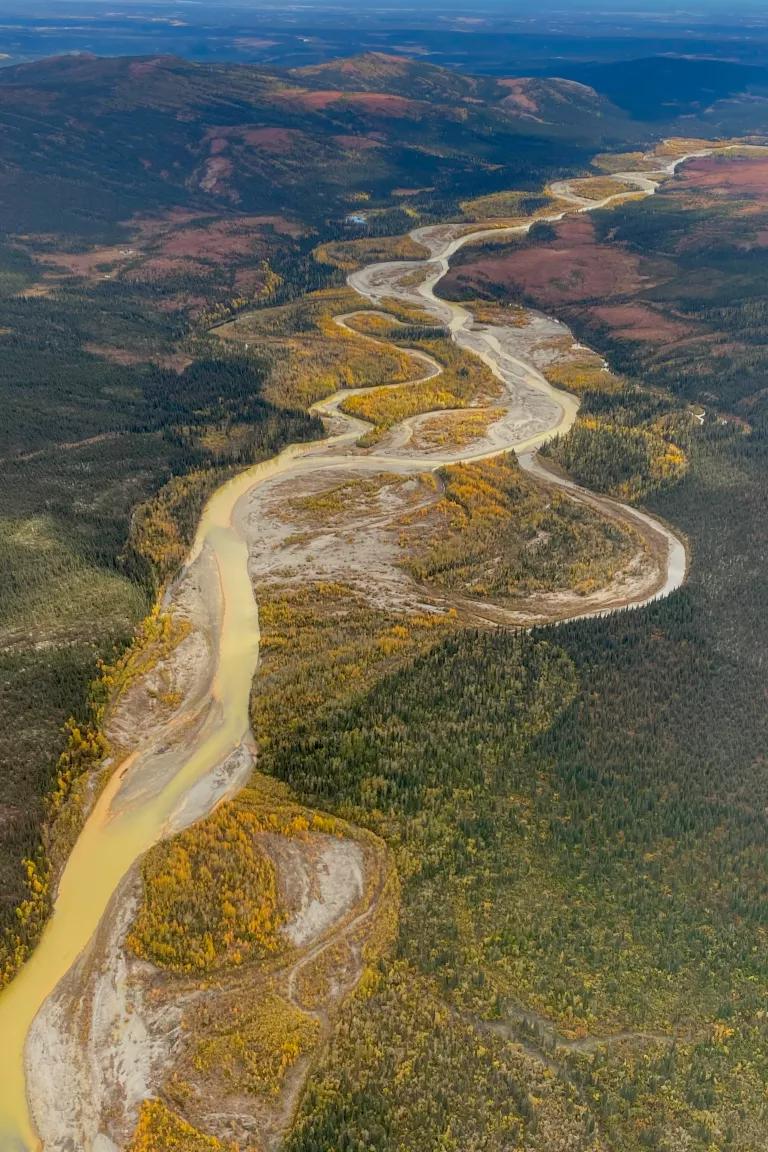
Patrick Sullivan (left)—who is part of a team of scientists testing water quality in Kobuk Valley National Park's Salmon River (right)—standing by an acid seep, July 2023. The permafrost thaw has caused acid rock drainage into the waterway.
Clear water doesn’t mean clean water
Sullivan and colleagues sampled 10 major tributaries of the Salmon River and found that nine had metal concentrations considered toxic to aquatic life. Cloudy orange water was consistently toxic, but worryingly, they also found clear water samples that had dangerously elevated metal concentrations.
In these stretches of the waterway, the scientists hypothesize, the orange-tinting iron had already settled to the streambed while other toxic particulates continued to flow downstream. So even though rusting rivers are more noticeable, the extent of the contamination may be difficult to see.
The consequences are far-reaching. Indigenous residents depend on fish from affected streams, especially chum salmon, for culturally and nutritionally significant subsistence harvests. Chum salmon hatch in freshwater streams, migrate to the ocean, and eventually return to their home streams to spawn in a cycle that takes three to six years. In 2024, four to five years after widespread river rusting in 2019 and 2020, the salmon harvests in Kotzebue Sound were the lowest on record. While the link between the two events isn’t yet definitive, it’s certainly concerning.
Scientists have described worrying declines in other species too. In Kobuk Valley National Park, juvenile fish—Dolly Varden char and slimy sculpin—completely disappeared from a tributary of the Akillik River after it turned orange in 2018. The diversity of streambed macroinvertebrates (think: insects and snails), which are common indicators of stream health and important food sources for fish, also plummeted.
The 2025 Arctic Report Card, published by the National Oceanic and Atmospheric Administration, highlights the need for research on the impacts to rural drinking water supplies. “Some metals, such as cadmium, nickel, and manganese, exceeded either EPA drinking water criteria or World Health Organization guidelines in orange-colored streams,” the authors write.
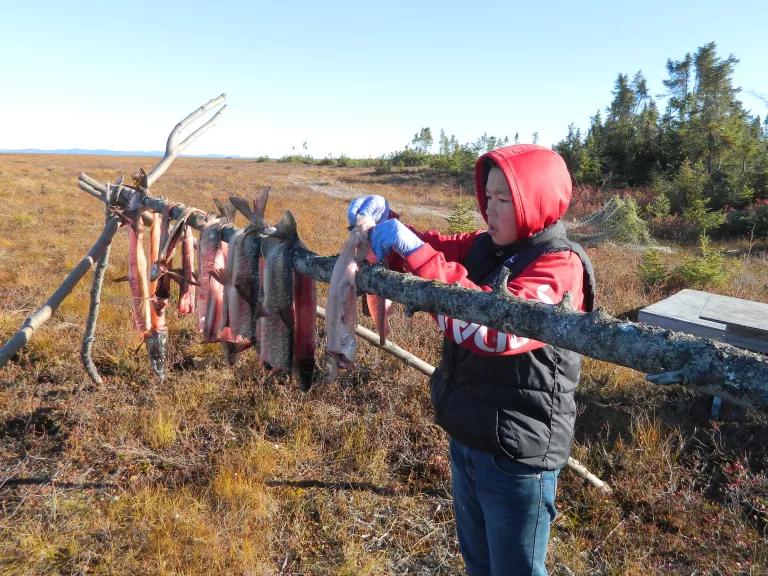
A boy hanging salmon out to dry at Selawik Science-Culture Camp in Selawik National Wildlife Refuge, Alaska, where children from the Iñupiaq village of Selawik in northwest Alaska celebrate the natural history and cultural traditions of their homeland
Point of no return
Like climate change, river rusting is a global phenomenon. Similar reports of melting permafrost and contaminated waters are coming in from the Swiss Alps, the Peruvian Andes, and the Colorado Rockies. And alarmingly, the consequences of thawing permafrost go far beyond local waterways.
Nearly twice the amount of carbon currently in the atmosphere is locked in permafrost in the form of enormous amounts of undecayed organic matter. As this organic matter thaws and decomposes, it releases carbon dioxide and methane (an even more potent greenhouse gas than CO2). This unleashing of once-trapped carbon into the atmosphere accelerates warming, thawing even more permafrost and releasing even more climate emissions, thus creating a feedback loop.
Once permafrost melts, there’s no going back. Prevention is the only cure.
This is just one of the reasons why the Trump administration’s plans to open more than 1.5 million acres of the Arctic National Wildlife Refuge, along with special areas within the National Petroleum Reserve-Alaska, to oil and gas leasing is deeply troubling.
“While this administration’s push to expand oil and gas drilling in the region is not directly causing these changes, the global-scale warming that has already resulted from decades of oil and gas drilling is the key driver of these potentially devastating ecological impacts,” says Geller.
President Trump also recently green-lit the Ambler Road Project to build an industrial mining road that would run 211 miles through a roadless area of the Brooks Range and cut through the similarly roadless Gates of the Arctic National Park, despite opposition from dozens of Tribal governments. Most immediately, the Ambler Road would disrupt caribou breeding grounds and degrade salmon habitat. But in the long run, a road can also act as a feedback loop, one that invites more industry and eventually more roads that chip away at a wilderness already in crisis.
The rusting Salmon River represents just how much the global climate has changed the face of our planet in the past 50 years since McPhee’s journey—not even the wildest, most protected places are immune to its consequences. But they are still worth trying to save. We must ask ourselves what could the Salmon River look like, let alone the rest of the planet, in another 50 years?
“This one definitely caught all of us by surprise, and that’s kind of scary,” says Sullivan. “It makes you wonder if there are going to be more surprises in the future.”
This NRDC.org story is available for online republication by news media outlets or nonprofits under these conditions: The writer(s) must be credited with a byline; you must note prominently that the story was originally published by NRDC.org and link to the original; the story cannot be edited (beyond simple things such as grammar); you can’t resell the story in any form or grant republishing rights to other outlets; you can’t republish our material wholesale or automatically—you need to select stories individually; you can’t republish the photos or graphics on our site without specific permission; you should drop us a note to let us know when you’ve used one of our stories.

Say no to the Trump administration’s plan to open up our waters to oil and gas drilling!
The Interior Department is proposing to expand oil and gas drilling across more than ONE BILLION acres of U.S. waters. This will threaten endangered whales, generate toxic air pollution, and put coastal communities and economies at risk of oil spills and other drilling impacts. Submit your public comment now opposing this proposal.
RELATED CONTENT

Our Public Lands Are on the Chopping Block Again
Alaska’s Tongass National Forest at Risk Once Again
