
As the EPA Downsizes, Our Health Could Suffer
The Trump administration sidelines the scientists studying the health risks of environmental toxins—and leaves an opening for polluters.

A neighborhood located next to Marathon Petroleum’s Detroit refinery in the most polluted zip code in Michigan. Pollution comes from the refinery and other nearby industries, and from the 10,000 trucks that pass daily on Interstate 75.

The nation’s corps of federal health researchers is under siege. Drastic budget cuts, reorganizations, and reductions in force (RIFs) are hollowing out the National Institutes of Health and the U.S. Department of Health and Human Services. And the U.S. Environmental Protection Agency (EPA) is eliminating its Office of Research and Development (ORD) to meet Administrator Lee Zeldin’s goal of slashing his agency’s budget by 65 percent.
The proposed plan would terminate 50 to 75 percent of ORD staff and reassign remaining employees to other positions. In the words of one agency scientist, whose position will be eliminated in July, this decision is “lobotomizing our agency” by cutting away much of its scientific brain trust.
Specifically, the EPA is ushering out a wide swath of biologists, chemists, toxicologists, epidemiologists, emergency response specialists, engineers, and other experts who focus on protecting some of our most basic human rights: clean air, safe drinking water, a healthy home.
Through the research of these public scientists, the ORD has been critical to the implementation of such major laws as the Clean Air Act, Safe Drinking Water Act, and the Superfund program, which helps clean up toxic waste sites. The office provides up-to-date regulatory guidance and data to inform decisions on everything from how hazardous waste gets disposed to which emerging contaminants must be regulated.
Public health advocates like NRDC senior scientist Jennifer Sass point out that this loss at the EPA would leave a dangerous vacuum. It’s one that the government could fill “through expanding collaborations with chemical manufacturers,” she says, funneling our tax dollars into polluter-biased research.

An EPA environmental engineer sorting samples used for drinking water and PFAS research at the Office of Research and Development's Center For Environmental Solutions and Emergency Response in Cincinnati
How does the ORD contribute to public health efforts?
The ORD is the EPA’s largest office, and its span of work is massive. Among the various ORD research centers, the Center for Public Health and Environmental Assessment investigates the health impacts of the numerous contaminants infiltrating our air, water, waste, and ecosystems.
“They’re looking for answers to questions like, does this chemical cause cancer?” explains Erik D. Olson, NRDC’s senior strategic director for health. “If it causes cancer, what’s its potency? Can it cause reproductive problems? Developmental problems in kids? And then they come up with health risk values of that substance for human health.”
Learn more

For instance, ORD scientists have been evaluating decades of research on the health effects of inhaling formaldehyde, a chemical compound that can be found in furniture and building materials, pesticides, insulation, car exhaust, and tobacco smoke. Formaldehyde is a known carcinogen, but the scientists’ assessment concluded that it was even more harmful than previously thought, particularly in children and people with pre-existing respiratory conditions.
“By going after science and research, this administration is attacking our nation’s brain trust."
Dr. Jennifer Sass, senior scientist, NRDC
The office has also been looking at per- and polyfluoroalkyl substances (PFAS), “forever chemicals” that are now widespread in our daily lives. Studies show that PFAS can cause cancer, harm the development of fetuses and children, and pose other health hazards. But it wasn’t until last year that the EPA decided to restrict six of these chemicals in our drinking water. ORD’s research on PFAS toxicity, treatment, and destruction has been integral to the agency’s evaluations of many of these ubiquitous chemicals.
Public health advocates like Olson, who have been sounding the alarm on the dangers of PFAS for years, were hopeful that continuing ORD research would lead to tighter controls for the chemicals in all the places we encounter them. Instead, the EPA now plans to repeal its regulations for four types of PFAS and delay the restrictions of the remaining two.
There are hundreds of PFAS chemicals in use, many of which contaminate our water and air, and right now, EPA methods only test for 29 in drinking water, just scratching the surface. Without the ORD, there won’t be a standard way to monitor the vast majority of these toxic chemicals in the environment. The department’s researchers have also played a central role in developing methods to destroy harmful chemicals—especially pertinent for PFAS, given that they, as Olson notes, are almost indestructible.
“There will be a gaping hole in our safety net for protecting citizens,” Olson says. “Not only will we not be able to detect a lot of them, but we also won’t be able to figure out how to control them using up-to-date technology.”
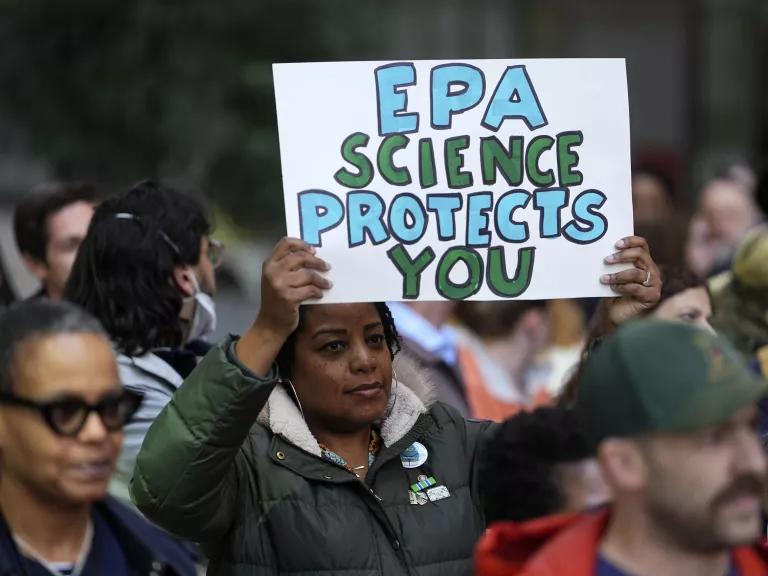
EPA employees and supporters protesting actions by the Trump administration to cut funding and staff at the agency in Philadelphia, March 2025
The ORD scientists in our communities
In a March letter to Zeldin, members of the the House Committee on Science, Space, and Technology expressed outrage over the proposed elimination of ORD. The move would be “a catastrophe,” they wrote, and one that “compromises EPA’s ability to meet dozens of legal obligations required in numerous environmental laws.” The lawmakers went on to note the impacts of the proposed layoffs to 1,540 ORD employees working in Florida, Georgia, Minnesota, New Jersey, North Carolina, Ohio, Oklahoma, Oregon, Rhode Island, and Washington, D.C., who enable the EPA to do its job.
Learn More



And just how do the regional staff in all these places engage with their communities? Scientists working in the Duluth, Minnesota, lab participate in an annual educational program for students. Staffers in Corvallis, Oregon, worked with local farmers to demonstrate how to prevent water pollution while increasing crop production. And in 2024, the ORD signed a memorandum of understanding with the Chickasaw Nation to increase collaboration opportunities at the lab in Ada, Oklahoma, for sustainably managing groundwater resources.
Beyond the research that ORD scientists conduct, they also provide technical advice for local governments and industries on how to control, detect, and address environmental problems. For example, for a city to measure the amount of lead in its drinking water, its public water system would need to use an EPA-approved testing procedure. By standardizing these methods, the EPA ensures the whole country is using the same measuring stick, and that it is accurate and reliable.
The alternative is that scientific research is left up to individual states—a dangerous proposition that both Olson and Sass point out. Very few states have the capacity to take over the research that the EPA would do or to ensure municipalities are correctly implementing major environmental laws.
“Without these scientists, there won’t be anyone left to do the work,” says Sass, adding that there will be economic impacts to these cuts as well. “Businesses and industries save money when their workers are healthy—and alive! Without these research arms of our federal government, we’re creating this huge knowledge gap that will only get bigger over the next four years.”
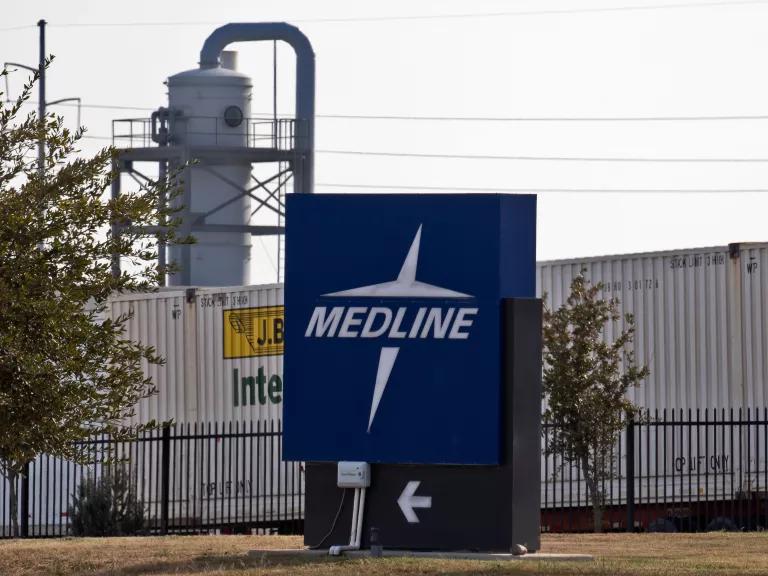
Manufacturing facilities like Midwest Sterilization Corp. use ethylene oxide, a known carcinogen, to sterilize medical devices.
Filling the public research vacuum: for-profit science
With increasingly fewer opportunities to conduct research for federal agencies—and now for federally funded universities, to boot—scientists may have to look elsewhere. That may mean working for groups with private interests. But when it comes to public health goals, that can spawn major conflicts of interest. “Often, it’s EPA science that will prove something as a problem, while industry science will miraculously claim everything they produce is safe,” Olson says.
In a recent op-ed she wrote for Scientific American, Sass highlighted the consequences that industry-biased science can have on driving misinformation about health threats. In 2016, after nearly a decade of research, the EPA found that the cancer risk from ethylene oxide exposure—such as from working at a facility that makes the chemical, working at medical sterilization facility that uses the chemical, or living near these polluting facilities—was 30 percent higher than previously thought. Sass writes that rather than accept this finding, the Texas Commission on Environmental Quality issued its own alternative report on the chemical based on industry-funded science, which failed to fully account for the risk of cancer and could end up allowing more than 3,000 times more air pollution to be emitted from these facilities.
As Sass points out, we’ve seen this before from industry groups. Take Big Tobacco, which, in the face of rising cancer concerns in the 1950s, began funding its own research with the aim of allaying fears and keeping profits up. Similarly, the American Chemistry Council (ACC), a trade association for chemical companies, has long used flawed scientific methods to undermine existing and potential rules for harmful compounds. Among the misleading PR campaigns for toxic substances spearheaded by the ACC are those for BPA, flame retardants, and formaldehyde.
“By going after science and research, this administration is attacking our nation’s brain trust,” Sass says. At its core, publically funded investigative research teaches us more about how the world works, she adds. It’s also an indispensable part of protecting our very lives.
This NRDC.org story is available for online republication by news media outlets or nonprofits under these conditions: The writer(s) must be credited with a byline; you must note prominently that the story was originally published by NRDC.org and link to the original; the story cannot be edited (beyond simple things such as grammar); you can’t resell the story in any form or grant republishing rights to other outlets; you can’t republish our material wholesale or automatically—you need to select stories individually; you can’t republish the photos or graphics on our site without specific permission; you should drop us a note to let us know when you’ve used one of our stories.

Add your name: I stand with climate science and the law
NRDC is fighting back in court to stop the EPA’s illegal giveaway to polluters. Help us get to 25,000 signatures for climate protections. Join us in demanding that the EPA respect climate science and the law, uphold the endangerment finding, and protect people from dangerous vehicle pollution.
Mercury’s Journey from Coal-Burning Power Plants to Your Plate
Why We Need the EPA
How EPA Rollbacks Will Cost Us—in Dollars and Lives