
The Pollution That Causes Acid Rain Is Back on the Rise
Last year, the Trump administration gave coal-fired power plants free passes to pollute—and the dirtier air is already here.

Exhaust blowing out of Mill Creek Generating Station, a coal-fired power plant outside of Louisville, Kentucky

Sometimes you know an environmental problem has been solved when nobody talks about it anymore. Take the hole in the ozone layer, for example. Or the Cuyahoga River fires.
Another such success story was acid rain—a scourge of the 1970s and ’80s that killed aquatic life, damaged forests, stripped nutrients from soil, ate away at buildings, and literally defaced statues.
Sulfur dioxide (SO2) and nitrogen oxide (NOx) emissions, mostly from coal-burning power plants, cause this corrosive form of precipitation, but an amendment to the Clean Air Act, passed by Congress in 1990, helped get the issue under control. Over the past 30 years, the resulting Acid Rain Program, along with other federal policies, have cut SO2 and NOx emissions by a whopping 95 and 89 percent, respectively.
Because these pollutants also contribute to particulate matter, smog, and regional haze, curbing their emissions has led to cleaner, clearer skies that benefit public health and local economies. But over the past year, SO2 and NOx emissions from coal-fired power plants have been going up. What could be going on? Hint: It’s likely the consequence of an overly lax U.S. Environmental Protection Agency (EPA). Here’s why.
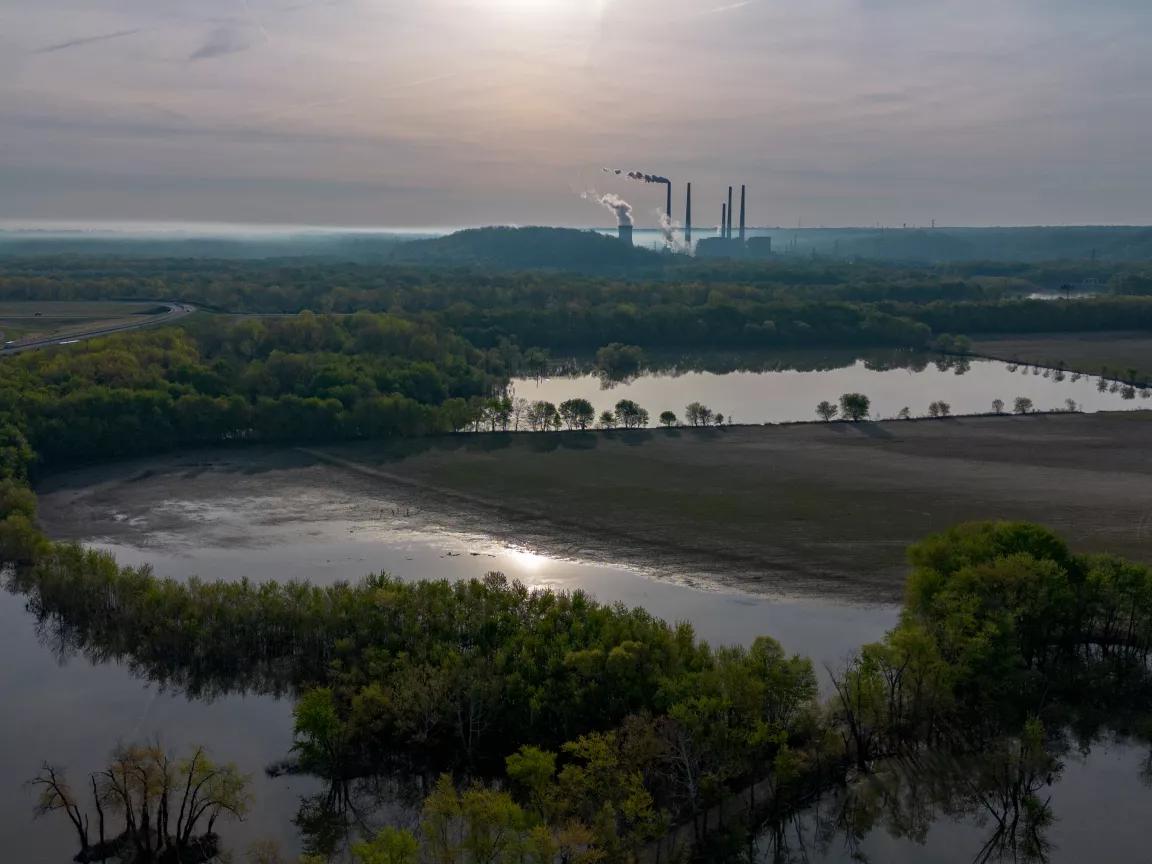
Pollution and steam rising from the coal-fired Miami Fort Power Station, located along the Ohio River near Cincinnati
Want to pollute? Just send an email!
In March 2025, the EPA set up an inbox for coal plant operators to send requests for a presidential exemption from the 2024 Mercury and Air Toxics Standards (MATS). The standards regulate emissions from coal- and oil-fired power plants, and the update called for stricter limits on particulate matter and mercury as well as stronger emissions monitoring for power plants.
No lengthy application, no regulatory process to weigh the costs and benefits to the American people—simply send an email and voilà, the government grants an exemption.
There is a provision in the Clean Air Act—one which has never been used until now—that allows a president to exempt air pollution sources from regulatory standards in cases when the pollution control technology doesn’t exist or isn’t cost-effective, or when national security is at risk. None of those scenarios apply here.
First, in his exemption proclamation, President Trump did not even specify how MATS could impact national security interests beyond stating a general need for domestic energy. In fact, a diverse portfolio of power sources is the key to building energy resilience, and Trump has been actively working against this by blocking renewable projects, some of which were nearly complete. Meanwhile, coal may be the most inefficient of domestic energy sources, with its aging infrastructure costing U.S. consumers more and more every year.
"This kind of stark turnaround is a startling trend ... coal plants are dirtier than they were the year before."
Amanda Levin, director of policy analysis, NRDC
Second, the technology to cost-effectively control particulate matter has not only been around for decades, but it’s already widely used (including by many of the plants that requested exemptions).
“More than 90 percent of the facilities that received an exemption already had pollution controls installed and could have reached the new MATS limits without spending a single dime on new capital investment,” says Amanda Levin, NRDC’s director of policy analysis.
Levin explains that only about 14 percent of the exempted facilities would have had any new costs associated with meeting the new standards. Of those, more than half had already installed the proper controls, and the EPA found that they would just need to maintain and run them more to comply with the MATS update. Nonetheless, 71 coal plants (about a third of the country’s total) jumped at receiving a two-year exemption to ignore the pollution rules that were set to go into effect by next year.
So, why bother even getting this exemption? Because the pollution controls use electricity, which can impact a plant’s overall efficiency—the more power used in running the plant itself, the less power the plant can sell to the grid. Efficiency is something coal plants inherently struggle with—generating electricity by burning fuel results in a lot of energy escaping as waste heat. The average operating efficiency of U.S. coal plants is only 32 percent—which means they waste about 68 percent of the energy they produce. For clean energy, on the other hand, the power generated by, say, the sun or wind can go straight to the grid or to a battery for storage.
“The EPA found the operating and maintenance costs of these controls for any given coal unit was $60,000 to $80,000 a year,” says Levin. That’s as low as 0.05 percent of what a plant would spend each year on coal, ultimately just a drop in the bucket for a large-scale power plant’s budget. Recouping that cost may mean a small bump in profit for coal companies, but it comes at much greater expense to the health of surrounding communities.
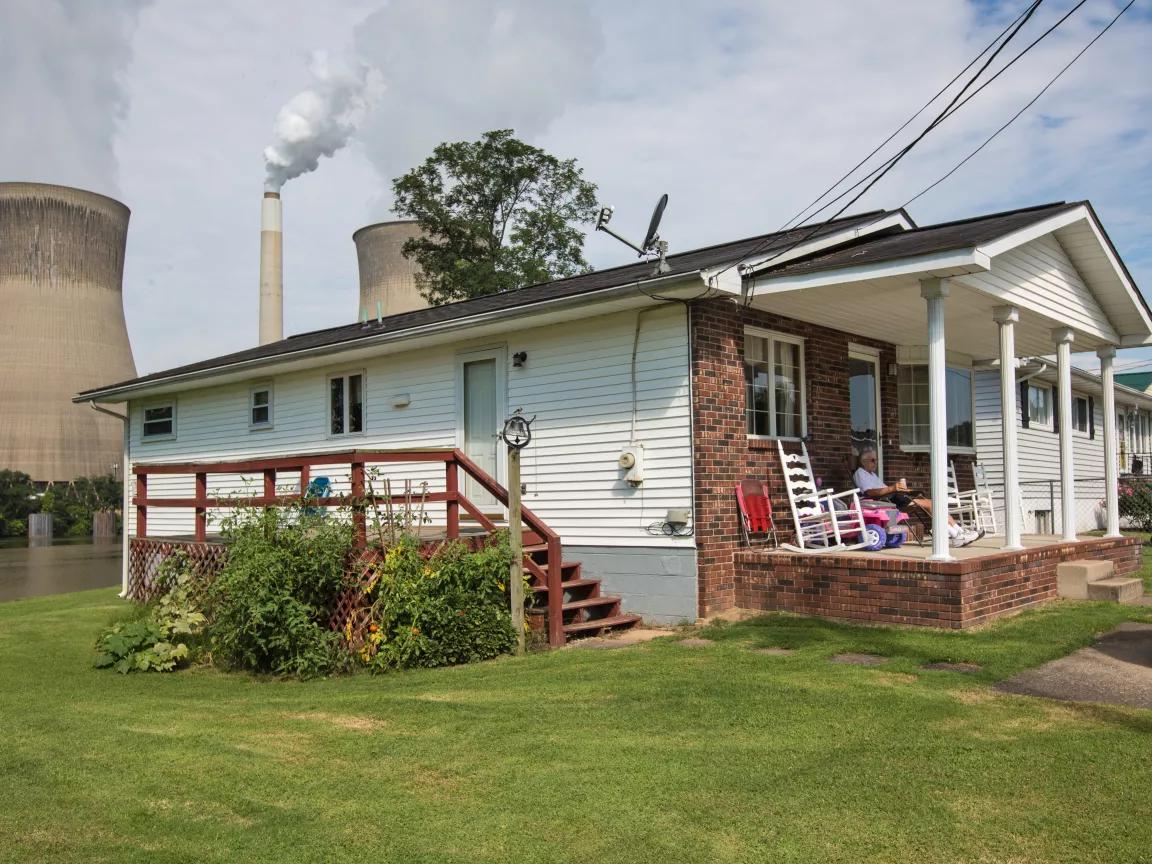
A resident on the porch of his home in Poca, West Virginia, across from the John Amos coal-fired power plant
NRDC’s director of policy analysis, Amanda Levin, explains how coal plant pollution surged across the country last year, thanks to Trump’s presidential exemptions, and how that has subsequently created billions of dollars in public health costs for local communities.
Trump’s exemptions are already affecting air quality
MATS doesn’t regulate SO2 and NOx, so how might the exemptions influence emissions of these pollutants? In some cases, the technology that certain power plants use to control particulate matter, such as wet scrubbers, also helps curb SO2 pollution. But more broadly, Levin points to a more permissive regulatory environment.
Previously, under the watch of an EPA that was serious about protecting air quality, it was in a power plant’s best interest to try harder to control its pollution, whether it be particulate matter, SO2, or NOx. These days, as the agency rolls back regulations and cuts enforcement programs, some power plants—particularly the ones asking for exemptions over email—appear to be relaxing their overall efforts to rein in pollution.
We know this because Levin dug into the EPA’s power plant database, which is regularly updated with emissions data for pollutants regulated by federal clean air programs. She found that since mid-2025, SO2 pollution from coal plants has increased 18 percent and NOx pollution went up by 12 percent.
The data, Levin notes, definitively shows that the exempted plants saw significant increases in SO2 and NOx emissions, while those without exemptions had, for the most part, either lower-level increases in emissions or outright declines. “This kind of stark turnaround is a startling trend,” says Levin. “There is clear evidence that coal plants are dirtier than they were the year before.”

Could acid rain make a comeback?
Probably not, says Levin. That’s because over recent decades in the United States, emissions from coal-fired power plants overall have been, like the industry itself, in steady decline.
Despite the Trump administration going to great lengths to revive the coal industry, it’s been past saving for quite some time. For reference, in 1990, SO2 emissions reached 15 million tons per year. By last year, they were down to 715,000 tons.
“We’re not going back to 15 million tons. We just don’t need coal the same way we needed it 30 years ago,” says Levin. We may be seeing spikes in these pollutants at the moment, but no new coal plants have come online in the United States in over a decade, and the existing ones will have to retire at some point (even as the Trump administration is trying to force them to stay open).
“We’re backsliding today, and the Trump administration is doing everything it can to keep that backslide moving,” Levin adds. “But it’s not going to change the fundamental economics and drivers that have resulted in the U.S. becoming so much cleaner over the last two decades. He cannot stop technological progress.”
And let’s not forget the legal actions taking place against these free passes to pollute. NRDC and partners sued the Trump administration last year over the illegal exemptions, but the lawsuit was left in limbo this past February when the EPA repealed the 2024 MATS update altogether. In response, a coalition of green groups, including NRDC, filed another lawsuit that argues that the repeal violates the Clean Air Act.
Hopefully, pollution from coal-fired power plants will one day be something that people no longer need to talk about. Until then, clean air, clean rain, and clean lungs are worth fighting for.
This NRDC.org story is available for online republication by news media outlets or nonprofits under these conditions: The writer(s) must be credited with a byline; you must note prominently that the story was originally published by NRDC.org and link to the original; the story cannot be edited (beyond simple things such as grammar); you can’t resell the story in any form or grant republishing rights to other outlets; you can’t republish our material wholesale or automatically—you need to select stories individually; you can’t republish the photos or graphics on our site without specific permission; you should drop us a note to let us know when you’ve used one of our stories.
How EPA Rollbacks Will Cost Us—in Dollars and Lives
Mercury’s Journey from Coal-Burning Power Plants to Your Plate
Why We Need the EPA