
We Are Here to Make a Difference: Our Litigators Are at the Ready
NRDC’s attorneys will continue our time-tested tactics to defend public health and the environment from future federal attacks.
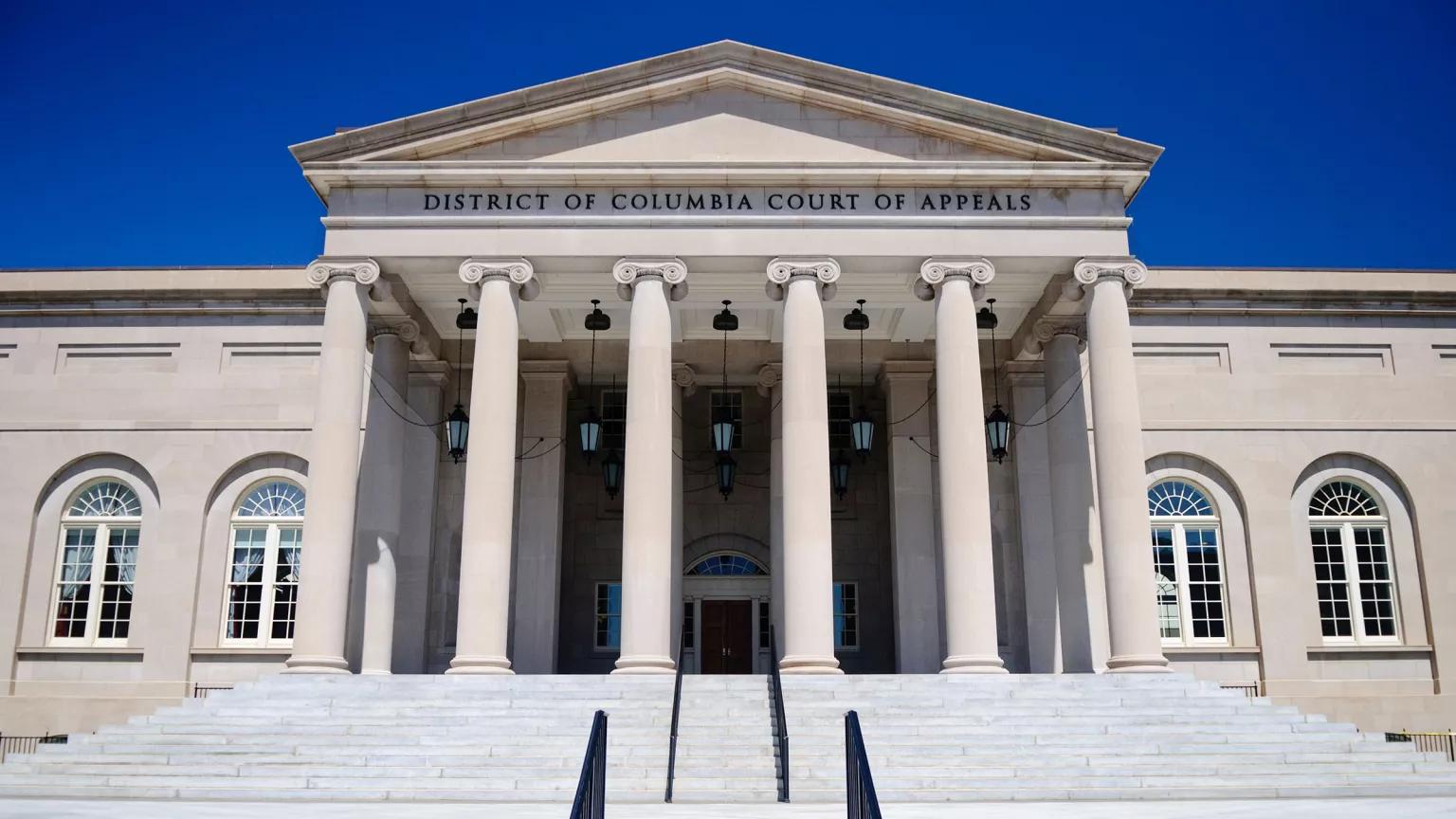
David Coleman/Alamy

In response to the first Trump administration's assault on environmental and public health protections, NRDC went to court 163 times. And the results spoke for themselves: We won nearly 90 percent of all resolved cases.
It was a testament to the persistence of our people—attorneys, scientists, advocates, and others—uniting to protect our air and water, environmental justice, endangered wildlife, and more. It was also a dizzying period of work.
“The pace at which we were litigating was completely unprecedented,” says NRDC’s chief litigation officer Michael Wall. A significant proportion of cases throughout the organization’s entire history were fought during just those four years, he notes. On average, NRDC filed a new case every 10 days.
LEARN MORE

On the surface, some may, at first glance, seem small—like the defense of a single insect pollinator or of energy efficiency standards for a specific appliance category. But the impacts of these rulings add up and often ripple out beyond the given case because they create legal precedents that can apply far more broadly.
"Litigation can make a difference—and what are we here to do if we're not here to make a difference? Sometimes people feel a little bit frozen by the fact that we may not get all the way to where we want to be. But what we should be asking ourselves is, Can we leave this place better than we found it or better than it would be without us? We can absolutely do that.”
Michael Wall, NRDC chief litigation officer
“You know, if you protect a bumblebee, it may be the bumblebee that protects an entire habitat,” Wall explains. “Because the habitat protection follows the protection of the species.” What’s more, he adds, “The reasoning of the court’s ruling may affect the way that the federal government considers endangered species protections for scores of other species.”
As we look to the path ahead, it’s worth taking a glance back at what NRDC faced down during the first Trump administration. Below, we rounded up 10 of those wins—victories made possible by millions of activists and supporters standing with us to speak truth to power.
NRDC’s chief counsel Mitch Bernard walks us through the state of environmental litigation in today’s political climate and how consistency and tenacity has fueled the successes of NRDC’s litigation team over the last 50 years.
-
We fended off attacks on clean car and fuel economy programs. In NRDC et al. v. National Highway Traffic Safety Administration et al. (and, subsequently, New York v. NHTSA), the courts ruled in our favor that the U.S. Department of Transportation could not suspend or reverse an inflation adjustment to penalties on automakers for violating fuel economy standards.
The backstory: In 2015, Congress required that federal agencies update their civil penalties to account for inflation; the fees had barely changed for more than 40 years. After President Barack Obama updated the penalties for fuel economy—meant to ensure that automakers produce more efficient vehicles—President Donald Trump first tried to pause that update, then to reverse it. With our partners, we sued and won both times. The U.S. Court of Appeals for the Second Circuit ensured the inflation adjustments to the fuel economy penalties remained in place.
-
We shut down a governmental scheme to sideline scientific evidence. In NRDC v. U.S. Environmental Protection Agency, we obtained a ruling from the U.S. District Court for the Southern District of New York that an anti-science directive from Trump’s first EPA administrator, Scott Pruitt, violated the Administrative Procedure Act.
The backstory: Pruitt attempted to ban scientists who receive EPA research grants from serving on the agency’s advisory panels. The result would have sidelined independent and academic scientists while allowing scientists and consultants who receive funding from the chemical and fossil fuel industries to continue influencing EPA decision-making. We sued and won, and after the court vacated a key provision of the directive, the EPA dropped its defense.

-
We defended bedrock protections for more than 1,000 bird species. In NRDC v. U.S. Department of the Interior, we successfully challenged the Trump administration’s overly narrow interpretation of the Migratory Bird Treaty Act (MBTA).
The backstory: The MBTA prohibits the unauthorized “taking” or “killing” of migratory birds “at any time, by any means, or in any manner.” For decades, the federal government applied this law to both intentional acts (like hunting and poaching) and industrial activities that directly and foreseeably kill large numbers of birds (like oil and gas development and pesticide applications). The Trump administration broke with long-standing practice and reinterpreted the MBTA to apply only to activities that purposefully kill birds. We sued and won—the U.S. District Court for the Southern District of New York threw out the government’s illegal reinterpretation.
Learn More: NRDC in Court
-
We helped block the Keystone XL pipeline. Through Northern Plains Resource Council v. U.S. Army Corps of Engineers and related Keystone XL (KXL) cases, we successfully challenged President Trump’s attempts to restart construction on the notorious pipeline.
The backstory: One of the foremost climate controversies of our time, the massive Keystone XL project—an expansion of TC Energy’s existing Keystone Pipeline system—would have carried some of the world’s dirtiest crude oil across the United States to refineries and export terminals on the Gulf Coast. NRDC and our partners sued the Trump administration three times, preventing every illegal attempt to restart the project until finally, in 2021, the Biden administration revoked KXL’s cross-border permit. TC Energy then abandoned the project for good.

-
We protected an offshore drilling ban in the Arctic and Atlantic oceans. In response to League of Conservation Voters v. Trump, a federal court blocked President Trump’s 2017 executive order to overturn bans on oil and gas leasing in the Arctic and Atlantic oceans.
The backstory: Upon taking office, President Trump sought to eviscerate protections and open 98 percent of the U.S. Arctic Ocean and parts of the Atlantic Ocean—roughly 128 million acres in all—to more oil and gas drilling. NRDC and our partners sued, and a federal judge in Alaska agreed with us that Trump’s executive order was unlawful. The Trump administration appealed but, while the appeal was pending, President Biden took office, revoked Trump’s order, and reinstated the pre-Trump leasing ban—restoring permanent protections to these vulnerable areas.
-
We gave the rusty-patched bumblebee a fighting chance. Through NRDC v. U.S. Fish & Wildlife Service, we saw to it that this imperiled native bee, which had lost almost 90 percent of its range since 1997, would finally get a critical habitat determination.
The backstory: This lawsuit wasn’t just about a bee. It called to light the staggering decline of a group of pollinators that are responsible for the health of so many of the fruits and other crops we eat to maintain healthy diets. Wild bees also serve an indispensable role in our planet’s ecosystems. So when Trump’s EPA refused to designate critical habitat for the rusty-patched bumblebee, NRDC and our partners sued. The federal court agreed that the EPA’s decision was unlawful and ordered the agency to carry out its duty under the Endangered Species Act.
-
We defended energy efficiency standards. As an outcome of NRDC v. Perry, the U.S. Department of Energy (DOE) had to publish the energy efficiency standards that they’d unlawfully delayed. The standards were expected to save U.S. households and businesses money and avoid millions of metric tons of carbon pollution over the next 30 years.
The backstory: The DOE has been creating energy efficiency standards for household appliances and industrial equipment since 1987. These standards have saved consumers billions of dollars on energy bills, and each one is the result of a years-long process that involves input from manufacturers, utilities, scientists, energy efficiency advocates, and the public. The DOE missed its deadline to publish these standards for several categories of appliances (including portable air conditioners, among others). NRDC and our partners sued, and we prevailed in district court and again on appeal.

Richard Levine/Alamy
-
We fought a rollback on the regulation of climate super-pollutants. In NRDC v. Wheeler, we stopped an effort under EPA administrator Andrew Wheeler to illegally suspend limitations on industry’s use of hydrofluorocarbons (HFCs), which are chemicals commonly found in refrigeration, air-conditioning, insulation, and aerosols.
The backstory: In the 1990s, the EPA approved HFCs as “near-term” substitutes for ozone-destroying chlorofluorocarbons (CFCs), since at the time, they were an improvement over CFCs. But by 2015, industry had developed alternatives with far less climate impact—and so HFCs were moved to a prohibited list under the Clean Air Act. Nevertheless, under Trump, the EPA ruled that HFCs were again valid replacements for any manufacturers still using ozone-depleting chemicals. NRDC and our partners sued, and the U.S. Court of Appeals for the D.C. Circuit restored commonsense limits on HFCs.
-
We protected kids from a toxic drinking water contaminant. In NRDC v. EPA, we successfully challenged the agency’s decision to refuse to set a standard for perchlorate in drinking water.
The backstory: Perchlorate is a component of rocket fuel, munitions, and fireworks, which can cause permanent damage to the developing brains of infants and children. When we sued in 2020, it had already been found in drinking water in 26 states. Nevertheless, the Trump EPA declared it would not regulate the chemical and would not require drinking water providers to test for or control it. As a result of our lawsuit, the U.S. Court of Appeals for the D.C. Circuit ordered the EPA to fulfill its duty under the Safe Drinking Water Act and regulate perchlorate.

Aldo Pavan/Getty Images
-
We stood guard against the overuse of antibiotics in agriculture. In Migrant Clinicians Network v. EPA, we and our partners put a stop to what would have been the largest approval ever of an antibiotic for use in plant agriculture.
The backstory: In the final days of the Trump administration, the EPA registered streptomycin—a medically important antibiotic—for use as a pesticide on citrus plants nationwide, including on 650,000 acres of citrus in Florida alone. The agency took this action despite no solid proof that it would combat the plant diseases it was intended to target. And it did so at the peril of increasing antibiotic resistance, one of the top concerns for public health and a particular risk to the farmworkers toiling in these fields, who would become more susceptible to antibiotic-resistant infections. In addition, this pesticide would exacerbate threats to endangered species and pollinators. NRDC and partners sued, and the U.S. Court of Appeals for the Ninth Circuit agreed that the approval was unlawful and vacated the registration.
This NRDC.org story is available for online republication by news media outlets or nonprofits under these conditions: The writer(s) must be credited with a byline; you must note prominently that the story was originally published by NRDC.org and link to the original; the story cannot be edited (beyond simple things such as grammar); you can’t resell the story in any form or grant republishing rights to other outlets; you can’t republish our material wholesale or automatically—you need to select stories individually; you can’t republish the photos or graphics on our site without specific permission; you should drop us a note to let us know when you’ve used one of our stories.
What Are the Causes of Climate Change?
What Are the Solutions to Climate Change?
Single-Use Plastics 101