BLM Moves to Subsidize Dirty Drilling, Cut Out the Public, and Send Taxpayers the Bill
The Trump administration is proposing to strip away multiple critical protections, weakening financial, environmental, and public accountability for the oil and gas industry.

A herd of pronghorn grazing near a BLM-leased oil field in Wyoming

The Trump administration just published its latest giveaways to the oil and gas industry—new rules that aim to increase industry profits, cut the public out of the environmental review process, and make it easier and quicker for companies to lease public lands while increasing risks to clean air, clean water, wildlife habitat, local communities, and the climate.
Weakening the oil and gas leasing rule
In December, the Trump administration started the process to repeal key protections contained in the Bureau of Land Management (BLM) 2024 Onshore Oil and Gas Leasing Rule. Now, it has proposed regulations to make that happen, and to go even farther.
The 2024 leasing rule increased financial and environmental accountability for oil and gas leasing on public lands. It updated severely outdated policies for the first time in nearly 40 years. A key example was an increase in the amounts of financial bonds that industry has to post to help pay for safely closing oil or gas wells and remediating well sites at the end of their useful lives. Appropriate bond levels help ensure that companies won’t walk away from their responsibilities and that taxpayers won’t be left with the bill to clean up dangerous wells that are no longer producing oil or gas.
Old wells that aren’t properly plugged can lead to toxic air pollution, significant amounts of greenhouse gas emissions, contamination of soil and water, and threats to public safety, such as explosions. Needless to say, plugging these wells is a top priority, which is why the 2024 rule rightfully increased bonding requirements to bring them closer to the real cost of cleanup and to adjust for inflation. A report from Conservatives for Responsible Stewardship concludes that weakening federal oil and gas bonding requirements could leave American taxpayers responsible for billions of dollars in cleanup costs on public lands.
Nevertheless, the Trump administration is now attempting to overturn most of the 2024 rule, including the adjusted bonding levels, to help its friends in the oil and gas industry amass even more profits and walk away from liabilities. And it proposes to go even further than reversing these reforms. It wants to cut public participation in the leasing review process by eliminating public input on scoping and environmental assessments, ending the notice to local landowners regarding proposed leasing, and leaving only 10 days for the public to protest BLM leasing decisions when it used to be 30.
Weakening the methane waste rule
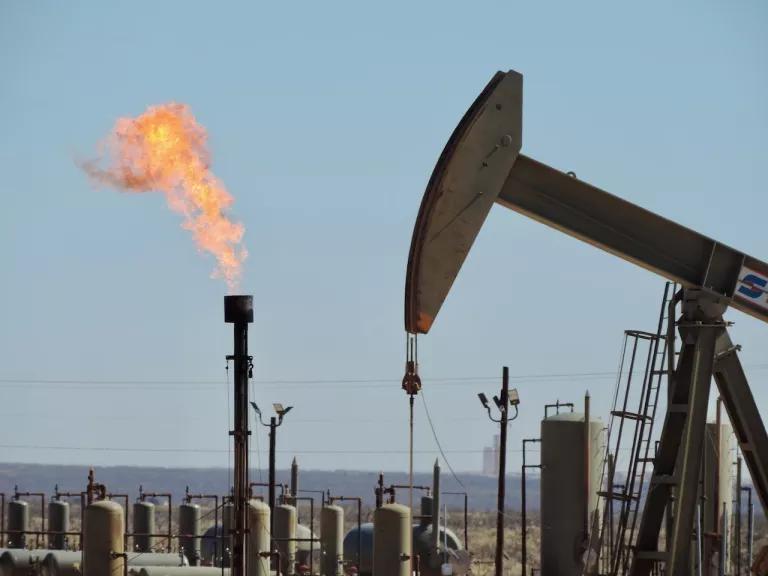
In addition to changes to the oil and gas leasing rule, the administration is proposing to gut the BLM’s 2024 methane waste rule. This separate rule was designed to address the oil and gas industry’s massive waste of public resources via unnecessary and preventable venting, flaring, and leaking of methane emissions from wells on public lands. At the time, the BLM estimated that capturing this methane would lead to approximately $50 million per year in additional royalties from industry—a win for taxpayers, the climate, and the health of nearby communities. The methane waste rule required that companies use all reasonable tools to prevent methane waste, have a waste minimization plan, and have a leak detection and repair program. All things well within the industry’s financial and technical capacity.
BLM proposals would slash safeguards and accountability
These 2024 rules were modest, commonsense, practical updates to policies that had gone largely unchanged for decades. Together, they required oil and gas companies to take greater responsibility for their pollution and waste, helped safeguard public lands and nearby communities, and increased fairness to taxpayers, all without standing in the way of record oil and gas production. Now the Trump administration is proposing to strip away both sets of protections—weakening financial, environmental, and public accountability for the oil and gas industry. Here are some of the most terrible things it is proposing:
- Reduce lease bond minimums to levels from the 1950s and ’60s. Statewide bonds used to cover multiple wells within a single state would be reduced from a minimum of $500,000 to only $25,000, regardless of the number of wells covered, and individual lease bonds would be reduced from a minimum of $150,000 to $10,000. Reality demonstrates how insufficient these rates are: It typically costs $10,000 to $50,000 to seal off conventional wells, and it may require $1 million or more to seal off modern, complex wells. As a touchpoint, consider this: The State of Alaska requires $400,000 per well if an operator owns five or fewer wells and a statewide blanket bond of $30 million if an operator owns more than 1,000 wells in the state.
- Eliminate crucial public comment periods for environmental analysis of lease sales. Currently, the public can comment at two different steps of the oil and gas leasing process, giving members of the public, including public interest organizations like NRDC, an opportunity to provide the agency with the latest science and information regarding wildlife habitat, Indigenous historic or sacred sites, prized recreational areas, and anything else that the public thinks the agency should consider before making a decision about leasing a particular parcel of land for oil and gas drilling. Public input has been a crucial part of government decision-making for generations, and for good reason. It does not slow the leasing process, reduces the chances of litigation against the agency, and leads to better outcomes.
-
In addition to completely eliminating two public comment opportunities during the leasing process, the administration is proposing to dramatically reduce the public’s ability to protest a leasing decision after the agency has made a decision regarding which lands to lease. While the current protest process gives the public 30 days to learn about, study, and file a protest, the administration is now proposing to slash that to 10 days.
- Eliminate the current process that places a preference on leasing lands with high oil and gas potential and lower conservation values, which directs leasing toward the places where it makes the most financial and ecological sense and away from lands with low oil and gas potential and important wildlife habitat, sensitive ecosystems, community priorities, cultural values, and recreational opportunities, such as hiking, camping, hunting, fishing, wildlife viewing, and more.
- Eliminate the requirement to notify landowners in split estate situations (where they don’t own the rights to the minerals beneath their land) that the agency is considering leasing the federally owned minerals beneath their property for oil and gas drilling. Under current rules, the BLM must notify any split estate surface owners of proposed lease sales for subsurface minerals under their land to ensure that the landowners have an opportunity to weigh in. You might think a split estate situation is rare, but the BLM estimates that 57.2 million acres in the United States are split estate where federally owned minerals lie beneath private surface acreage. That’s an area larger than the entire state of Utah, and 90 percent of these split estate lands fall within eight states west of the Mississippi.
- Reduce the oil and gas company lease application fee from $3,100 to $155, which pays for agency staff time and other resources needed to process industry applications. At the same time, the administration proposes to increase fees for the public to protest a lease sale.
- Eliminate the requirements for methane waste minimization plans as well as leak detection and repair programs. The proposed rule will also increase the amount of methane that operators can flare without paying royalties. The 2024 rule was a significant move toward reining in air pollution caused by oil and gas companies’ irresponsible practices of venting or flaring air pollutants and not repairing leaks in their equipment. This air pollution increases greenhouse gas emissions and endangers the health of nearby communities. In addition, the 2024 rule stopped an enormous corporate financial giveaway.
Take action
The BLM is currently accepting public comments on its proposals, with the comment period ending on August 24, 2026. (Submit a public comment below or here.) NRDC will be fighting to ensure oil and gas companies—not taxpayers and nearby communities—remain responsible for the costs and consequences of drilling on public lands.

Don't let fossil fuel companies off the hook for polluting public lands!
Trump's Interior Department is moving to gut the Oil and Gas Leasing Rule, which helps ensure that the fossil fuel industry is held accountable for the pollution it generates on public lands. You have until August 24 to submit a public comment to make your voice heard about this dangerous plan.
This NRDC.org blog is available for online republication by news media outlets or nonprofits under these conditions: The writer(s) must be credited with a byline; you must note prominently that the blog was originally published by NRDC.org and link to the original; the blog cannot be edited (beyond simple things such as grammar); you can’t resell the blog in any form or grant republishing rights to other outlets; you can’t republish our material wholesale or automatically—you need to select blogs individually; you can’t republish the photos or graphics on our site without specific permission; you should drop us a note to let us know when you’ve used one of our blogs.
Related Blogs
The Public Lands Rule Falls Victim to the Dirty Energy Agenda

Repealing the Oil and Gas Rule Would Be Another Industry Giveaway