The Public Lands Rule Falls Victim to the Dirty Energy Agenda
Two years ago, BLM modernized its strategies for conserving water, wildlife, and other natural resources—the Trump administration is jettisoning them to advance its dirty energy program.
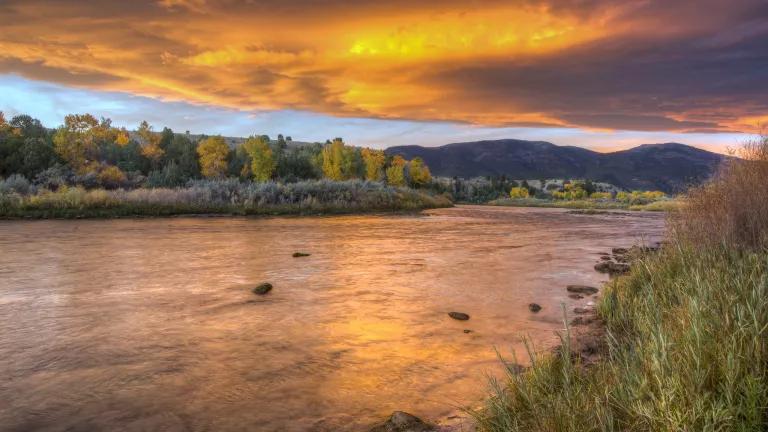
The Green River in Utah
Bob Wick/Bureau of Land Management


The U.S. Department of the Interior has repealed the Bureau of Land Management’s (BLM) Public Lands Rule, which recognizes that conservation is a core historic responsibility of public land management and must be considered alongside uses like mining, grazing, and oil and gas development. In doing so, the administration has dismantled commonsense requirements designed to appropriately balance the uses of more than 245 million acres of public lands managed by the BLM.
In justifying this move, the Trump administration claims the repeal restores a more “efficient” management framework without “a thumb on the scale in favor of conservation at the expense of productive use and development.” In doing so, it is advancing a diminished view of conservation that frames resource protection primarily as a tool to support “balanced development” and the “long-term productivity” of resources rather than recognizing, for example, the conservation of watershed health, fish and wildlife, and recreation as independent and enduring public land values, as clearly mandated by statute within the Federal Land Policy and Management Act (FLPMA), the organic act that governs the BLM.
Eliminating the rule is a dangerous step backward that puts extractive industries ahead of rural communities, endangered wildlife, and clean drinking water. And it is yet another step in a relentless campaign to strip protections from our public lands and open them up to unchecked industrial development while also eliminating the public’s right to participate in how these lands are managed. This latest attack demonstrates that this administration would rather sell off the nation’s public lands for shortsighted profit than honor its duty to ensure long-term sustainable use.
NRDC’s director of land conservation, Bobby McEnaney, talks about the cultural and environmental significance of our public lands as well as the threats they face from the Trump administration and the oil and gas industry.
What is the Public Lands Rule and why does it matter?
The BLM adopted the Public Lands Rule in April 2024 to help it better realize its multiple-use mission and safeguard the health and resilience of the lands it manages. Historically, the bureau’s lands have been and continue to be widely used for oil and gas, grazing, timber, and mining. But in passing FLPMA in 1976, Congress also required the BLM to manage its vast lands for additional conservation-focused uses, including watersheds, fish and wildlife, recreation, and natural scenic values.
After almost 50 years of inconsistent implementation of FLPMA by the BLM, an agency that would often elect to discount conservation as a key element of land management governance, the 2024 rule was designed to help comply with this congressional mandate and modernize the agency to better serve the American public for the 21st century. It recognized that conservation—the long-term protection and restoration of our shared lands—must continue to be a core part of the bureau’s public land stewardship. The rule has three main components: protecting intact healthy landscapes, restoring landscapes back to health, and ensuring that decision-making is based on science and data. It reflects the BLM’s obligation to conserve clean water, fish and wildlife, and resource-rich landscapes for generations to come.
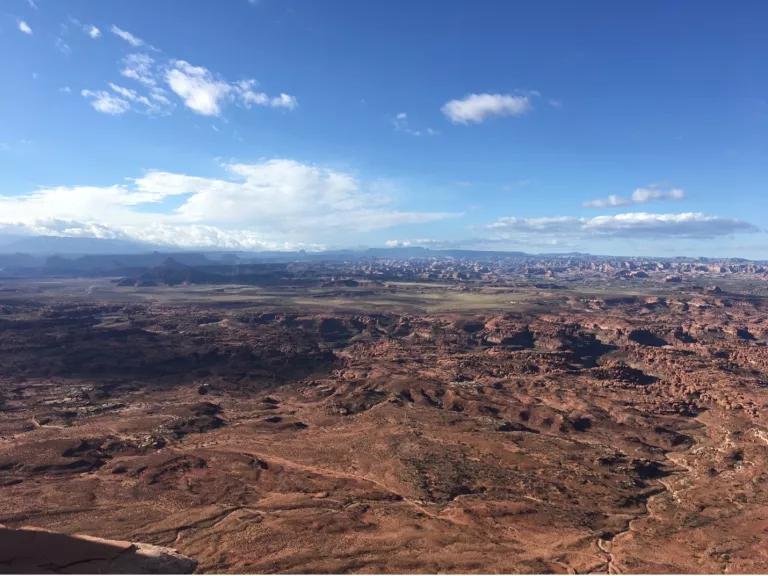
Bears Ears National Monument
Courtesy of Bobby McEnaney
Aligning land and water management to meet today’s pressing needs
From the California coast to Montana’s Upper Missouri River Breaks National Monument, the BLM, as the largest land management agency in the United States, oversees some of the country’s most beloved lands and waters. These lands are the ancestral homelands of Tribal Nations and Indigenous Peoples, who continue to have intimate cultural connections to them. Countless other communities rely on the bureau’s 245 million acres to exercise, explore, hunt, fish, and connect with nature. Outdoor recreation on public lands generates $689 billion annually in consumer spending and supports 4.3 million jobs. And these lands are playing a key role in transitioning the country to a cheap, efficient, and cleaner renewable energy future.
Roughly 1 in 10 Americans in the West depends on the lands managed by the BLM to supply their drinking water, but many of these freshwater ecosystems are in trouble. A sampling of the bureau’s aquatic habitat shows that only 25 percent of its floodplain area is healthy, active, and connected to rivers and streams. The BLM’s own data indicates that one of every five acres it manages fails to meet its own land health standards. These standards, referred to as the “fundamentals of land health,” focus on the health and functionality of watersheds, ecological processes, water quality, and wildlife habitat. Water scarcity is already a pressing issue across the West. The rule was poised to help build resilience on the bureau's lands, something that is increasingly critical for people and wildlife as we grapple with increased wildfire, flooding, and drought.
Although FLPMA directs the bureau to manage its lands according to a “multiple use, sustained yield” framework, for the last several decades, the agency’s on-the-ground implementation of its mission has been unbalanced, tilting substantially toward multiple use while discounting sustained yield.
Despite the ecological importance of its lands, 81 percent of the bureau's acres are open to oil and gas extraction, more than 60 percent are open to livestock grazing, and more than 4 percent have active mining claims. In contrast, only 15 percent of BLM lands are protected as National Conservation Lands. The Public Lands Rule was designed to rebalance the scale and help the agency plan and manage for today’s needs as well as the long-term needs of the nation. And with the 2025 passage of the budget reconciliation bill—which requires substantial expansion of oil, gas, and coal leasing, as well as logging on bureau lands—safeguards like the Public Lands Rule are even more critical to provide a modicum of balance.
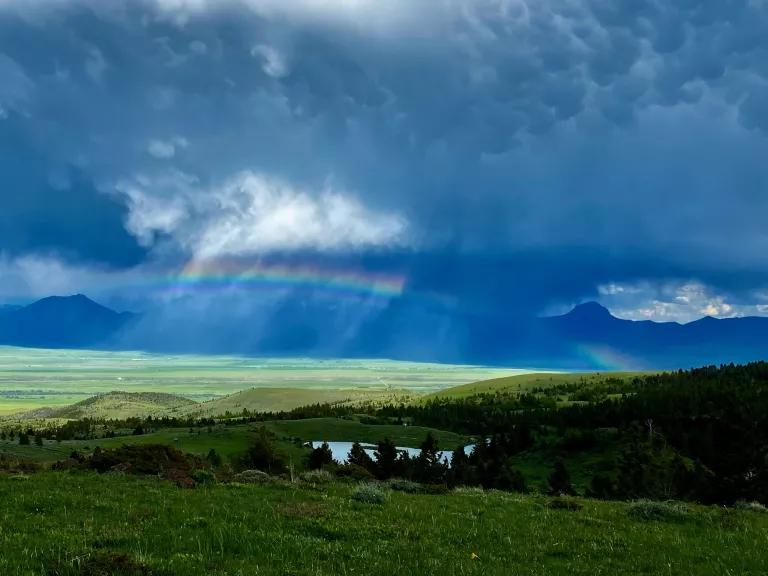
The Upper Missouri Restoration Landscape bridges the Greater Yellowstone and Crown of the Continent ecosystems. The Bureau of Land Management had prioritized restoring streams and native plants.
Bureau of Land Management
Rebalancing the management scale
Climate change, mega wildfires, persistent drought, increased demand for recreation, and the biodiversity crisis are all putting new pressures on the BLM to shore up its internal processes so that it can fulfill its mission. Had it been fully implemented, the rule’s framework would have balanced multiple uses in a way that best meets the present and future needs of the American people. Specifically, the rule:
- Provided clear direction to ensure the bureau was appropriately managing important water, cultural, wildlife, and scenic resources and complying with Congress’s direction to prioritize protection and designation of Areas of Critical Environmental Concern.
- Required the bureau to identify priority landscapes—including wildlife habitat corridors and old-growth forests—for protection and restoration, consistent with existing resource management plans, and to prepare a restoration plan for those priority landscapes.
- Established restoration and mitigation leases to improve the health of public lands and prevent degradation. Such tools have been widely and successfully implemented on private lands.
- Applied the bureau’s well-established fundamentals of land health to all BLM lands and program areas to further the agency’s ability to protect healthy intact landscapes, restore degraded habitat, and help inform all decision-making.
- Promoted more equitable and informed decision-making by requiring meaningful consultation with Tribal Nations and using the best available science, including Indigenous knowledge.
- Aimed to advance opportunities for Tribal co-stewardship of public lands and environmental justice.

Upper Missouri Breaks National Monument
Courtesy of Giulia Good-Stefani
The Public Lands Rule had widespread support
The Public Lands Rule would have helped the BLM advance land conservation outcomes that were widely supported by voters in the West. For example, 72 percent of voters in the West want Congress to focus on ensuring that our public lands protect sources of clean water, air quality, and wildlife habitat while providing opportunities to visit and recreate. Also, more than four in five voters across the region agree that we need to be cautious in how oil and gas is developed on public lands. And, when the bureau invited feedback on the draft rule in 2023, 92 percent of the comments encouraged the agency to adopt the Public Lands Rule as written or to strengthen its conservation measures. In addition, 98 percent of the public comments opposed the Trump administration’s proposed rescission of the rule.
A better future for public lands
The BLM is responsible for safeguarding many of the country's last intact landscapes, old-growth forests, and most critical water resources. The rule’s tools to increase sustainable management, protect intact landscapes, and restore landscapes back to health were commonsense and long overdue. Had they been implemented, they would have provided a framework for putting our public lands to work—not just for industry but also for watersheds, wildlife, and hardworking, healthy communities. By jettisoning the Public Lands Rule, the administration is yet again prioritizing corporate interests over the needs and values of the American public.
This expert blog was originally published on April 18, 2024, and has since been updated with new information and links.

Tell the Trump administration to keep protections for the scared lands around New Mexico’s Chaco Canyon!
The Trump administration announced its latest scheme to sell out cherished public lands to the oil and gas industry, proposing to remove protections for lands within a 10-mile radius of Chaco Culture National Historical Park. We cannot give up protections for this World Heritage site.
Related Blogs

Trump Administration Readies the Axe for Nearly 45 Million Acres of Public Forests

BLM Moves to Subsidize Dirty Drilling, Cut Out the Public, and Send Taxpayers the Bill
