Making Energy and Water Affordable: A Policy Agenda for Michigan's New Leadership
Voters demanded relief. Here's how Lansing can deliver it.

Residents of Mason, Michigan—many wearing hats that say "No data centers in Mason" in opposition to a proposed data center—at a city council meeting, October 19, 2026

Affordability was the defining issue of the 2026 midterm elections. In Michigan—and all across the country—voters made their voices heard loud and clear: The cost of living is simply too expensive, and leaders need to do something about it.
In January, Michigan will swear in a new governor and a new legislature. They will have a strong mandate to reduce costs for their constituents. And nowhere do consumers need more relief than for their energy and water bills.
Michigan utility consumers are feeling the squeeze
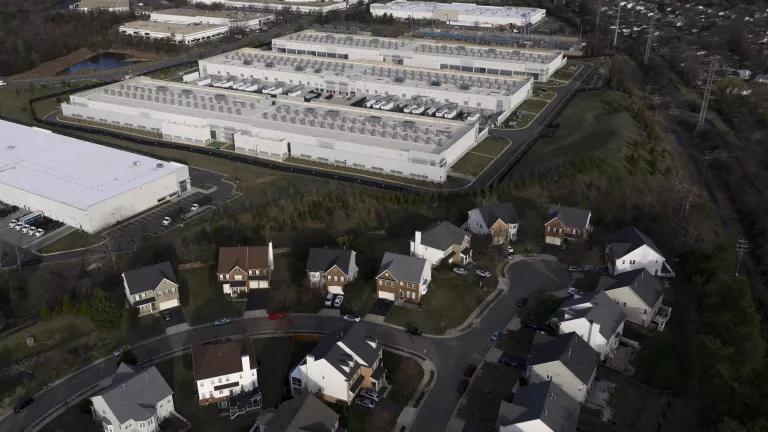
Michigan already has some of the highest electricity rates in the Midwest, and it feels like the cost of energy is going up every month. In February 2026, DTE Electric announced a new rate increase request just five days after the Michigan Public Service Commission approved a $242.4 million increase. Two months later in April, Consumers Energy requested higher rates, just seven days after a $276.6 million electricity increase was approved, and in October, regulators approved yet another $139 million rate hike. A score of new data centers set to come online in coming months threatens to raise those rates even higher, leaving Michigan households to subsidize the power needs of wealthy Big Tech companies.
Meanwhile, an estimated 1 in 10 Michigan families struggle to afford their water bills. Michigan has assistance programs for energy bills, but there is no permanent state or federal program to help ensure low-income residents can afford their water bills, which leaves too many families one missed payment away from a shutoff. Unpaid bills also mean utilities lose the revenue they need for basic water system operations, much less upgrading and maintaining aging systems, and many of Michigan’s water mains are about 100 years old. The result is disasters like the May 2026 water main break in Auburn Hills, which left 10,000 residents unable to cook, bathe, or safely drink their tap water for days; many businesses had to close their doors until water services were fully restored. A recent report from the Great Lakes Water Authority estimates that Michigan faces $85 billion in water, wastewater, and stormwater infrastructure needs over the next 20 years.
An affordability agenda for Michigan’s leaders
Michigan's new administration, legislature, and regulators must enact stronger affordability and consumer protection policies and ensure energy and water investments deliver measurable benefits to Michigan residents. Here are five actions that Michigan lawmakers can begin advancing in the first 100 days of the 2027 legislative session and build on through the year to protect Michiganders:
- Protect customers from data center costs and accelerate clean energy. Require data enters to power their operations with clean energy and pay the full costs of that energy and the infrastructure needed to serve them—rather than passing those costs onto Michigan households—with long-term financial commitments that protect customers from being left with unpaid costs.
- Hold utilities accountable and expand access to customer-owned clean energy. Limit excessive utility profits by reforming and rightsizing their return on equity. Also, expand opportunities for households to lower their electricity bills through customer-owned clean energy, including rooftop solar and battery storage.
- Lower energy bills through whole-home improvements. Incoming administration and legislature should take action to coordinate state housing and energy programs to help families create healthier, more comfortable homes by helping them access whole-home improvements, including home repairs, energy efficiency upgrades, and clear heating/cooling systems that improve indoor air quality while lowering energy bills.
- Pass the bipartisan water affordability package. Michiganders from all political stripes overwhelmingly support making water affordable for every resident through the creation of a statewide water affordability program. An August 2026 poll conducted by EPIC-MRA and commissioned by NRDC found that nearly 9 in 10 Michigan voters feel that no one should lose access to safe drinking water because they can't keep up with rising rates. In addition, three in four support a proposed water affordability program funded by a $1.25 monthly fee on everyone’s water bills.
- Create a dedicated revenue stream for water infrastructure. Federal water infrastructure dollars have declined sharply for decades, and Michigan has no dedicated funding stream to repair and upgrade its aging systems. That burden has shifted almost entirely onto local water bills, straining households across the state. The federal government is not coming to save us. Michigan needs a significant infusion of ongoing state funding to fix our outdated infrastructure before more disasters occur.
Michigan, let’s get to work
Affordability is not a partisan issue. The cost of living impacts every single Michigander, regardless of where they live or how they voted. NRDC looks forward to working with Michigan’s new leadership to lower costs, strengthen utility accountability, ensure everyone has access to affordable water and energy, and create a permanent funding stream for water infrastructure repairs and upgrades while protecting households from data center costs and making energy-saving home improvements more accessible.
This NRDC.org blog is available for online republication by news media outlets or nonprofits under these conditions: The writer(s) must be credited with a byline; you must note prominently that the blog was originally published by NRDC.org and link to the original; the blog cannot be edited (beyond simple things such as grammar); you can’t resell the blog in any form or grant republishing rights to other outlets; you can’t republish our material wholesale or automatically—you need to select blogs individually; you can’t republish the photos or graphics on our site without specific permission; you should drop us a note to let us know when you’ve used one of our blogs.
Related Blogs
Accounting for AI: Environmental Transparency for a Responsible Digital Future

We Can't Afford to Slow Down on Climate Action
